
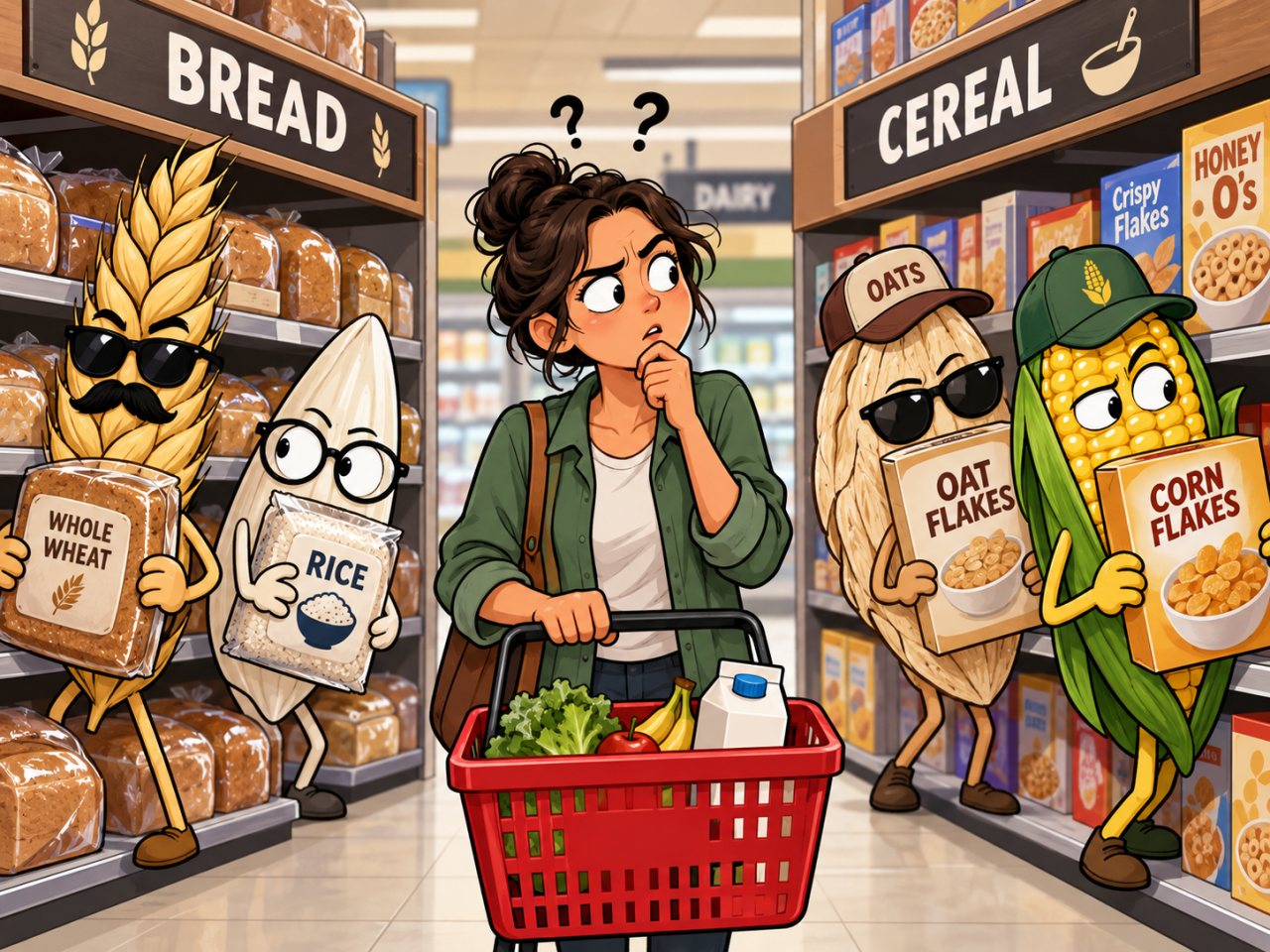
First we told you how flowers get pollinated and then their ovaries turn into the fruits we eat.
Then we told you how the Produce Aisle is botanically strange: peanuts are not nuts, strawberries are not berries, potatoes are not roots.
And then we told you about the craziness of the botanical definition of the word “berry”: strawberries and raspberries are NOT berries, while tomatoes, grapes, and bananas ARE berries.
And now...
Now we can reveal that the craziness does not stop with the Produce Aisle.
You can also find botanical FRUIT in your bread aisle and your cereal aisle!
Say what?
Yes!
Wheat, rice, oats, corn, barley, rye, sorghum, and other cereal grains are actually FRUITS.
These are the fruits produced by cereal grasses, and they have a special name: caryopses.
You might have thought you were looking at a “seed.”
You are actually looking at a fruit wrapped so tightly around its seed that the two structures are basically laminated together.
More precisely, a caryopsis is a dry, one-seeded fruit in which the fruit wall is fused to the seed coat.
But before you go looking for your recommended daily serving of fruit in the bread and cereal aisles, remember that there is a large gulf between what plant scientists call a fruit and what nutritionists and dietitians call a fruit.
So when a dietitian says, “Eat more fruit,” they mean the nutritional food group.
They do not mean:
“Consume more mature ovaries.” 😜
So up until now, the Produce Section has been taking all the blame for fruit-naming craziness while rice, wheat, oats, and corn quietly conducted fruit business three aisles over.
No more.
The grain has been exposed.
It was a fruit masquerading as a seed all along!
The Real Story
The cereal grains we eat come from grasses, members of the plant family Poaceae. Wheat, rice, corn, oats, barley, rye, and sorghum products may look like seeds, and in everyday conversation we routinely call them seeds.
Botanically, however, these products are actually a type of dry fruit known as a caryopsis.
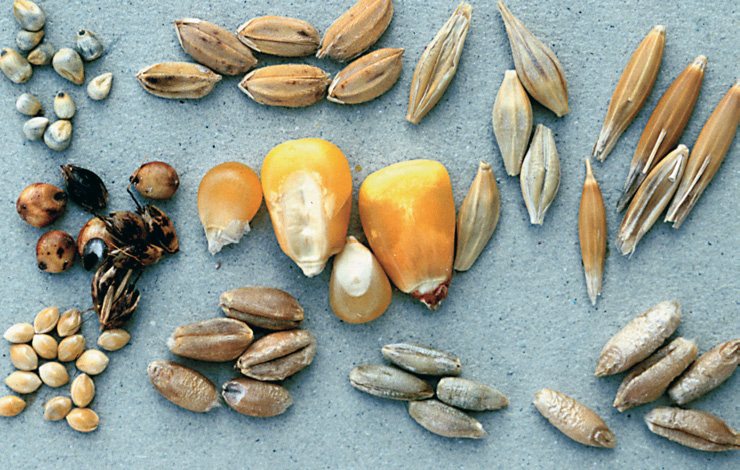
A caryopsis is a dry, one-seeded fruit that does not split open at maturity, with the fruit wall, or pericarp, tightly fused to the seed coat. That fusion is what makes a grain look so much like an ordinary seed: the fruit and seed are packaged together so intimately that separating them is generally not practical.
This makes a cereal grain very different from a fleshy fruit such as a tomato. In both cases, the fruit develops from the flower's ovary. But instead of becoming juicy and fleshy, the ovary wall of a cereal flower matures into a thin, dry pericarp surrounding its single seed.
So a wheat kernel is not merely a naked seed.
It is a fruit containing a seed, with their outer tissues effectively laminated together.
What Is Inside the Grain?
Since we have spent several articles talking about fruits, this is where we finally need to look inside the seed itself.
A seed has three major jobs:
-
protect the next generation,
-
store or provide access to nutrients,
-
and contain the embryo, the young plant that can eventually grow into a new individual.
The seed coat, also called the testa, provides protection around the seed. Inside is the embryo, often called the germ in cereal processing, which is the young plant. Most of the seed's interior is occupied by the endosperm, a nutrient-rich tissue that stores much of the starch used to support the developing plant.
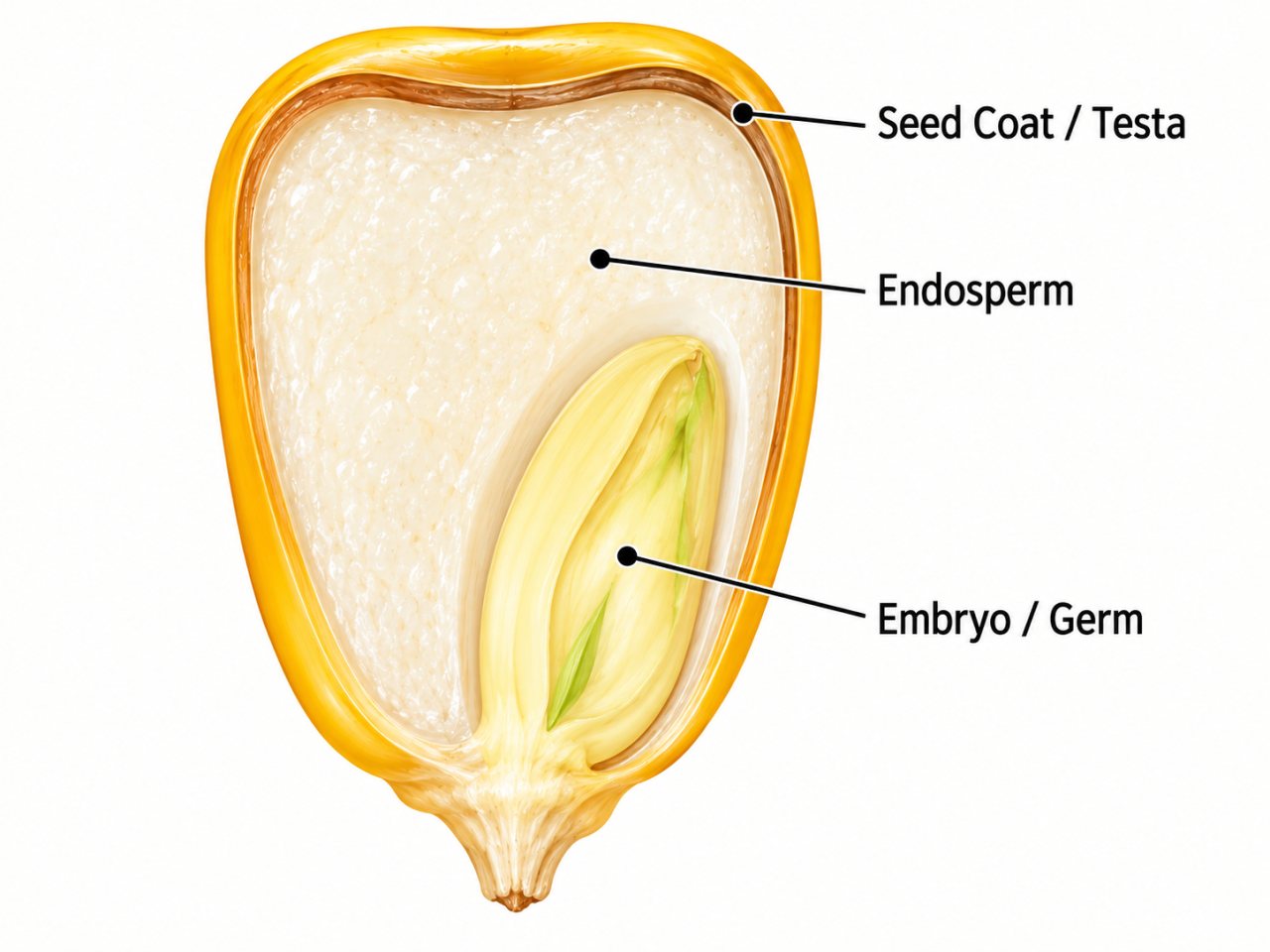
In corn, for example, the embryo sits to one side of an enormous endosperm packed with stored nutrients. The outer pericarp surrounds the whole structure and is fused tightly to the seed.
That large endosperm is also a major reason cereal grains became so important to humans.
We discovered that plants had conveniently packed enormous stores of carbohydrates into tiny, dry, transportable structures.
The embryo presumably had other plans for it.
Fruit Tissue and Seed Tissue Are Both in There
This is where grain anatomy gets especially interesting.
The pericarp is maternal tissue. It comes from the ovary wall of the parent plant.
The seed tissues inside it have a different developmental origin. The embryo forms from the fertilized egg, while the endosperm forms during the reproductive process and serves primarily as nutritive tissue.
So one tiny grain can contain tissues with different biological histories, all pressed together into what looks like one simple kernel.
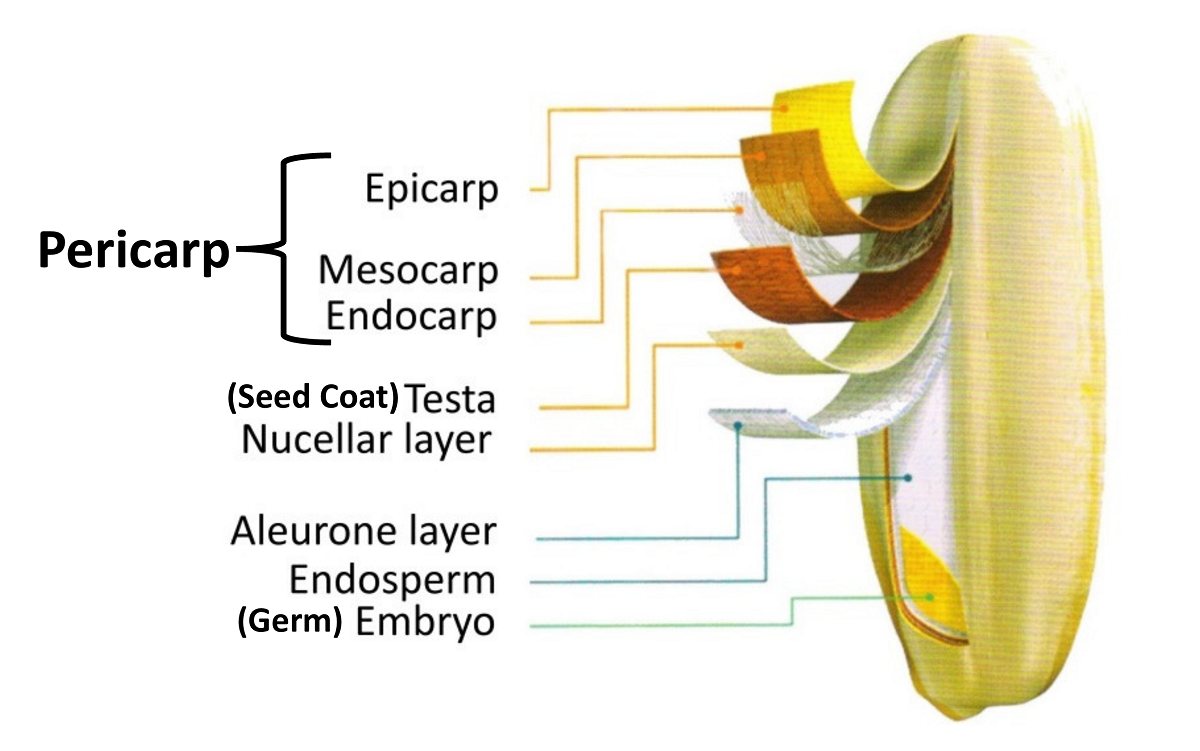
Studies of rice make this particularly clear. A rice caryopsis contains maternal tissues including the pericarp and testa, along with the embryo and endosperm produced during seed development. In the mature grain, those structures are packed tightly together.
And What Exactly Is “Bran”?
This is also why we should be careful about saying that bran equals the fruit wall.
It doesn't.
In commercial grain terminology, bran refers to outer grain tissues removed or retained during processing, and the exact anatomical contribution depends on the cereal and the milling process.
In rice, for example, polishing removes not only the pericarp, but also seed-associated tissues including the testa, aleurone, and embryo. White rice is therefore mostly the starchy endosperm left behind.
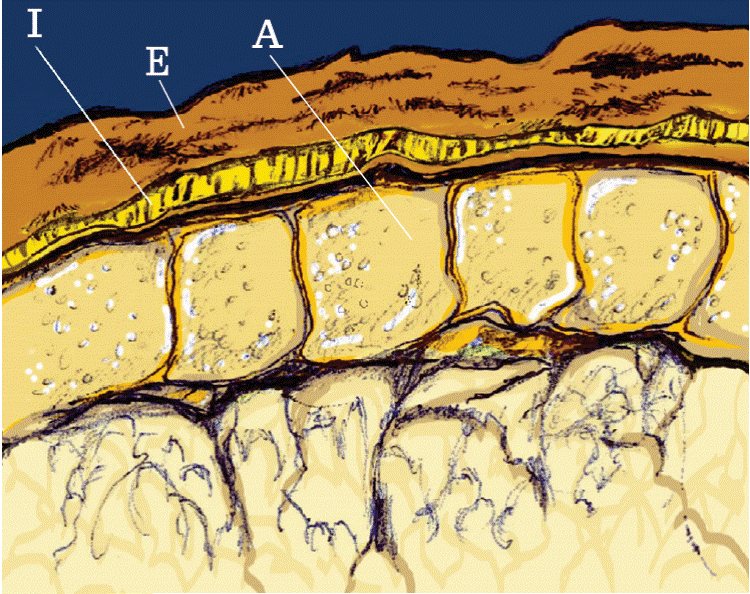
So the bran includes fruit-derived tissue, but it is not simply another name for the pericarp.
Botany and food processing have apparently created overlapping terminology just to make sure nobody gets overconfident.
The Husk Is Another Structure Entirely
Some cereal grains arrive with yet another wrapper.
In rice, oats, and many forms of barley, the harvested grain may still be enclosed by floral structures called the lemma and palea. Together these form what we commonly call the hull or husk.
Those structures are not the fruit wall.
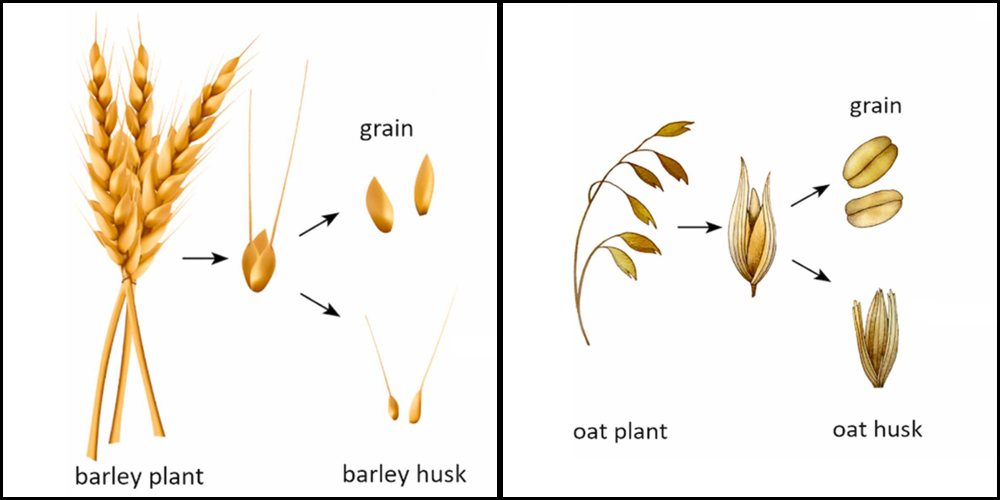
They are modified floral bracts surrounding the actual caryopsis. They can be physically removed while leaving the fruit underneath. Wheat, rye, corn, and sorghum generally separate more readily from these floral coverings during harvesting, while rice and oats commonly retain them until processing.
That gives us several nested structures:
husk, when present → caryopsis → pericarp fused to seed coat → endosperm + embryo
Apparently the grain was wearing layers.
Brown Rice Versus White Rice Shows the Anatomy in Action
Rice processing provides one of the clearest demonstrations.
First, dehusking removes the lemma and palea, exposing the caryopsis. The result is brown rice.
Next, milling/polishing removes the bran layers from the outside. Depending on how far processing goes, the germ, or embryo, may also be removed. What remains is mostly the starchy endosperm we recognize as white rice.
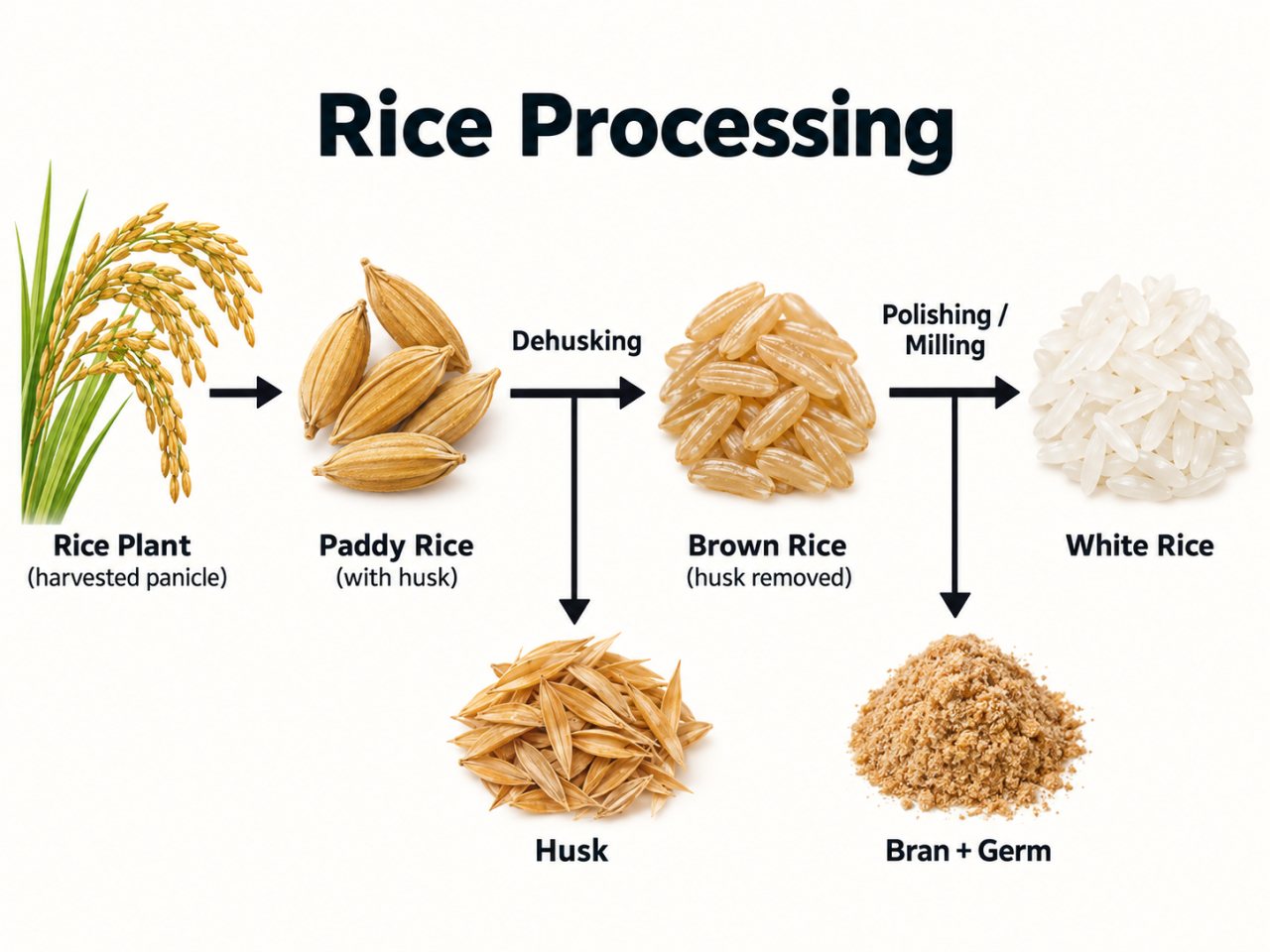
So the anatomical difference between brown and white rice is not merely a change in color.
Processing has physically stripped away portions of the original fruit-and-seed package.
What About Bread and Breakfast Cereal?
This is where the terminology gets especially slippery.
A whole cereal grain is botanically a fruit, because the grain itself is a caryopsis: a dry fruit in which the fruit wall is fused tightly to the seed coat.
But that does not mean every food made from grain is still botanically a fruit.
Processing matters.
In whole-grain foods, much of the original caryopsis remains, including the bran, which contains the pericarp or fruit wall along with other outer tissues. But in refined grains, those outer layers are largely removed during milling, often along with the germ, leaving mostly the starchy endosperm.
So white bread is not just a mashed-up fruit in the way applesauce is still mashed-up apple. In applesauce, the fruit tissue is still there. In refined wheat flour, much of the actual fruit tissue has been stripped away before the bread is made.
The same distinction applies to many breakfast cereals. Some are made from whole grains and retain most of the original caryopsis. Others are made from highly refined grain ingredients that consist mostly of endosperm.
So yes, the bread and cereal aisles are full of foods derived from botanical fruits.
But no, that does not mean a slice of white bread counts as an intact fruit.
And it definitely does not mean your nutritionist is going to accept “toast” as your daily serving of produce. 😜
Sources
-
Poaceae: 15-Spikelet and caryopsis
University of Illinois. “Poaceae: 15-Spikelet and caryopsis.” Digital Flowers.
Why this source matters: Provides a concise university reference defining the grass fruit, or caryopsis, and explaining its defining feature: the seed coat is fused to the pericarp.
-
9.1 Seed Morphology
Michaels, T., Clark, M., Hoover, E., Irish, L., Smith, A., & Tepe, E. (2022). “9.1 Seed Morphology.” In The Science of Plants: Understanding Plants and How They Grow. Emily Tepe, ed. University of Minnesota Libraries Publishing.
Why this source matters: Explains basic seed anatomy and function, including the embryo, seed coat, endosperm, and nutrient storage, and specifically uses corn to show how the pericarp of a caryopsis is fused to the seed.
-
Rice caryopsis development I: Dynamic changes in different cell layers
Wu, X., Liu, J., Li, D., & Liu, C.-M. (2016). Rice caryopsis development I: Dynamic changes in different cell layers. Journal of Integrative Plant Biology, 58(9), 772–785.
Why this source matters: Primary research providing detailed anatomical evidence for rice caryopsis structure and development. It distinguishes the pericarp, testa, embryo, and endosperm; shows that the lemma and palea form a separable husk around the caryopsis; and documents what tissues are removed during dehusking and polishing.
-
Chapter 1: Structure of Cereals
Delcour, J. A., & Hoseney, R. C. (2010). Structure of Cereals. In Principles of Cereal Science and Technology (3rd ed., pp. 1–22). AACC International.
Why this source matters: Authoritative cereal-science reference covering the structure of wheat, corn, rice, barley, rye, oats, sorghum, and other cereal grains. It explains that cereal grasses produce dry, one-seeded fruits called caryopses and distinguishes naked caryopses from grains such as rice, oats, and barley that commonly retain surrounding hull structures after harvest.