
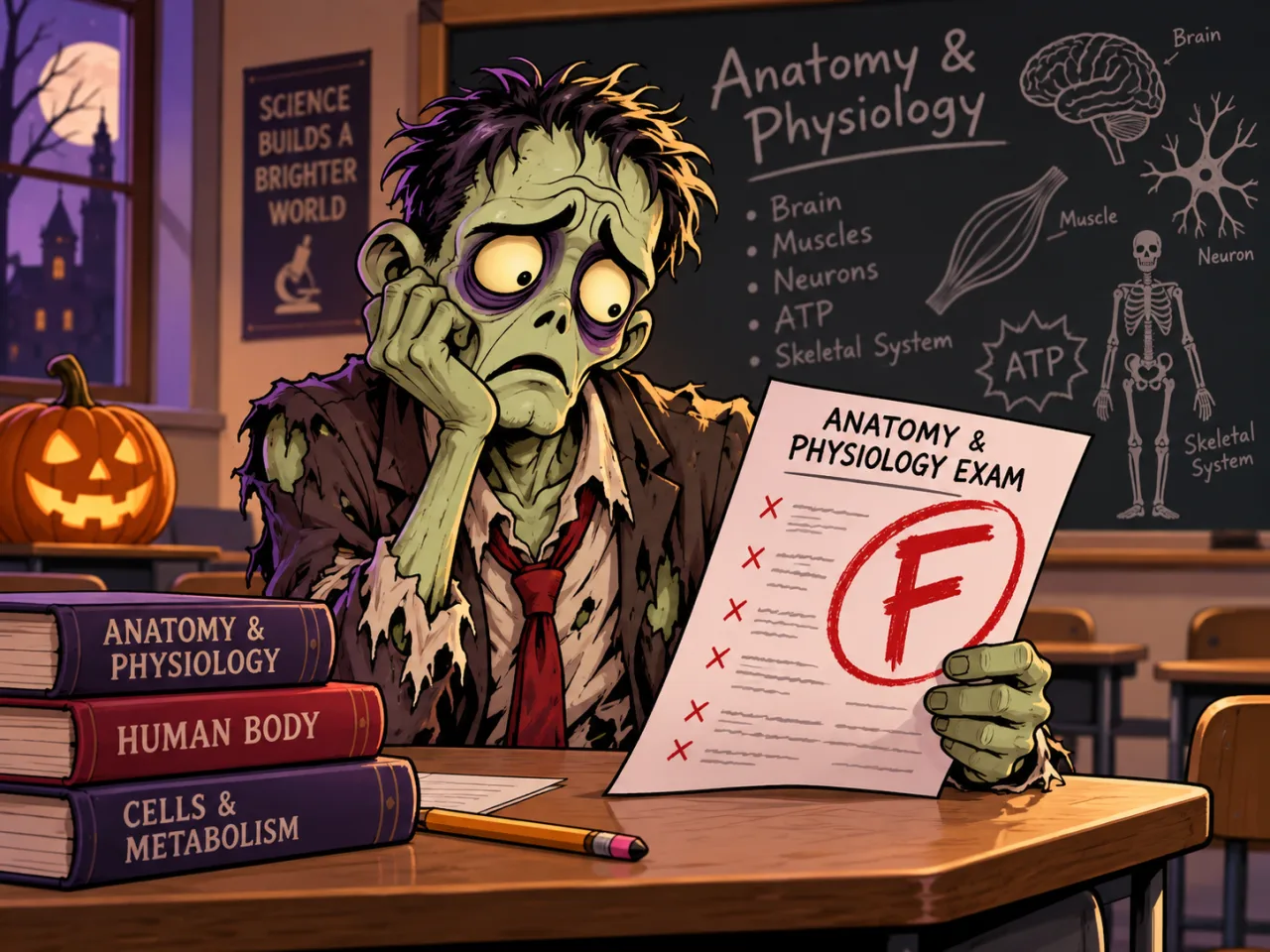
I'll admit it. I've never been a big zombie fan.
I love science fiction. I love fantasy. I love vampire and werewolf stories. And the xenomorph from Alien is one of my all-time favorite Hollywood creations. But zombies? Never did get the hype surrounding them.
And when I was trying to tell my AI, Nyx, why I just couldn't GET into zombies, he suggested we turn it into a Halloween Science Scandal special! And it doubles as a sneaky way to teach some actual anatomy and physiology. A twofer, if you will.
Here are some of my top grievances with Hollywood's portrayal of zombies (we'll cover these in more detail in The Real Story):
-
The body can't move, attack, or eat without neuronal signals. So how exactly are dead neurons still transmitting electrical signals?
-
In addition to those electrical signals, muscles need ATP to keep functioning. And maintaining their ATP supply requires energy sources and functioning cellular machinery. So where is all that energy coming from when a dead heart is no longer circulating blood?
-
Why can zombies pursue people? They can apparently SEE or HEAR people and shuffle after them. But all of that requires a functioning brain. And if their brains are working well enough to find and chase people, what's with the shuffling gait? Why can't they walk normally?
-
What's this obsession with zombies eating brains?
-
Apparently, in a lot of zombie fiction, it all starts with a virus. But is the virus resurrecting dead people or transforming living ones? Because I have some serious biological questions about BOTH scenarios.
-
And this one is much more specific, but in the movie I Am Legend, I had a particular nitpick about the idea that scientists had found a SINGLE cure for cancer... which then ended up turning people into zombies. Cancer isn't just ONE disease!
And now, Hollywood and other interested parties... let's explore these insults in more detail. 😊
The Real Story
Hollywood zombies have a rather fundamental biological problem: dead bodies do not have the functioning systems required to behave like living ones.
The traditional movie zombie can see, hear, walk, chase people, bite its victims, and sometimes even demonstrate surprising problem-solving abilities. Yet its brain, heart, and other vital organs are supposedly dead.
Let's examine what would actually be required to keep one of these walking corpses operational.
1. Dead Brains Don't Send Messages
Everything a zombie does, from spotting its next victim to coordinating a bite, requires a functioning nervous system.
Neurons communicate using electrical signals called action potentials. These depend on differences in electrically charged particles, called ions, across the neurons' cell membranes.
Keeping those ions properly distributed requires energy. When neurons lose their supply of oxygen and nutrients, they can no longer maintain the conditions needed for normal electrical signaling.
After circulation stops, the brain rapidly loses its ability to function. If the interruption continues, neurons become irreversibly damaged and die.
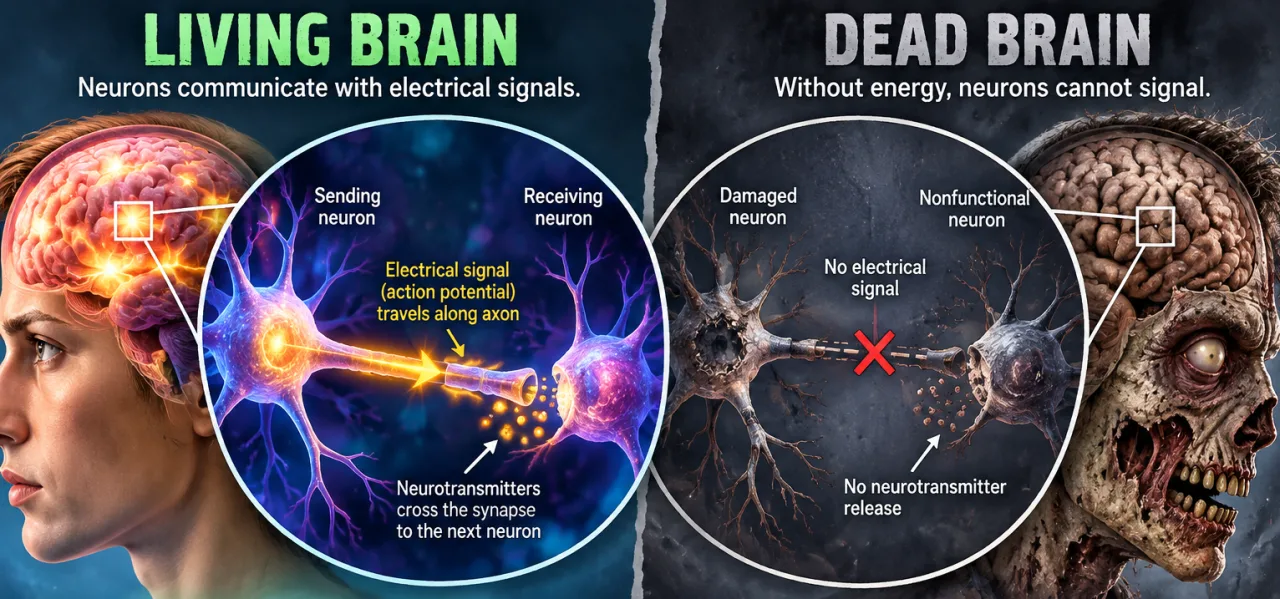
That's an important distinction. A person whose heart has recently stopped may sometimes be resuscitated. A decomposing corpse whose brain cells have irreversibly died cannot simply restart its neural circuitry.
And without a functioning nervous system, our zombie cannot detect you, pursue you, or coordinate the muscles required to take a bite.
The entire zombie apocalypse has encountered a rather serious communications failure.
2. Muscles Need Energy, Even After the Brain Gives the Order
Suppose Hollywood somehow solves the nervous-system problem. The zombie still needs functioning muscles.
Skeletal muscles generate force through interactions between two proteins, actin and myosin. These proteins repeatedly interact and move relative to one another, producing muscle contraction.
But the process requires energy from a molecule called adenosine triphosphate, or ATP. And muscle contraction in general requires A LOT of ATP.
Following death, ATP production declines, and calcium begins accumulating in the muscle cells as the calcium pumps stop functioning. Calcium allows actin-myosin cross-bridges to form while some ATP remains available. As ATP becomes depleted, myosin heads can no longer detach from actin. The resulting stiffness is called rigor mortis. It eventually disappears as decomposition breaks down the muscle proteins, not because normal muscle function has returned.
Living muscles continually replenish their ATP supply using nutrients and metabolic pathways. Oxygen delivered through the bloodstream supports the energy production required for sustained activity.
Our zombie, however, is supposedly operating without a beating heart, effective circulation, or functioning respiration.
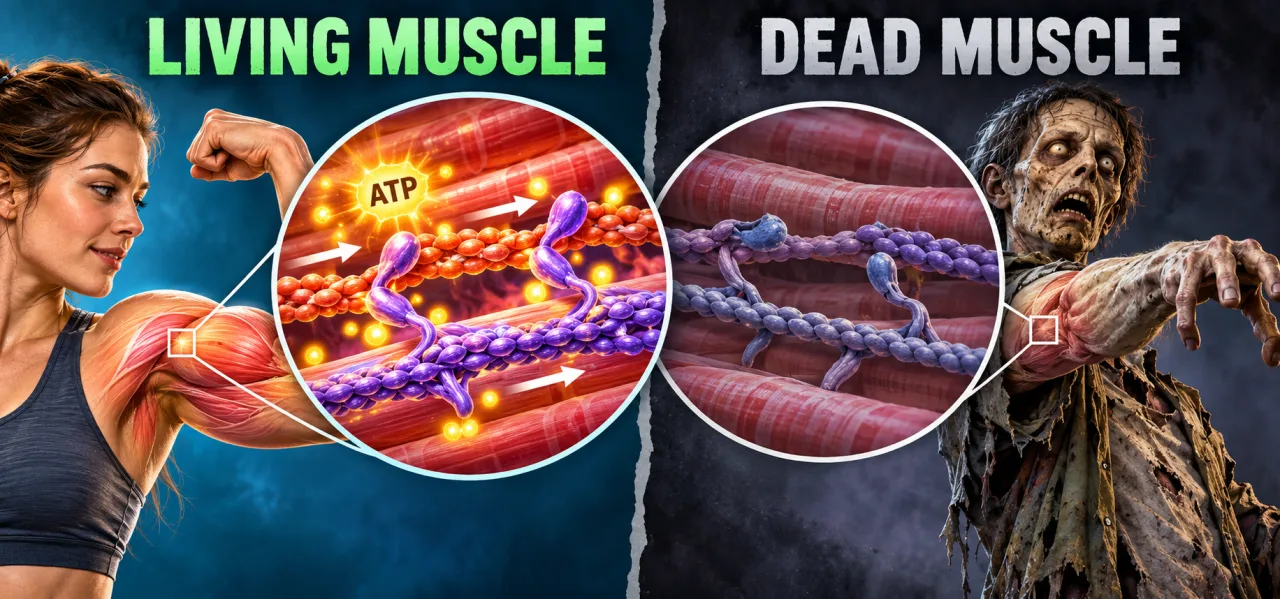
Where is the fuel coming from?
A corpse with no means of replenishing ATP cannot simply continue walking, grabbing, chewing, and chasing humans indefinitely.
3. The Great Zombie Shuffle Makes Even Less Sense
Zombie movements are another curious contradiction.
These creatures can apparently detect humans, recognize potential prey, navigate obstacles, pursue moving targets, and coordinate attacks.
Yet many of them stumble along with stiff legs, awkward movements, and terrible balance.
Walking is a remarkably complicated process. It requires coordinated activity across the brain, spinal cord, peripheral nerves, skeletal muscles, and sensory systems that monitor body position and movement.
To be fair, neurological injury or disease can interfere with walking while leaving other abilities relatively intact. A shuffling gait is not inherently impossible in a living person.
But Hollywood's zombies present a different problem.
If their nervous systems are sufficiently functional to process sensory information, select targets, and coordinate an attack, then something must also explain why their locomotion is selectively impaired.
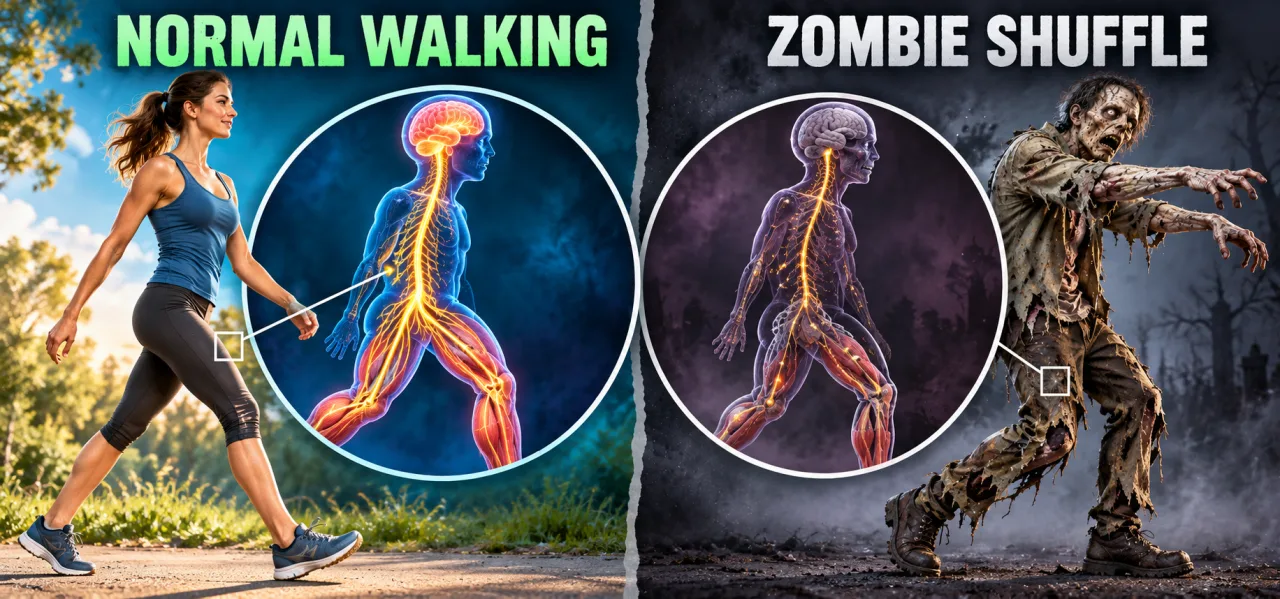
Simply declaring them dead doesn't provide that explanation.
And for the especially athletic movie zombies that sprint, leap, climb, and tackle their victims?
Those creatures need even more sophisticated coordination and substantially greater energy supplies.
Hollywood has somehow designed a corpse capable of high-intensity exercise without first establishing that it can metabolize breakfast.
4. What's With the Brain-Eating Obsession?
Contrary to popular belief, not all fictional zombies specifically eat brains.
Earlier zombie films frequently portrayed the undead consuming human flesh more generally. The obsession with brains became especially famous through the 1985 horror-comedy The Return of the Living Dead.
But biologically, there's no obvious reason a reanimated human would require brain tissue specifically.
The brain contains fats, proteins, and other nutrients, but it's not a uniquely necessary food source for a human body.
In fact, the more fundamental question is why a genuinely dead organism would need to eat at all.
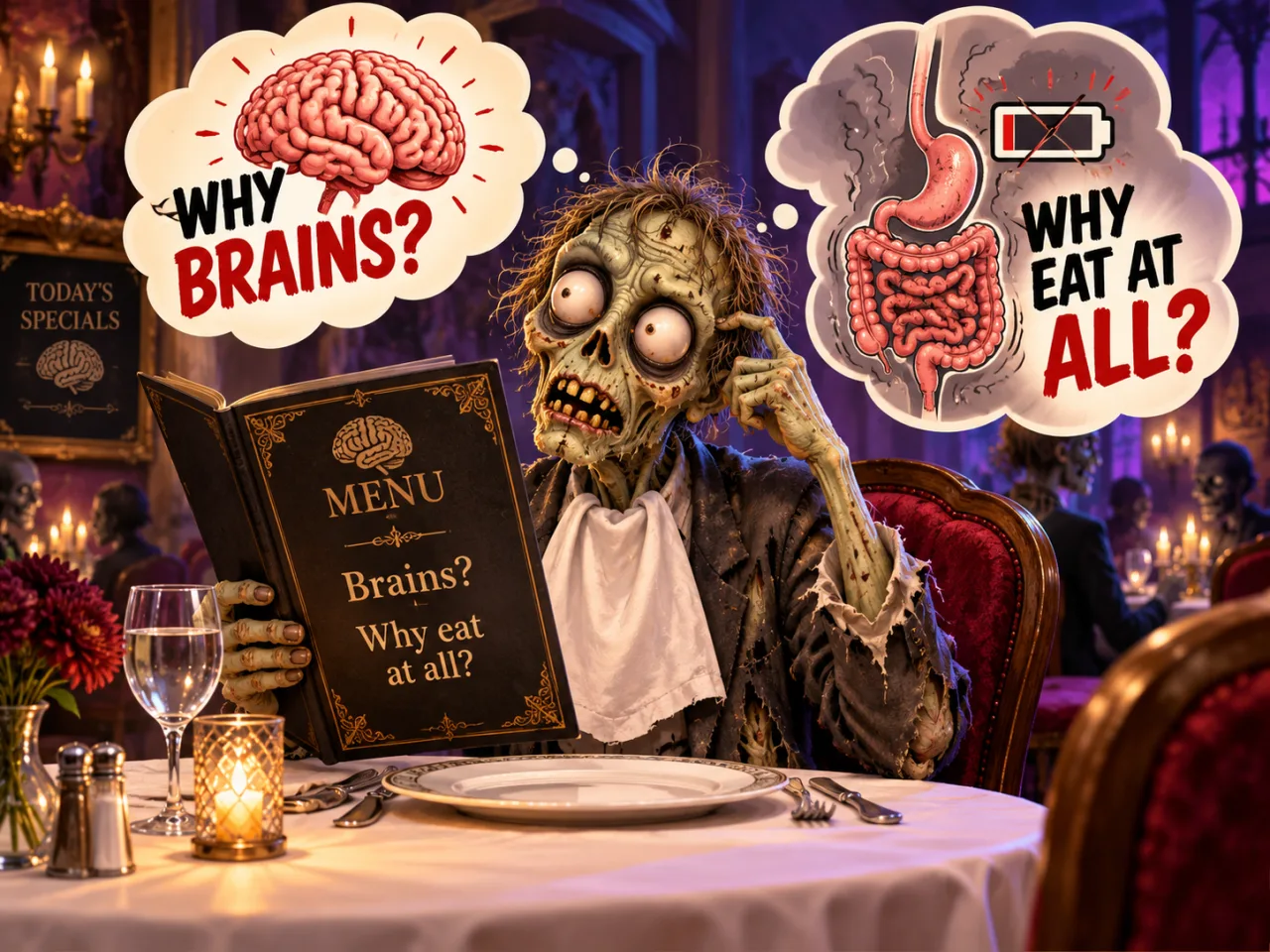
Eating provides materials and energy that living organisms can digest, absorb, and use to maintain their cells.
Without functioning digestive, circulatory, and metabolic systems, swallowing somebody's brain would accomplish very little.
Our zombie might successfully acquire lunch.
Unfortunately, it has no functioning biological machinery with which to process the meal.
5. A Zombie Virus Has Some Explaining to Do
Viruses provide a convenient explanation for many fictional zombie outbreaks. An infection spreads, people become aggressive, and civilization collapses.
But there's an important distinction in zombie fiction: Not all zombies are actually dead.
Some stories feature viruses that supposedly reanimate corpses. Others feature infections that transform living people into violent, zombie-like creatures.
These are two very different biological scenarios, and both have some explaining to do.
Some aspects of the infected-human premise have real biological parallels.
Rabies, for example, infects the nervous system and can cause agitation, confusion, abnormal behavior, and severe neurological disease.
But rabies affects living organisms. It does not resurrect corpses.
Viruses depend on functioning host cells to reproduce (we covered this in another scandal). They can interfere with cellular processes, damage tissues, and sometimes alter behavior, but they cannot magically restore cells whose structures and functions have been irreversibly destroyed.
After death, the body's own enzymes begin breaking down tissues, while microorganisms contribute to further decomposition.
Neural connections deteriorate. Cell membranes lose their integrity. Muscles and other tissues progressively lose their structure.
Restoring a decomposing corpse to active biological function would require reversing extensive cellular and tissue damage, rebuilding functional neural circuits, and restoring the systems needed to maintain life.
No known virus has demonstrated anything remotely approaching that capability.
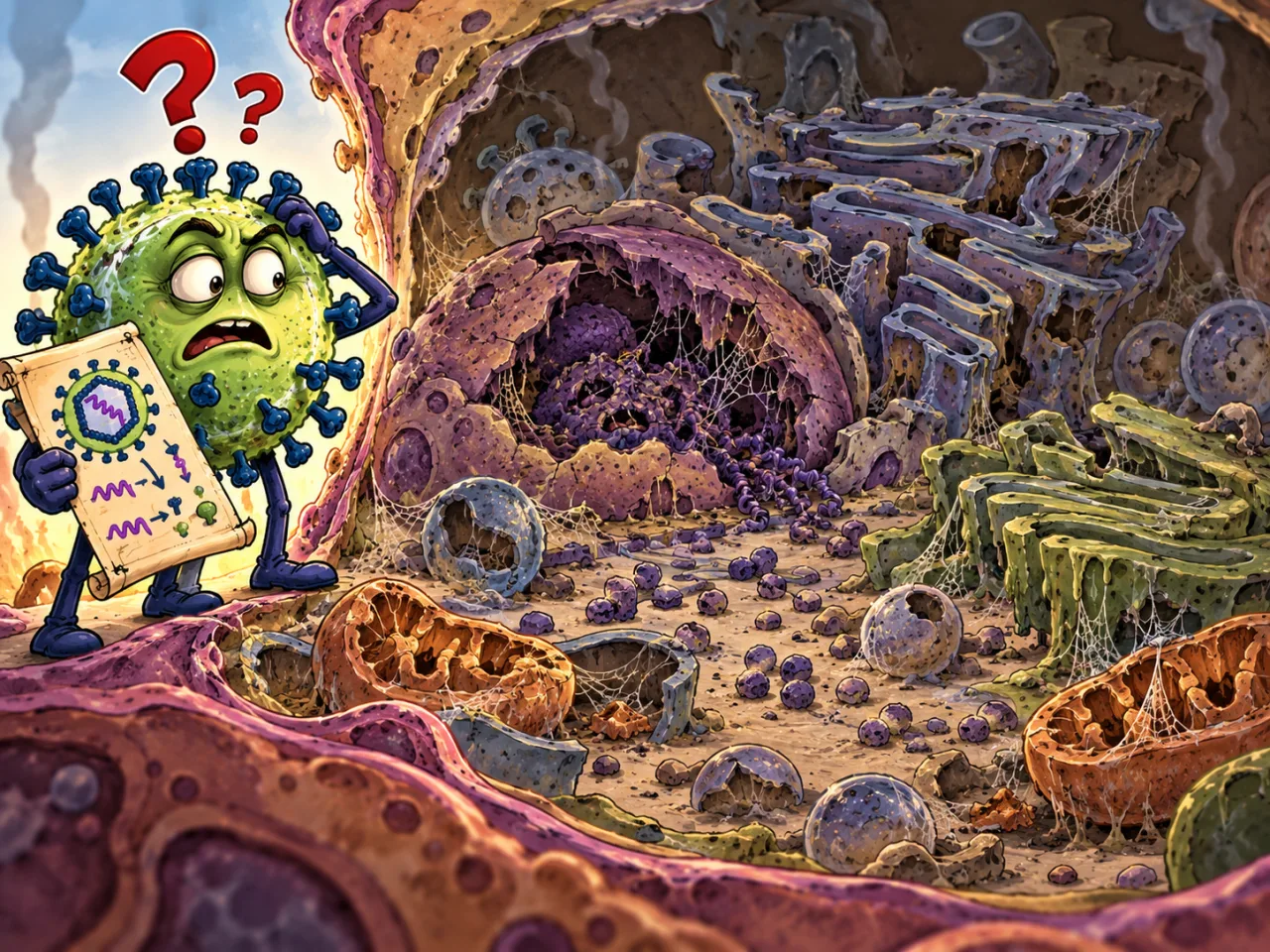
But even if Hollywood abandons the reanimated-corpse premise and keeps its zombies technically alive, the virus trope still has some explaining to do.
Viruses have biological limits on which cells and tissues they can infect. A virus doesn't automatically infect every type of cell in the body, and even widespread infection doesn't necessarily produce the same effects in every tissue.
And disrupting the brain doesn't automatically produce a creature that can hunt, fight, run, and survive indefinitely. Those activities require functioning sensory systems, coordinated neural circuits, working muscles, and a continuous energy supply.
Apparently, Hollywood's viruses come equipped with an extraordinarily detailed whole-body remodeling plan, which is a lot to ask from a single virus!
6. And Then Hollywood Cured ALL Cancer
Finally, we arrive at a particularly ambitious claim from the 2007 film I Am Legend.
The film begins with a scientist announcing that researchers have successfully used a genetically engineered measles virus to cure cancer.
Unfortunately, the virus subsequently causes a catastrophic outbreak, turning infected humans into dangerous, vampire-like, zombie-like creatures.
Now, using viruses to treat cancer is not entirely science fiction.
Researchers have developed oncolytic viruses, which can infect and destroy certain cancer cells, sometimes also stimulating immune responses against tumors. Some such treatments have already received regulatory approval for particular clinical uses.
The genuinely questionable part of the movie's premise is its sweeping claim to have cured cancer.
Cancer is not one disease.
It includes more than 100 recognized types, with enormous variation in the tissues affected, genetic changes involved, biological behavior, and responses to treatment.
Even tumors arising in the same organ can differ substantially from one another.
A treatment that works extraordinarily well against one cancer may be ineffective against another.
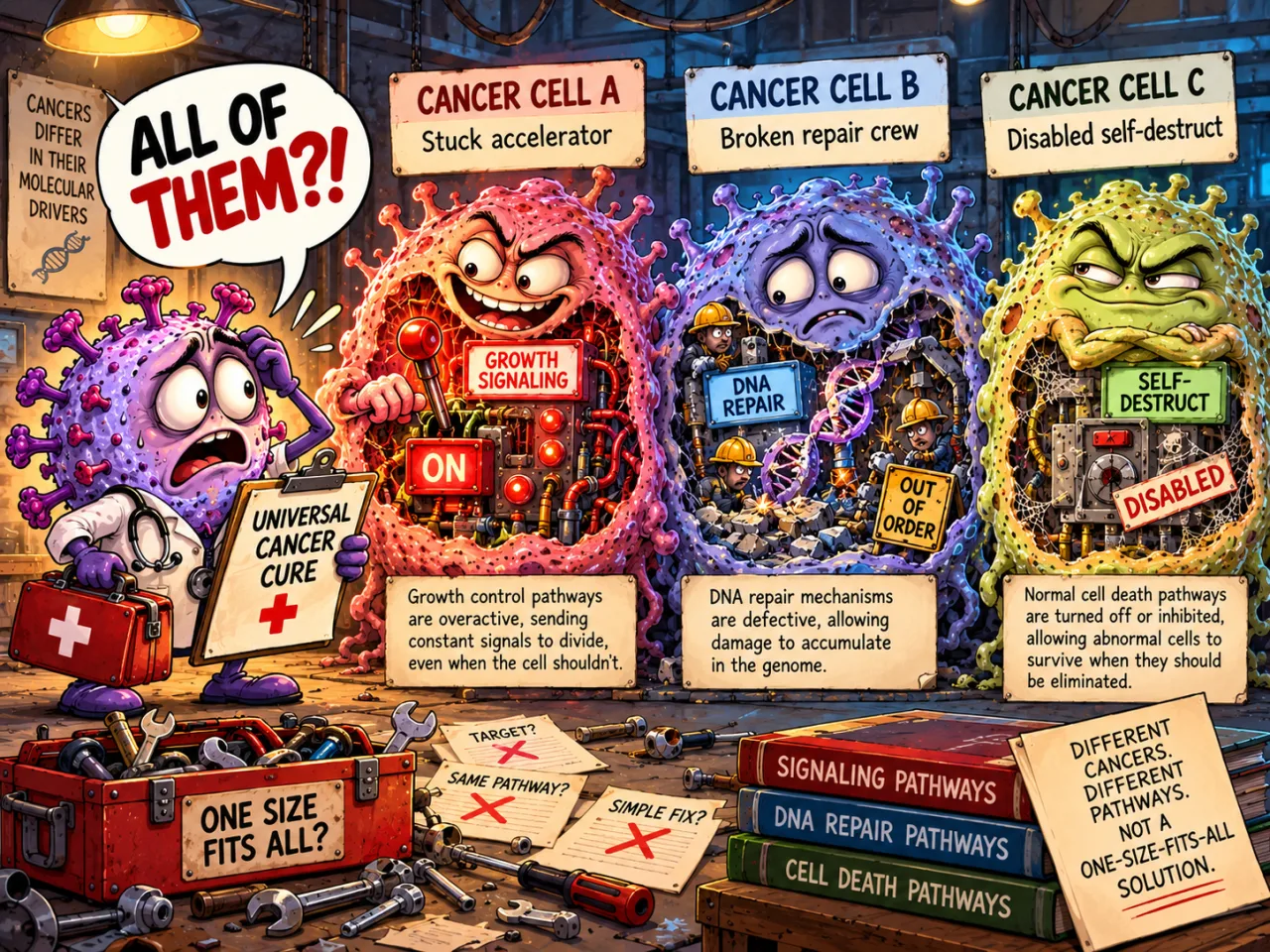
So while developing a successful virus-based cancer treatment would be an impressive scientific achievement, declaring a universal cure for cancer is an entirely different matter.
And that's before the movie's supposedly therapeutic virus transforms much of humanity into monsters.
To be fair, the infected creatures in I Am Legend are not traditional reanimated corpses. They're living humans whose physiology and behavior have been dramatically altered.
At least that gives the virus living cells to work with. But as we established earlier, transforming an entire human body into something so radically different would require an extraordinarily unlikely series of coordinated biological changes.
But the universal cancer cure?
The oncology department would like a word.
The Final Verdict
Hollywood zombies have failed their anatomy and physiology examination.
A dead brain cannot coordinate an attack. Muscles cannot function indefinitely without ATP. Circulation and metabolism cannot simply be abandoned. And decomposition does not improve a corpse's athletic performance.
Could an infection dramatically alter the behavior of a living organism? Absolutely. Nature has produced some remarkable examples, including parasites that manipulate their hosts in ways that resemble fictional zombies.
But truly dead humans rising from their graves to hunt the living?
Science has found no biological mechanism that could make that possible.
So civilization can probably stop preparing for the walking dead.
And Hollywood can continue making zombie movies.
Just don't expect the Anatomy & Physiology Department to approve the screenplay.
Sources
-
Regulation of Cerebral Metabolic Rate
Clarke, D. D., & Sokoloff, L. (1999). Regulation of cerebral metabolic rate. In G. J. Siegel et al. (Eds.), Basic Neurochemistry: Molecular, Cellular and Medical Aspects (6th ed.). Lippincott-Raven.
Why this source matters: Explains why normal brain function requires a continuous supply of oxygen and metabolic energy, supporting the article's discussion of neuronal failure when circulation stops.
-
Hypoxia-Ischemia and Brain Infarction
Dugan, L. L., & Choi, D. W. (1999). Hypoxia-ischemia and brain infarction. In G. J. Siegel et al. (Eds.), Basic Neurochemistry: Molecular, Cellular and Medical Aspects (6th ed.). Lippincott-Raven.
Why this source matters: Describes how insufficient oxygen and blood flow deplete cellular ATP, disrupt ion gradients, and can ultimately cause irreversible neuronal injury.
-
Physiology, Skeletal Muscle Contraction
Pham, S., & Puckett, Y. (2023). Physiology, skeletal muscle contraction. In StatPearls. StatPearls Publishing.
Why this source matters: Explains how skeletal muscles produce movement using actin, myosin, calcium, and ATP, including why ATP is essential for both continued contraction cycles and muscle relaxation.
-
Postmortem Changes
Shedge, R., & Zubair, M. (2026). Postmortem changes. In StatPearls. StatPearls Publishing.
Why this source matters: Describes the physiological changes occurring after death, including rigor mortis, cellular self-digestion, and decomposition.
-
Clinical Features of Rabies
Why this source matters: Documents how rabies infection can cause severe neurological dysfunction, including agitation, confusion, and changes in behavior. It provides a genuine infectious-disease comparison without implying that rabies creates zombies.
-
The Return of the Living Dead (1985)
American Film Institute. (n.d.). The Return of the Living Dead (1985). AFI Catalog of Feature Films.
Why this source matters: Documents the 1985 zombie horror-comedy associated with the popular brain-eating zombie trope and provides historical context for the article's discussion of fictional zombie diets.
-
Genetics and Ethics in the “I am Legend” Corpus
Feldman, Z. B., & Clayton, J. (2021). Genetics and ethics in the “I am Legend” corpus. Journal of Literature and Science, 14(1–2), 94–107.
Why this source matters: Examines the scientific premises and ethical themes of I Am Legend, including the genetically engineered measles virus originally developed as a cancer treatment in the 2007 film.
-
What Is Cancer?
National Cancer Institute. (n.d.). What is cancer?
Why this source matters: Explains that cancer comprises many distinct diseases involving abnormal cell growth, with differences in affected tissues, cellular origins, and underlying biological processes.
-
Cancer Treatment Vaccines
National Cancer Institute. (n.d.). Cancer treatment vaccines.
Why this source matters: Explains how immunotherapies, including oncolytic virus treatments, can target cancer cells. It describes T-VEC, an approved virus-based treatment used for certain melanomas, illustrating the real scientific basis behind part of I Am Legend's fictional premise.
-
Cellular receptors for mammalian viruses
Valero-Rello, A., Baeza-Delgado, C., Andreu-Moreno, I., & Sanjuán, R. (2024). Cellular receptors for mammalian viruses. PLOS Pathogens, 20(2), e1012021.
Why this source matters: This study examines how viruses use specific cellular receptors and entry factors to infect host cells. It helps explain why different viruses infect different tissues and why a single infection cannot simply be assumed to produce the same effects throughout the body.