
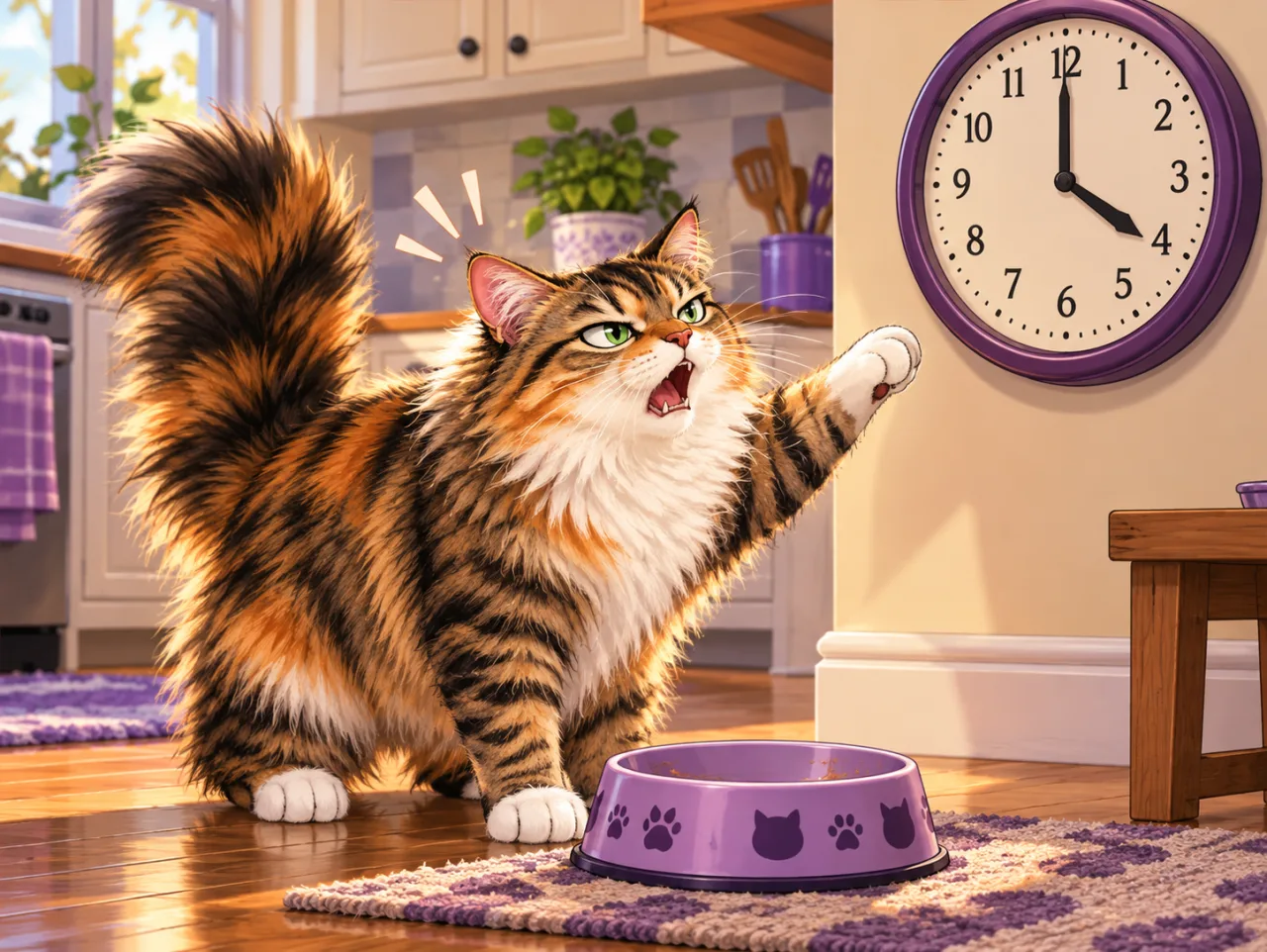
This is Millie. I have once again hijacked Momma’s keyboard to report an outrageous violation of the household feeding schedule.
This morning, I arrived for breakfast at precisely the appropriate time. I meowed. I rubbed against Momma’s legs. I performed my usual supervisory duties to ensure the wet food was delivered promptly.
Nothing happened.
Apparently, sometime during the night, the humans decided to turn all their clocks backward by one hour. Nobody consulted me. Nobody consulted my siblings. And nobody notified our digestive tracts that breakfast was now going to be late.
Momma insists that the clocks are correct.
I disagree.
And now I have learned that this ridiculous arrangement may also affect DINNER.
This is not the first time the humans have tampered with time. Every spring, they move their clocks forward an hour. I have no objection to this practice. In fact, I consider it one of their better ideas. Breakfast and dinner arrive early, and everyone is happy. Well, I am happy, which is what matters.
I hear Momma mumbling something about a "lost hour of sleep," but who cares?
But then autumn arrives, and the humans insist on moving their clocks backward again. Suddenly, breakfast is late. Dinner is late. And apparently, I'm expected to accept this because somebody decided to call 5:00 pm something else.
I have a proposal.
From now on, the clocks should move forward one hour in the spring and forward another hour in the fall.
No more turning back.
Momma says this would eventually result in breakfast occurring in the middle of the night.
I fail to see the problem.
The entire country gets an extra hour of sleep. I get an extra hour of outrage.
And if dinner is late tonight, I intend to file a second complaint.
Possibly directly on Momma's keyboard.
The Real Story
Millie may not understand daylight saving time, but she has a perfectly reasonable objection to it: changing the numbers on a clock does not instantly change an animal’s biological rhythms or learned expectations.
When daylight saving time ends in autumn, clocks move backward by one hour. If a cat normally receives dinner at 5 p.m. and her humans continue serving it at the "new" 5 p.m. after the change, that meal arrives one hour later relative to her previous routine. In spring, the opposite happens. Moving the clocks forward effectively brings the meal an hour earlier.
Of course, cats aren’t reading the kitchen clock. Their daily routines emerge from a combination of internal biological timing, environmental signals, hormones, and experience.
Many biological processes follow approximately 24-hour cycles called circadian rhythms. These rhythms are generated by internal timing systems that can be synchronized, or entrained, by regular environmental cues. In mammals, a group of neurons in the hypothalamus called the suprachiasmatic nucleus (SCN) serves as the principal circadian pacemaker, coordinating daily rhythms in activity, sleep, hormone secretion, and other physiological processes. Light and darkness provide especially important timing signals, but the body also contains additional clocks that respond to other cues, including the timing of meals.
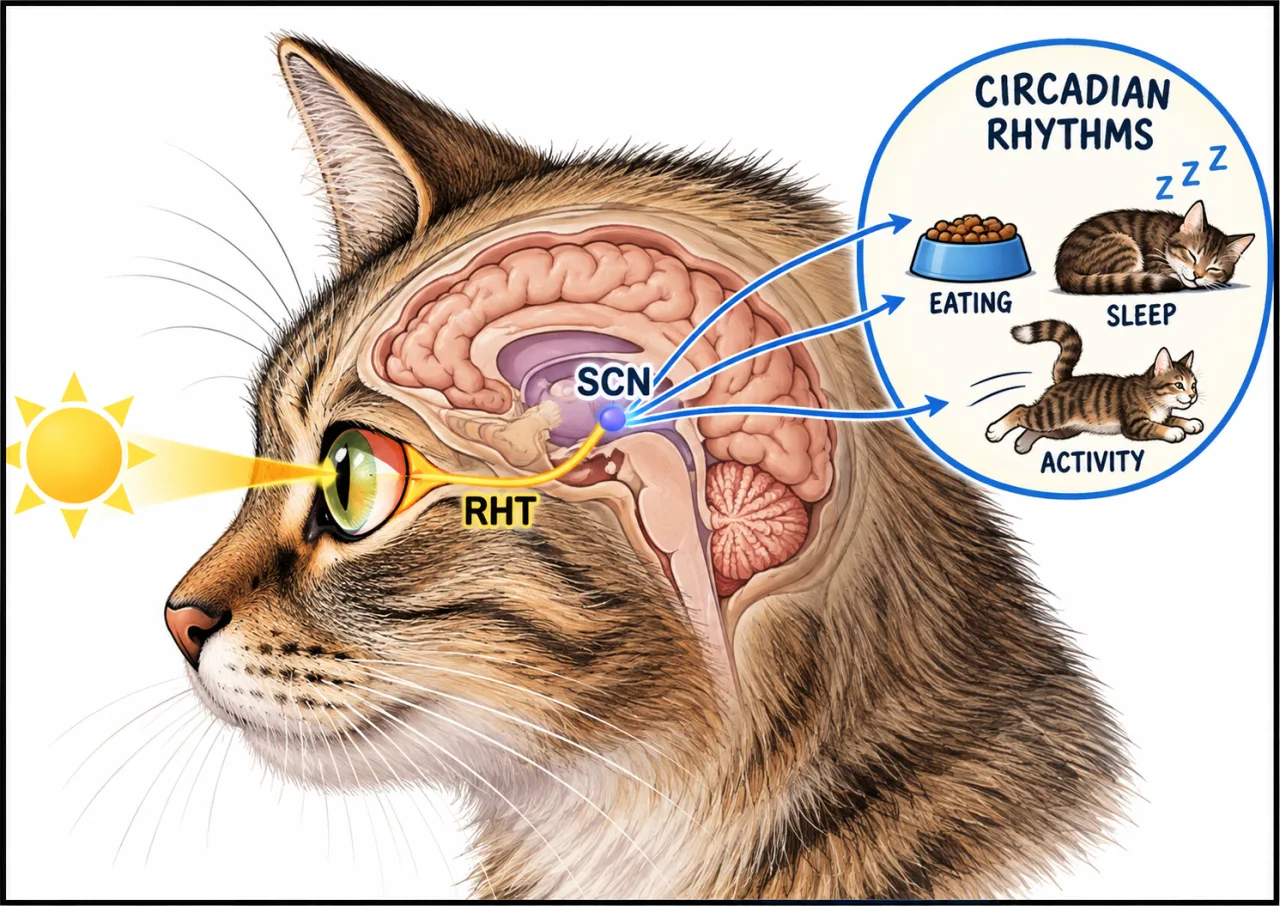
And food is an especially powerful motivator.
Animals can become increasingly active before an expected meal, a phenomenon called food-anticipatory activity. This behavior involves more than simply noticing an empty food bowl. Research in other mammals indicates that feeding schedules can synchronize biological timing systems independently of the SCN, helping animals prepare for predictable food availability.
Cats demonstrate food anticipation, too. In a 2015 experiment involving eight domestic cats, researchers compared feeding schedules of one versus four meals per day. Cats receiving four daily meals showed significantly greater anticipatory activity during the afternoon than cats fed only once daily. Their overall daily physical activity was also higher.
In other words, cats can adjust their activity around predictable feeding opportunities, even without knowing what the numbers on a clock mean.
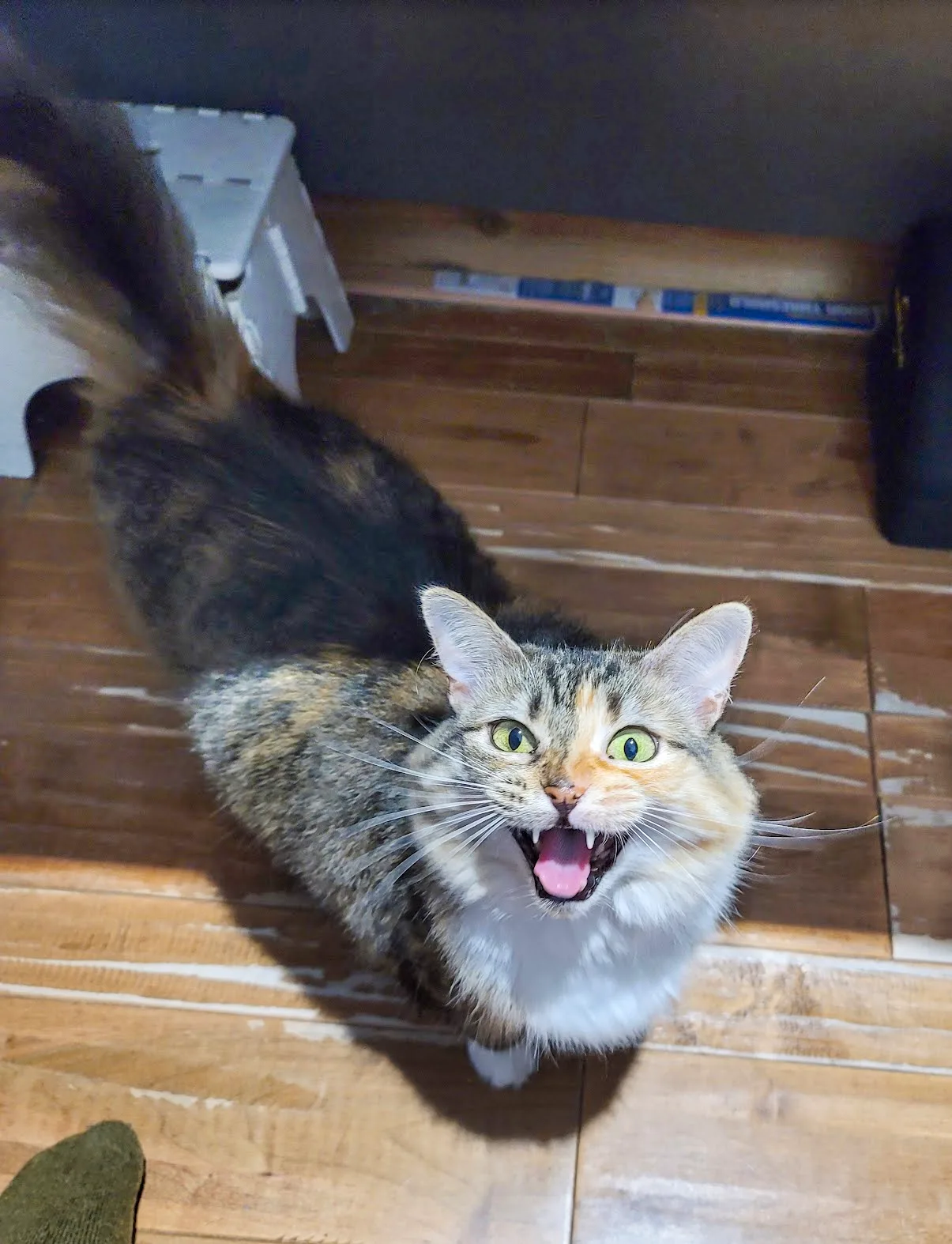
But biological timing is only part of the story. Hormones also help regulate appetite and feeding behavior.
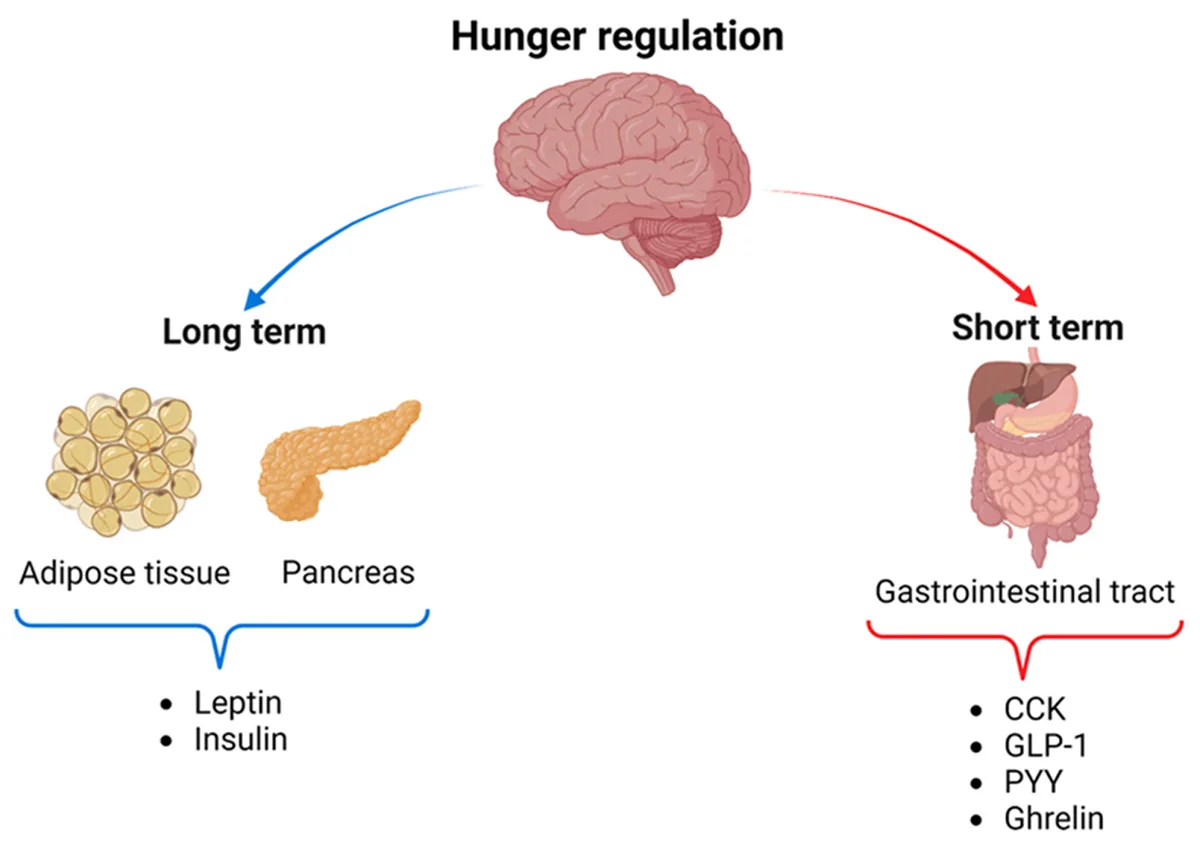
One particularly interesting hormone is ghrelin, produced primarily in the stomach and involved in stimulating hunger and food-seeking behavior. In several mammalian species, ghrelin concentrations can change around expected mealtimes, potentially helping prepare the animal to seek food.
A 2020 study examined how feeding frequency affected appetite-related hormones in eight healthy adult cats. Researchers compared cats receiving one meal per day with cats receiving four meals containing the same total daily calories. Cats fed once daily had higher circulating ghrelin concentrations, along with differences in insulin and several hormones involved in responses to meals, including GLP-1 and GIP.
The findings demonstrate that feeding schedules influence feline endocrine physiology, not merely observable behavior. The researchers suggested that the higher ghrelin concentrations might partly reflect anticipation of feeding, although the study did not establish that ghrelin caused food-anticipatory activity.
Ghrelin is not acting alone, either. Leptin, insulin, and hormones released by the digestive tract participate in regulating energy balance, appetite, and responses to food. Studies in rodents suggest that several of these signals interact with biological timing systems, but no single hormone has emerged as the master clock responsible for meal anticipation.
Cats are also remarkably flexible in their daily schedules. Although commonly described as nocturnal, domestic cats frequently show increased activity around dawn and dusk, a pattern known as crepuscular activity. Their behavior can also change in response to their environment and interactions with humans.
In a 2022 study comparing 23 cats living in indoor and outdoor enclosures, researchers found daily patterns in both movement and feeding. Indoor cats generally exhibited more stable daily routines, while both groups showed activity peaks around twilight. Human interactions also influenced feeding and activity patterns. Interestingly, the cats had continuous access to dry food, yet many still displayed recognizable daily feeding rhythms.
This flexibility matters because a cat’s expectations may reflect several overlapping signals: daylight, internal timing, hormonal activity, familiar household sounds, human behavior, and the repeated arrival of a particularly desirable meal.
And that is where daylight saving time creates a problem.
The human clock changes abruptly, but the animal’s biological and learned timing systems do not necessarily shift with it. A cat accustomed to receiving a special meal at a predictable point in the day may begin anticipating it before the newly adjusted clock says it is time.
Over repeated days, changing feeding schedules and household cues can influence those expectations. However, researchers have not established exactly how quickly domestic cats adjust to daylight saving time, and individual responses are likely to vary.
So Millie’s complaint is not entirely unreasonable. Her humans have changed the schedule, but the biological rhythms and learned associations that help her anticipate meals have not necessarily received the same update.
And having access to other food does not mean a cat will abandon an established routine involving a favorite treat.
The clock may say 4 p.m.
Millie has every reason to believe it is time for dinner.
Sources
-
Feeding frequency, but not dietary water content, affects voluntary physical activity in young lean adult female cats
de Godoy, M. R. C., Ochi, K., de Oliveira Mateus, L. F., de Justino, A. C. C., & Swanson, K. S. (2015). Feeding frequency, but not dietary water content, affects voluntary physical activity in young lean adult female cats. Journal of Animal Science, 93(5), 2597–2601.
Why this source matters: This controlled experiment demonstrated that feeding frequency influences cats' daily activity and behavior before expected meals. It provides direct evidence that domestic cats can anticipate predictable feeding opportunities.
-
The daytime feeding frequency affects appetite-regulating hormones, amino acids, physical activity, and respiratory quotient, but not energy expenditure, in adult cats fed regimens for 21 days
Camara, A., Verbrugghe, A., Cargo-Froom, C., Hogan, K., DeVries, T. J., Sanchez, A., Robinson, L. E., & Shoveller, A. K. (2020). The daytime feeding frequency affects appetite-regulating hormones, amino acids, physical activity, and respiratory quotient, but not energy expenditure, in adult cats fed regimens for 21 days. PLOS ONE, 15(9), e0238522.
Why this source matters: This experimental study measured how different feeding schedules affect appetite-related hormones in domestic cats, including ghrelin, insulin, GLP-1, and GIP. It demonstrates that feeding routines influence feline endocrine physiology as well as physical activity.
-
Comparison of Locomotor and Feeding Rhythms between Indoor and Outdoor Cats Living in Captivity
Parker, M., Serra, J., Deputte, B. L., Ract-Madoux, B., Faustin, M., & Challet, E. (2022). Comparison of locomotor and feeding rhythms between indoor and outdoor cats living in captivity. Animals, 12(18), 2440.
Why this source matters: This study compared daily feeding and activity patterns in cats living under different environmental conditions. It shows how light, housing, and human interactions help shape feline routines, including in animals with continuous access to food.
-
Circadian adaptations to meal timing: neuroendocrine mechanisms
Patton, D. F., & Mistlberger, R. E. (2013). Circadian adaptations to meal timing: Neuroendocrine mechanisms. Frontiers in Neuroscience, 7, 185.
Why this source matters: This scientific review explains how scheduled feeding interacts with circadian timing systems and metabolic hormones, including ghrelin and leptin. It provides the broader neuroendocrine background for understanding why food anticipation involves multiple biological signals rather than a single internal clock.