
Ever since COVID hit, the world has been inundated with products promising to help us fend off viruses.
Which is fair.
Viruses were around long before COVID, of course. COVID just gave them the kind of publicity campaign most pathogens can only dream of.
But whenever I see a bottle of disinfectant proudly announcing that it “kills 99.9% of viruses!” I cringe a little.
Because biologists cannot even agree on whether viruses are actually alive.
And if something is not alive, exactly what are we killing?
One reason viruses sit so awkwardly on the boundary between living and nonliving is that they cannot reproduce on their own.
But they CAN reproduce.
They just outsource the entire operation.
Unlike bacteria, which are themselves cells, viruses are packages of genetic material surrounded by protective proteins, and sometimes an additional membrane envelope. They do not arrive carrying a complete factory for making more viruses.
So they break into ours.
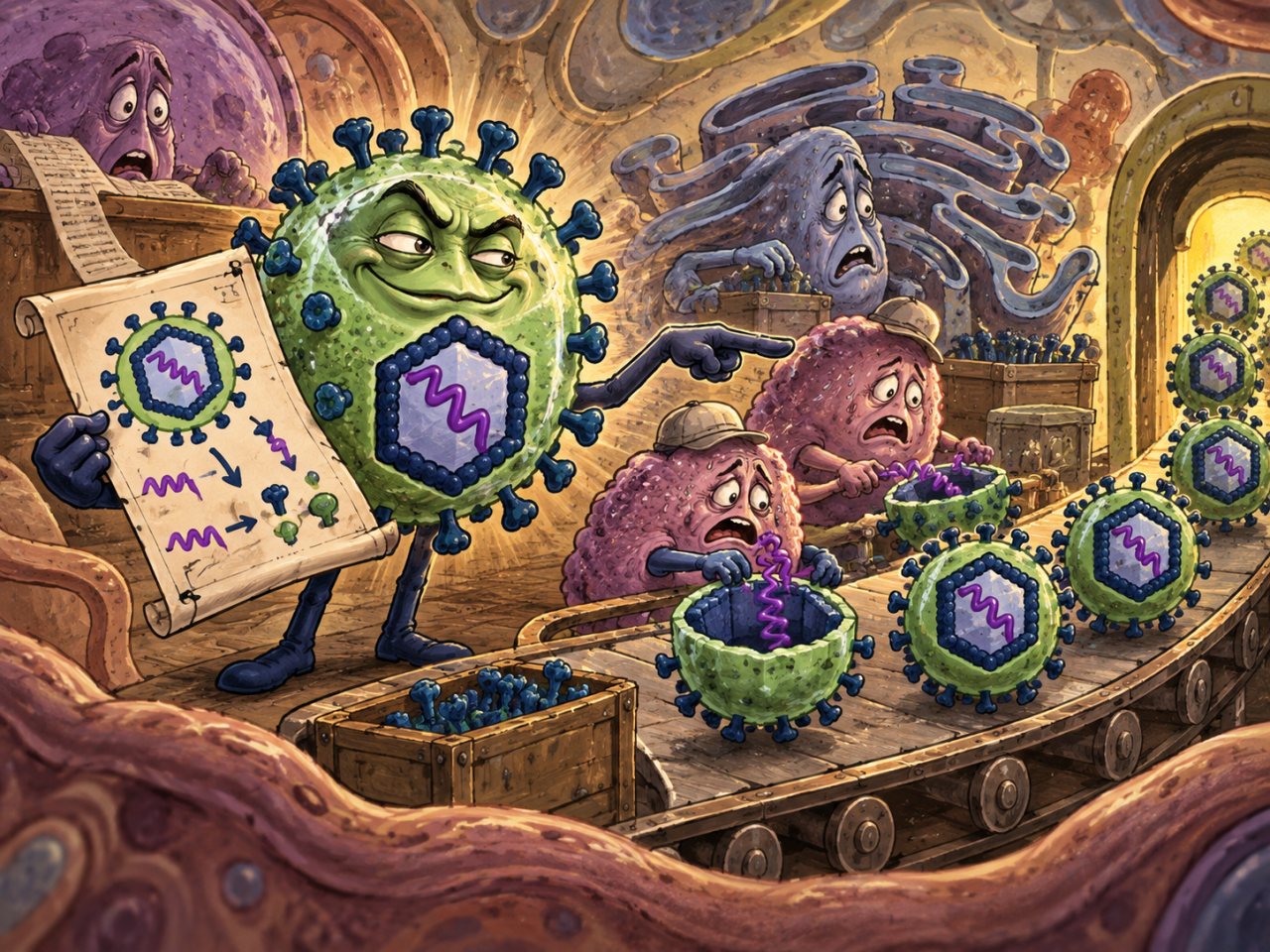
A virus attaches to a susceptible cell, gets its genetic instructions inside, and redirects the cellular machinery toward producing viral parts instead of minding its own perfectly respectable cellular business.
The result is essentially a hostile manufacturing takeover:
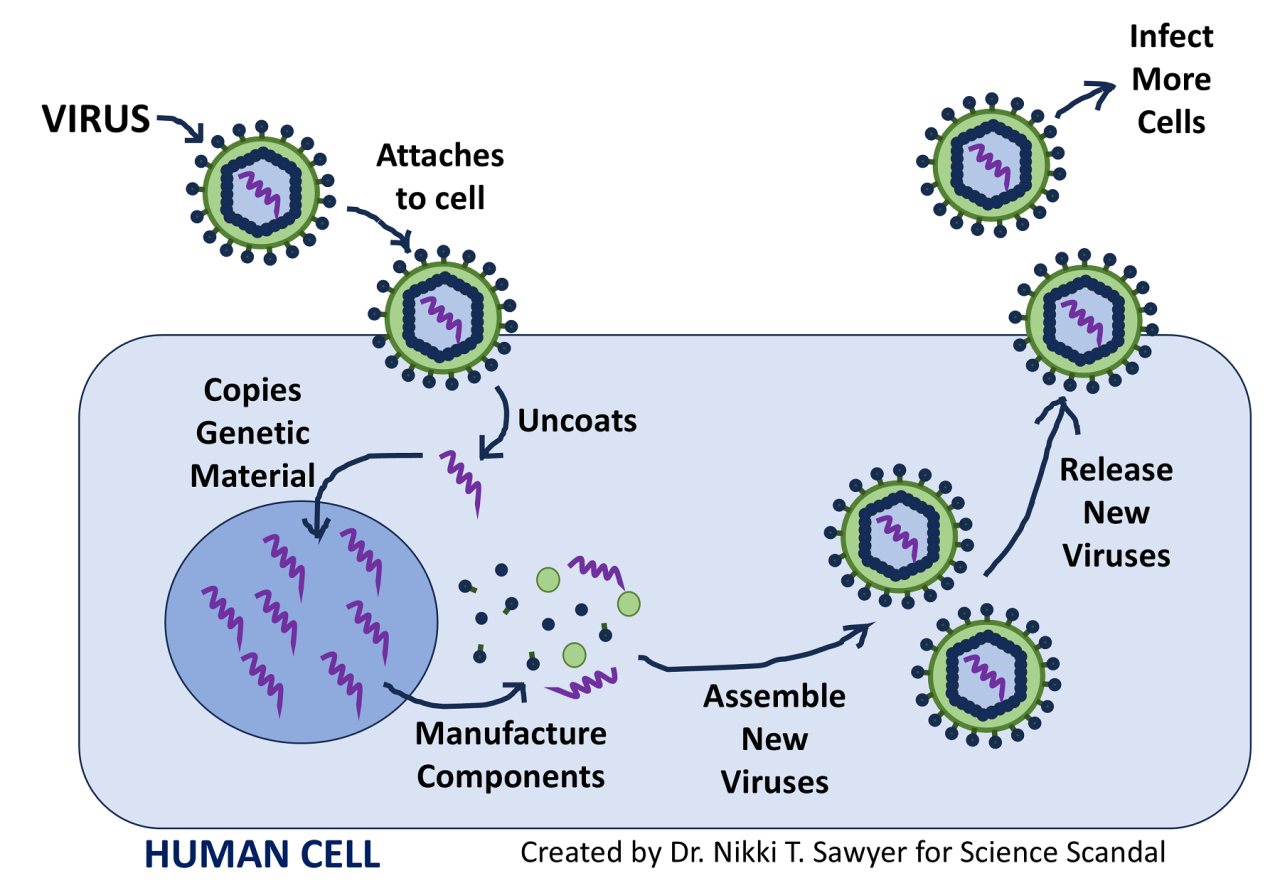
Attach to cell → Get inside and uncoat → Express viral instructions → Copy the viral genome → Manufacture viral components → Assemble new viruses → Get them out so they can infect more cells
The virus brings the blueprint.
Your cell gets reassigned to production. Without a choice.
The Real Story
Viruses are not cells.
A typical virus consists of genetic material, either DNA or RNA, enclosed in a protein coat called a capsid. Some viruses also have an outer lipid envelope. What they do not have is a complete cellular system for making more of themselves. Viruses cannot independently generate energy, and no known virus has ribosomes, the machinery cells use to translate genetic instructions into proteins.
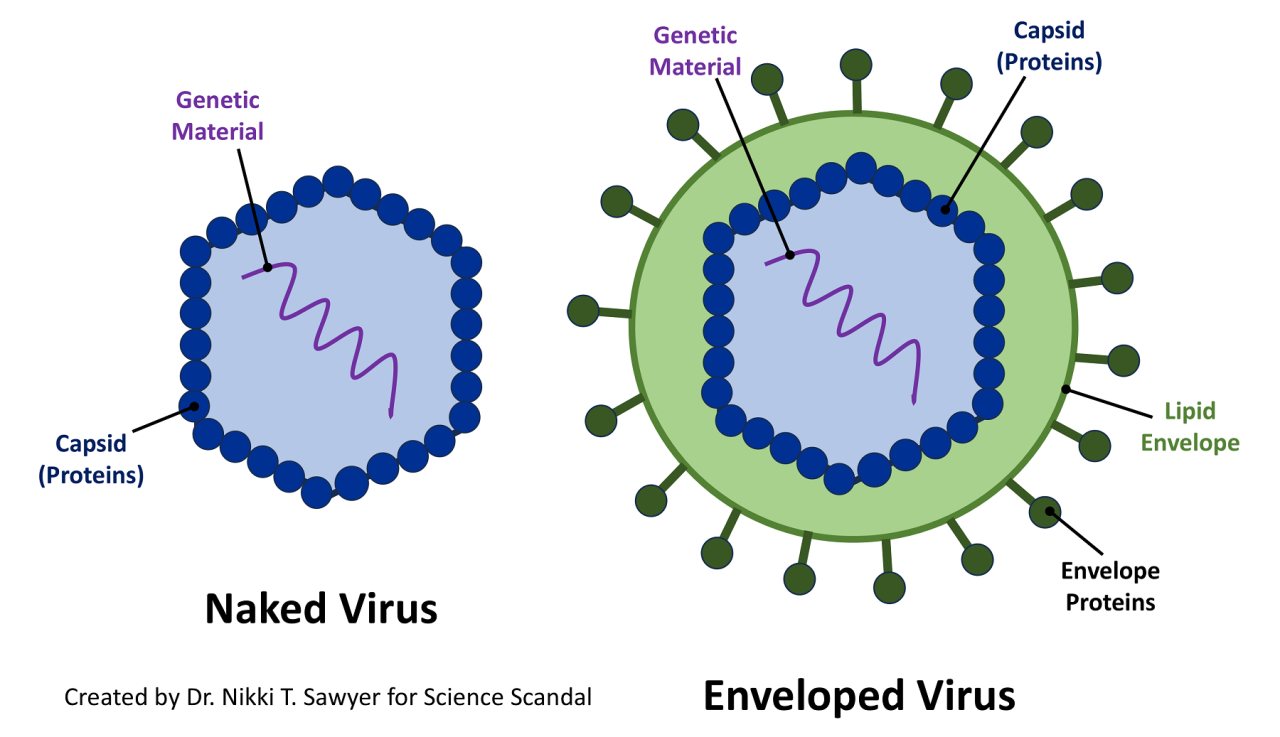
That means a virus can carry the instructions for making viral components, but it cannot run the whole production line by itself.
So it finds a host cell that can.
The details vary enormously from one virus to another, but the basic strategy is remarkably consistent. A virus first attaches to a susceptible cell, usually by binding to particular molecules on the cell surface. It then gets its genome into the cell and, in many cases, sheds some or all of its outer structure in a process called uncoating. Once the viral genome is accessible, the takeover begins.
The viral genome redirects cellular processes toward making viral nucleic acids and proteins. Host-cell ribosomes translate viral messages into proteins, while other host resources may supply energy, raw materials, membranes, enzymes, and intracellular transport. Some viruses also bring or encode important enzymes of their own, so the exact division of labor differs among viral groups. What they all share is dependence on a living cell for reproduction.
Those newly made viral components are then assembled into new virus particles, called virions. The completed virions must get out of the infected cell so they can reach new cells. Some viruses rupture the cell during release. Others bud through cellular membranes or use other exit strategies that may leave the host cell alive for at least some period of time.
That cellular takeover can contribute directly to disease. Viral infection may divert cellular energy, interfere with normal protein and nucleic-acid synthesis, damage cell structures, or kill infected cells outright. But that is only part of the story. Inflammation and the immune response directed against infected cells can also produce substantial symptoms and tissue damage.
And this dependence on cells is one reason viruses occupy such an awkward position in the biology filing cabinet.
Viruses contain genetic information. They reproduce inside hosts. Viral populations mutate, evolve, and undergo natural selection.
But individual virus particles do not carry out an independent metabolism, cannot make proteins on their own, and cannot reproduce without entering a suitable living cell. Under a strict definition that requires autonomous cellular metabolism and reproduction, viruses are considered nonliving. Other biologists argue that viruses blur the boundary enough that a simple yes-or-no answer depends partly on how we define life.
So when a disinfectant bottle says it “kills viruses,” the wording is not wrong in the regulatory sense. But biologically, “inactivates viruses” may be a cleaner description: damage the viral structure badly enough that it can no longer infect a cell, and the takeover ends before production ever starts.
The virus brings the instructions.
The cell provides the factory.
And biology gets stuck arguing over whether the invader was ever alive in the first place.
Sources
-
6.2 The Viral Life Cycle
Parker, N., Schneegurt, M., Tu, A.-H. T., Lister, P., & Forster, B. M. (2016). “6.2 The Viral Life Cycle.” In Microbiology. Houston, TX: OpenStax.
Why this source matters: Core source for the replication sequence and the fact that all viruses depend on host cells for reproduction and metabolic processes. It explicitly describes viruses as commandeering cellular machinery to produce new viral particles.
-
Structure and Classification of Viruses
Gelderblom, H. R. (1996). Structure and Classification of Viruses. In S. Baron (Ed.), Medical Microbiology (4th ed., Chapter 41). Galveston, TX: University of Texas Medical Branch at Galveston.
Why this source matters: Supports virus structure, the definition of viruses as obligate intracellular parasites, their inability to generate energy independently, and their dependence on host biochemical machinery for replication.
-
Viral Pathogenesis
Baron, S., Fons, M., & Albrecht, T. (1996). Viral Pathogenesis. In S. Baron (Ed.), Medical Microbiology (4th ed., Chapter 45). Galveston, TX: University of Texas Medical Branch at Galveston.
Why this source matters: Supports the article’s explanation that viral disease can involve both direct disruption of infected cells, including diversion of energy and interference with cellular synthesis, and indirect damage from inflammation and host immune responses.
-
The Origins of Viruses
Wessner, D. R. (2010). The Origins of Viruses. Nature Education, 3(9), 37.
Why this source matters: Useful for the “are viruses alive?” discussion. It notes that viruses lack ribosomes and independent metabolism, can replicate only within host cells, and occupy an unusual boundary because they reproduce and evolve while failing several commonly used criteria for life.
-
Selected EPA-Registered Disinfectants
U.S. Environmental Protection Agency. Selected EPA-Registered Disinfectants.
Why this source matters: Supports the terminology point from the humorous opening. EPA defines disinfectants as substances that destroy or irreversibly inactivate viruses and bacteria in the inanimate environment. This lets us acknowledge that “kills viruses” is standard product/regulatory language while explaining why “inactivates” is biologically more precise.