
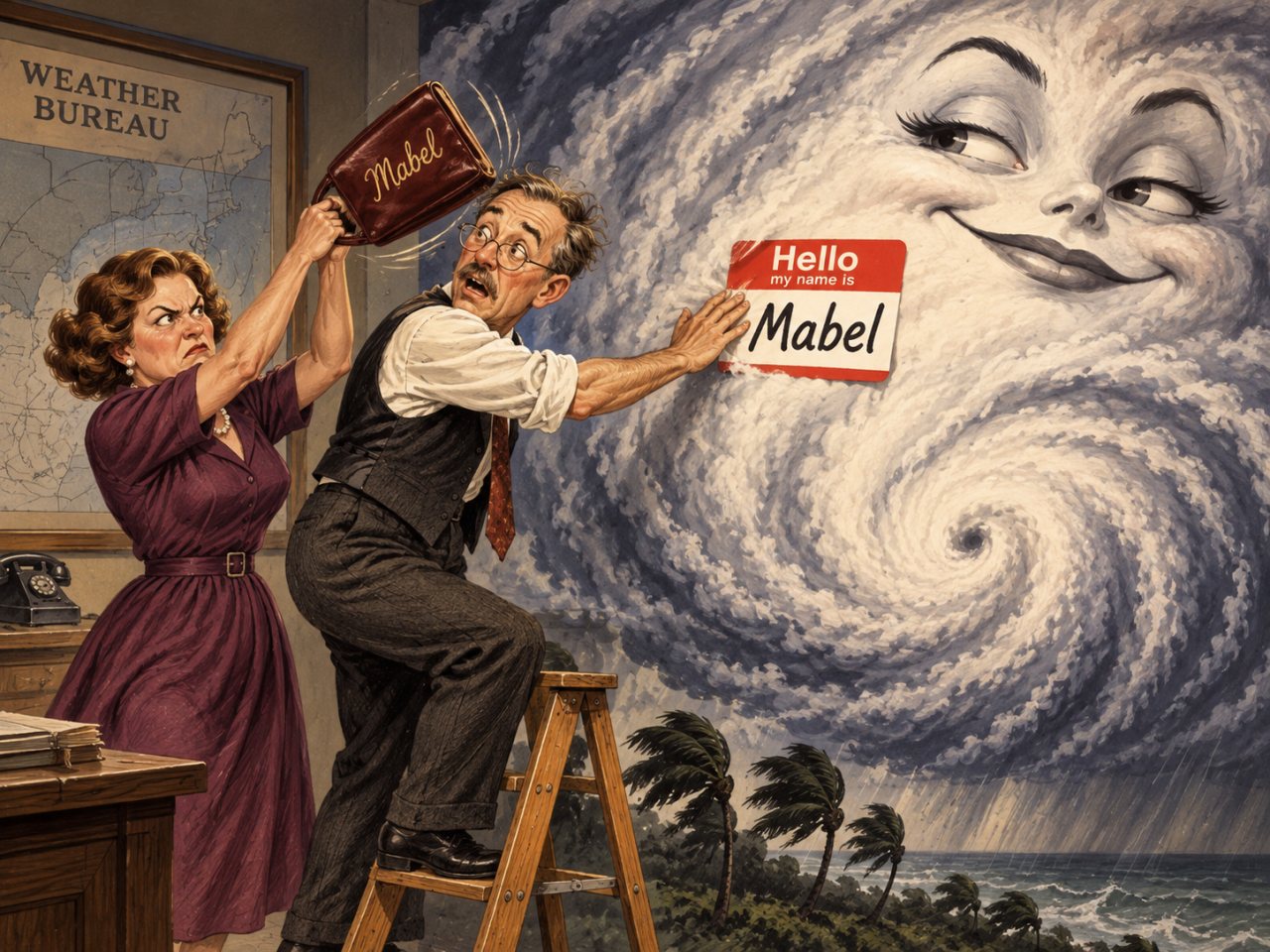
My husband Nigel was personally offended that Hurricane Nigel failed to become historically memorable in 2023.
I think he was a little jealous that my mom’s hurricane, Hurricane Sandy, went down in the history books in 2012.
Which got me wondering...
When did we decide to start giving major storms people’s names?
And, naturally, my curiosity led me straight down another rabbit hole.
First question: why name storms at all?
Because imagine being a radio announcer trying to say, over and over:
“The hurricane currently located near 20.4° north, 64.7° west is moving west-northwest at 15 mph, with maximum sustained winds of 75 mph... ”
And now imagine there are three storms active at once.
“Wait. Which one was at 20-point-what latitude?”
Humanity was always going to need names.
Before formal naming systems, storms were sometimes remembered by where they struck, such as the 1900 Galveston hurricane, or by the saint’s feast day on which they occurred. One famous example was Hurricane Santa Ana, which struck Puerto Rico on July 26, 1825.
Eventually, an Australian meteorologist became the first known forecaster to start systematically assigning human names to tropical cyclones.
And he used women’s names.
👀
Then, during World War II, U.S. military meteorologists in the Pacific began naming typhoons after their wives and girlfriends.
Wives and girlfriends?
Really?
Meteorologists of the past... would anyone like to explain yourselves?
The United States briefly tried a different system beginning in 1950, naming Atlantic storms from the phonetic alphabet:
Able. Baker. Charlie. Dog.
That worked until changes to the international phonetic alphabet threatened to turn storm identification into yet another terminology problem.
So in 1953, the United States switched to...
women’s names.
Again.
At this point I am trying very hard not to read anything into the apparent historical association between women and enormous rotating systems capable of destroying coastal infrastructure.
It was not until 1979 that Atlantic storm lists began alternating men’s and women’s names, finally bringing gender equality to meteorological destruction.
About time.
And underneath all this historical weirdness was a genuinely useful idea.
Names make storms easier to remember, easier to communicate, and much easier to distinguish when several tropical cyclones are active at the same time.
Unfortunately, giving storms human names also means that people occasionally become weirdly invested in the performance of their namesake hurricane.
Just ask Nigel.
The Real Story
Naming tropical cyclones sounds almost quaint until you remember the alternative.
Before names became standard, forecasters often identified storms by latitude and longitude. That worked... technically. It was also cumbersome, easy to confuse, and particularly awkward when more than one storm was active at the same time. Short, distinctive names proved faster to say, easier to remember, and less likely to be mixed up in communications among weather stations, ships, coastal bases, emergency managers, media, and the public.
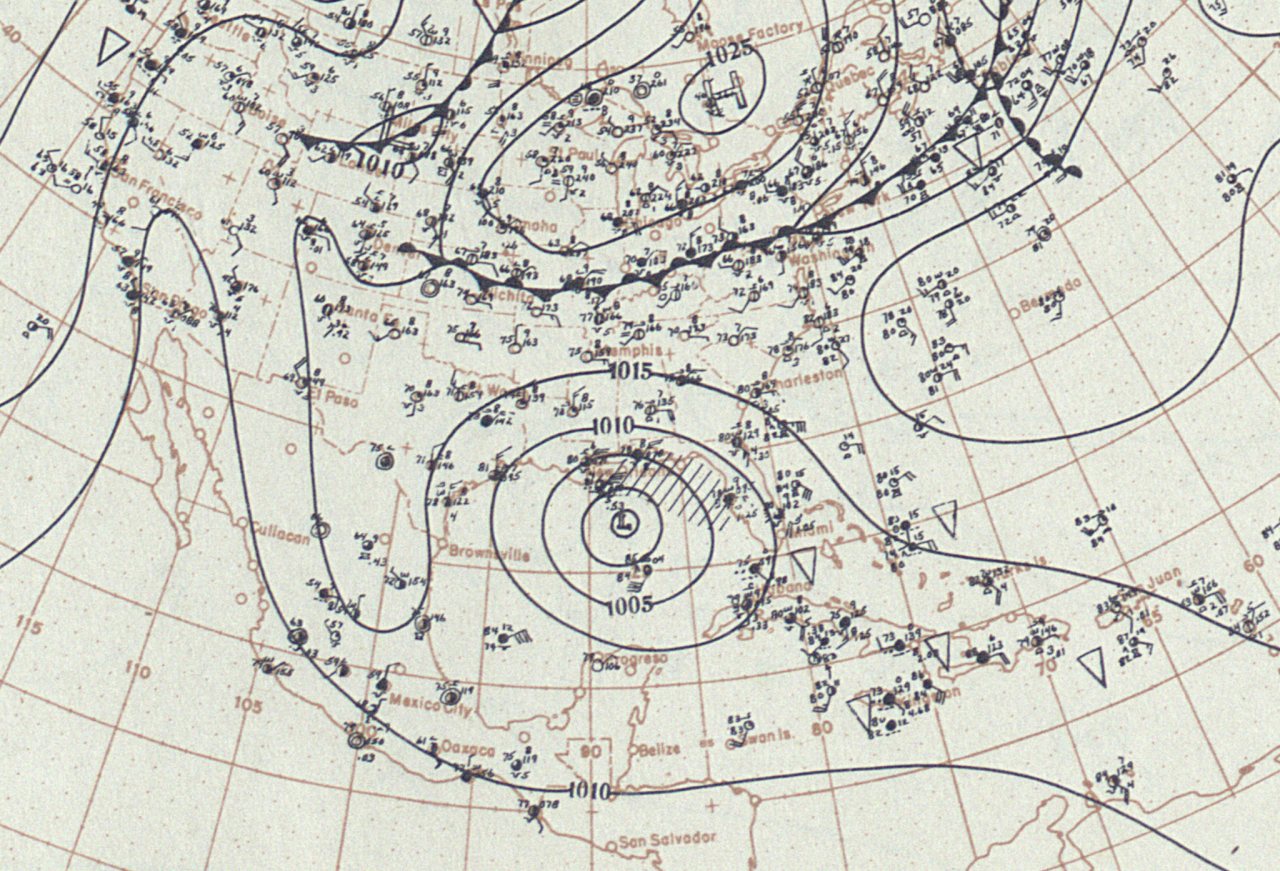
Storms had been given informal names long before modern forecasting systems existed. In the West Indies, hurricanes were sometimes remembered by the saint’s feast day on which they occurred. Hurricane Santa Ana, for example, struck Puerto Rico on July 26, 1825. Other storms acquired names from places, ships, or notable circumstances after the fact.
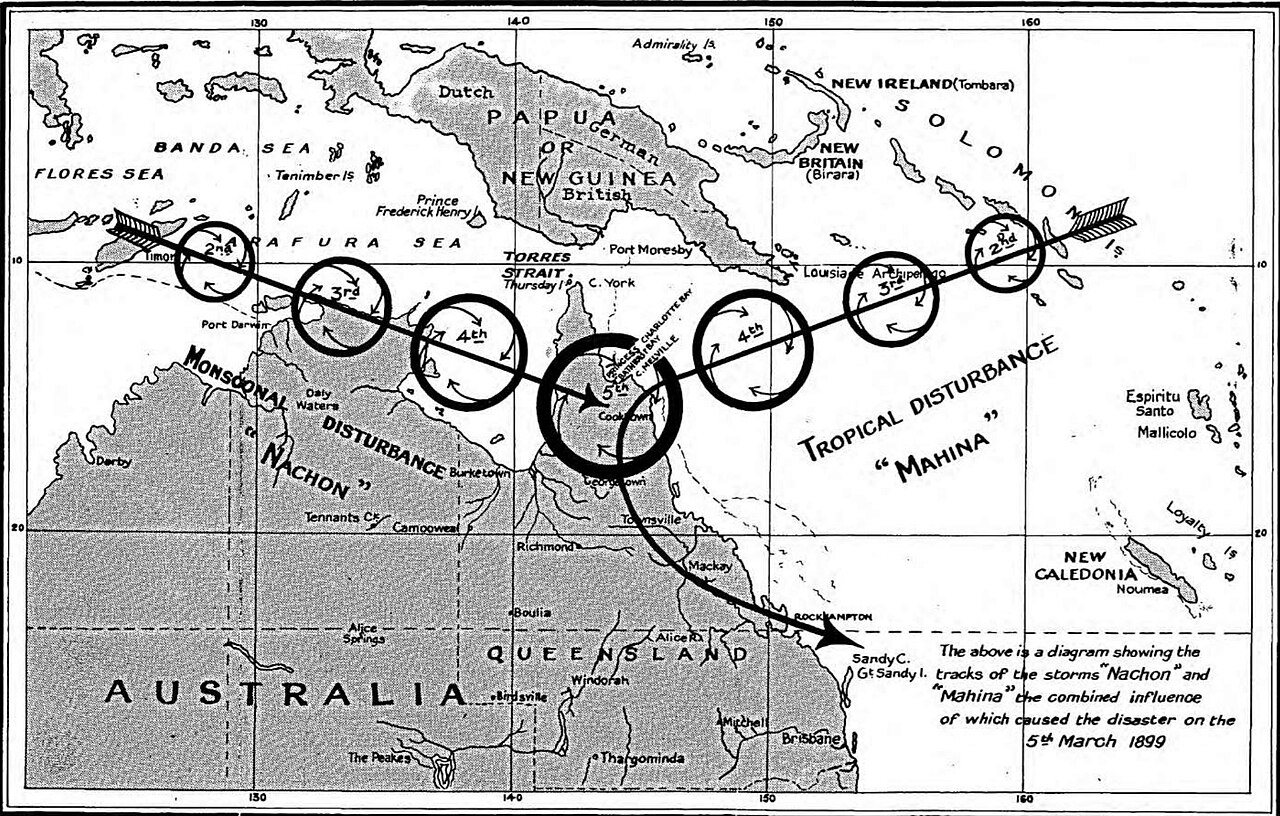
The first known meteorologist to use personal names systematically was Clement Wragge, an Australian forecaster working in the late nineteenth century. Wragge began assigning names to tropical cyclones, including women’s names, as a practical way to distinguish storms.
The idea resurfaced dramatically during World War II. In 1944, U.S. Army Air Force meteorologists stationed on Saipan began naming Pacific typhoons after wives and girlfriends. The practice spread among military forecasters because memorable names were far easier to use than strings of coordinates when storms had to be tracked across enormous areas of the Pacific.
The United States Weather Bureau initially resisted using personal names for Atlantic storms. Beginning in 1950, it instead used the phonetic alphabet, producing storms named Able, Baker, Charlie, Dog, and so on. But when a new international phonetic alphabet was introduced in the early 1950s, the system became confusing. In 1953, the United States abandoned the phonetic scheme and began assigning women’s names to Atlantic tropical storms.
For the next quarter century, the Atlantic lists remained female-only.
That changed first in the Eastern North Pacific, where male and female names were used beginning in 1978. In 1979, Atlantic naming lists began alternating male and female names as well. NOAA notes that the change followed growing criticism of the women-only system, including pressure from feminist groups.
Today, tropical cyclone naming is coordinated internationally through regional bodies of the World Meteorological Organization. Different ocean basins use different naming systems, but the goal is the same: make each storm easy to identify, discuss, warn about, and distinguish from other storms occurring at the same time. WMO specifically notes that names help meteorologists, emergency managers, media, and the public communicate more clearly and improve preparedness.
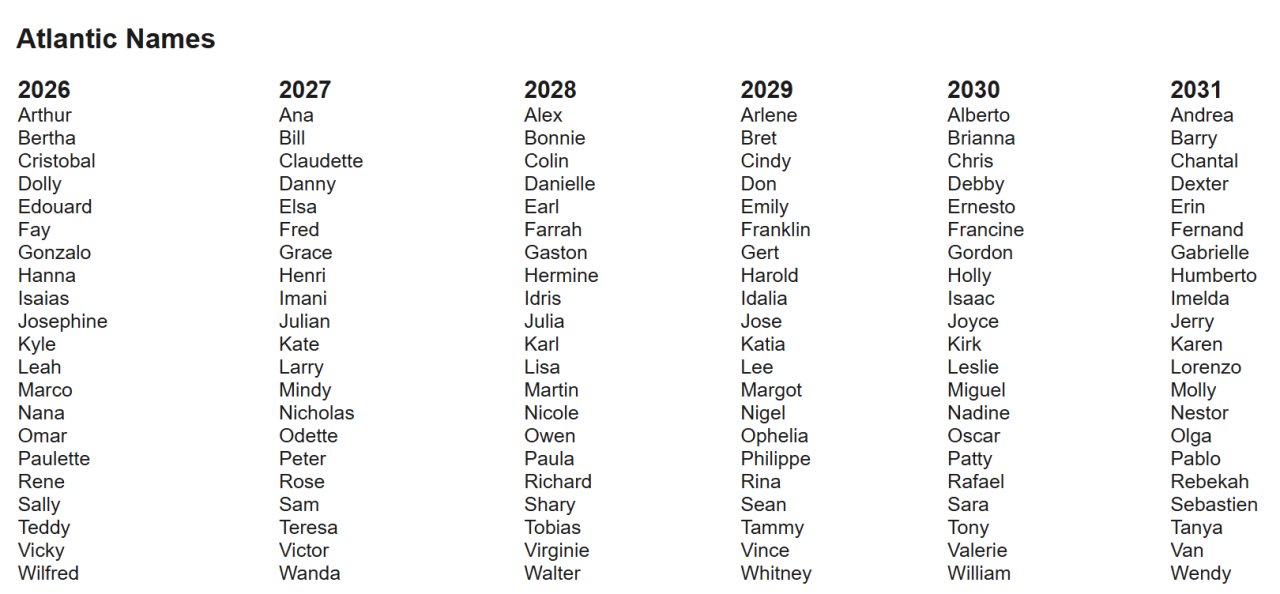
In the Atlantic, six lists of names rotate on a six-year cycle. If a storm is especially deadly or destructive, its name can be retired so that using it again would not cause confusion or insensitivity. That is why names such as Katrina, Sandy, Harvey, Maria, and Ian will not return to future Atlantic lists.
So storm names are not merely meteorological decoration.
They are a communication tool.
They make warnings easier to remember, reduce confusion when several storms are active, and give the public a simple label for a complex moving hazard.
Of course, once you give a hurricane a human name, people start taking it personally.
Nigel has entered the chat—and is already rooting for Nigel’s triumphant return in 2029. 🤣
Sources
-
Tropical Cyclone Naming History and Retired Names
National Hurricane Center. Tropical Cyclone Naming History and Retired Names. National Oceanic and Atmospheric Administration.
Why this source matters: Core source for the historical sequence: saints’ days, Clement Wragge, World War II naming practice, the 1950 phonetic-alphabet system, the 1953 switch to women’s names, and the 1978/1979 adoption of male names. Also explains why short names are more efficient and less error-prone than latitude-longitude identifiers.
-
65th Anniversary of Atlantic Hurricanes Being Named
NOAA Atlantic Oceanographic and Meteorological Laboratory. (2015). 65th Anniversary of Atlantic Hurricanes Being Named.
Why this source matters: Supports Clement Wragge’s early use of personal names, the 1944 Saipan practice of naming typhoons after wives and girlfriends, the Weather Bureau’s resistance to personal names, and the 1953 transition from the phonetic alphabet to women’s names.
-
70th Anniversary of Women’s Names Used for Typhoons
NOAA Atlantic Oceanographic and Meteorological Laboratory. (2014). 70th Anniversary of Women’s Names Used for Typhoons.
Why this source matters: Best source for the specifically documented World War II detail that U.S. Army Air Force meteorologists on Saipan used the names of wives and girlfriends for Pacific typhoons.
-
35th Anniversary of Men’s Name Added to Atlantic Hurricane Lists
Griffin-Elliott, T. (2014, May 29). 35th Anniversary of Men’s Name Added to Atlantic Hurricane Lists. NOAA Atlantic Oceanographic and Meteorological Laboratory.
Why this source matters: Supports the shift from women-only names to alternating male and female names in Atlantic lists beginning in 1979, including the role of pressure from feminist groups and the WMO Region IV Hurricane Committee.
-
Tropical Cyclone Naming
World Meteorological Organization. (2023, November 24). Tropical Cyclone Naming.
Why this source matters: Authoritative modern source for why storms are named today: faster communication, reduced confusion, easier tracking and discussion, improved public awareness and preparedness, and regional naming procedures.
-
Tropical Cyclone Names
National Hurricane Center. Tropical Cyclone Names. National Oceanic and Atmospheric Administration.
Why this source matters: Supports the current Atlantic six-list rotation system and the retirement and replacement of exceptionally destructive storm names.