
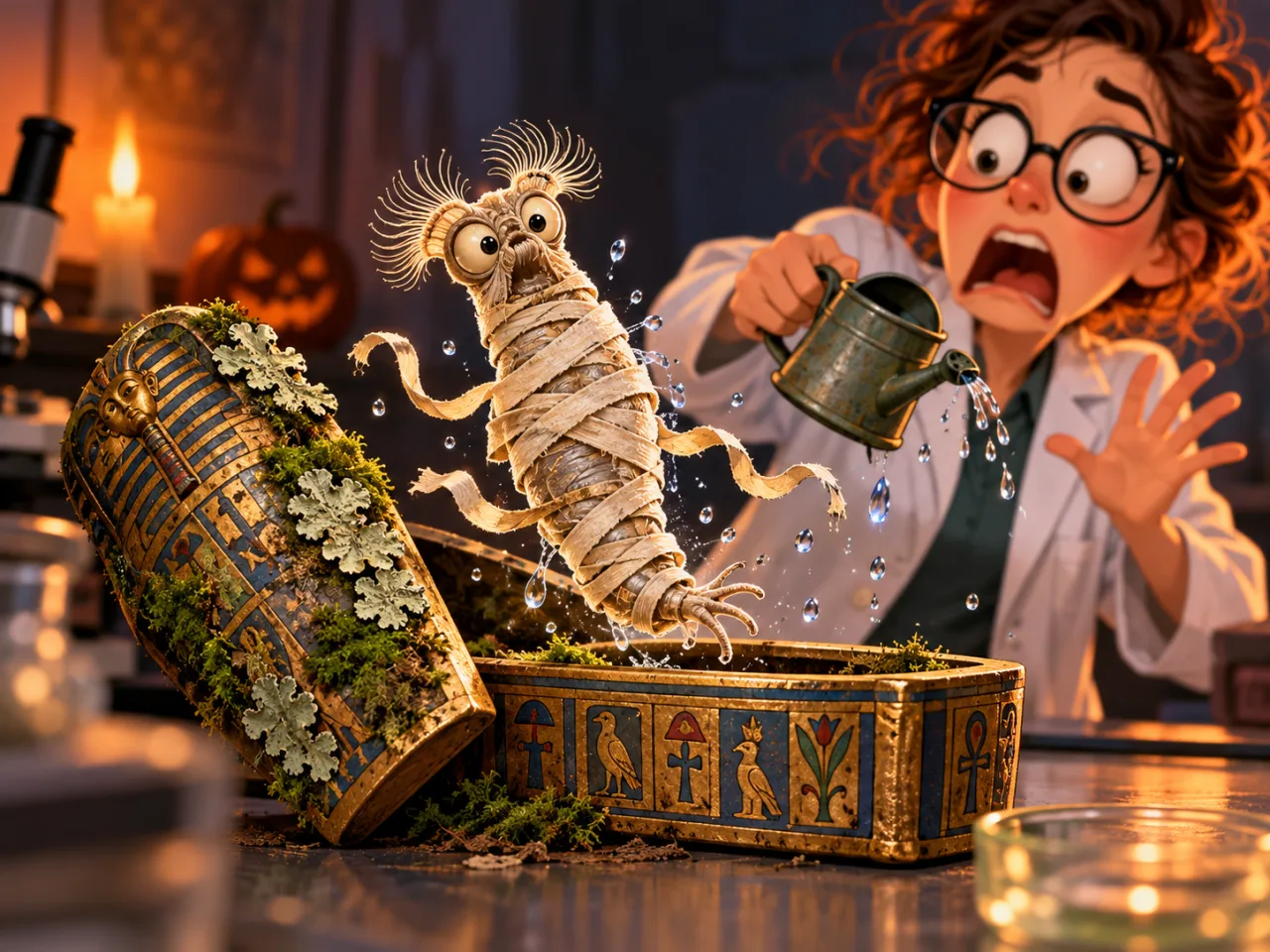
Let's set the stage for this Halloween scandal.
A dried patch of moss. Tucked inside is a tiny invertebrate animal. Shriveled. Dry. Apparently lifeless. A microscopic mummy encased in a mossy grave.
Now imagine researchers adding a little water.
The creature begins moving.
"It's ALIVE!" they shout.
What is happening here? Is it a resurrection? A reanimated corpse?
Or just an animal with an amazing ability to survive dehydration?
I'm glad you asked….
The Real Story
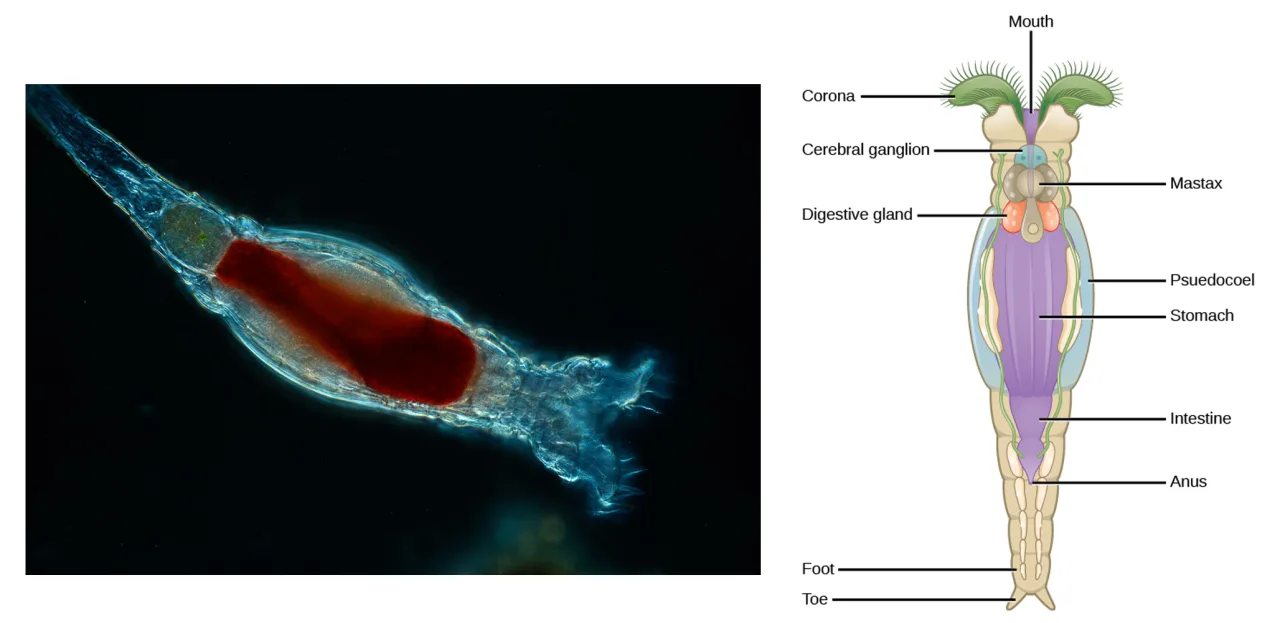
Our mysterious microscopic mummy is a bdelloid rotifer, a tiny multicellular invertebrate found in freshwater environments and damp habitats such as mosses, lichens, and soil.
These animals have complete bodies with organs, muscles, a digestive system, and a nervous system. They normally move through thin films of water, feeding on microscopic organisms and organic particles.
But there's a problem with living in a patch of moss or a lichen. Sometimes, the habitat dries out.
For most aquatic animals, losing nearly all their body water would be fatal. Cells shrink, membranes and proteins can become damaged, and the chemical reactions necessary for life can no longer proceed normally.
Some bdelloid rotifers, however, possess a remarkable survival strategy called anhydrobiosis, literally meaning “life without water.” This is one form of cryptobiosis, a broader category of biological dormancy in which an organism's metabolic activity becomes extremely low or temporarily undetectable.
As their surroundings begin to dry, these rotifers withdraw their head and foot, contract their bodies, and form a compact, barrel-like shape known as a tun. As water continues to disappear, their metabolism slows to extremely low levels, becoming effectively undetectable.
In this state, the animal is no longer swimming, feeding, or carrying out its normal activities. To an observer, it may appear completely lifeless.
But it isn't dead. Its biological functions have been temporarily suspended.
And the transformation involves more than simply shrinking. Researchers studying the bdelloid rotifer Macrotrachela quadricornifera found that successful dehydration was associated with a compact, well-organized body shape. They proposed that carefully packing its internal structures may also help the animal survive.
That careful contraction appears to be important for survival. Researchers found that the conditions under which the animals dried made an enormous difference. When rotifers were rapidly dried on glass, none recovered after seven days. But when they dried between protective layers of filter paper, approximately 88% recovered after water was restored. Their surrounding environment helped determine whether they could maintain the compact, organized body structure associated with successful recovery.
In other words, how the animal dries out can determine whether it survives.
Once the rotifer has entered anhydrobiosis, it can remain dormant until favorable conditions return. Depending on the species and circumstances, this may allow it to survive periods of dehydration that would kill most other aquatic animals.
And then comes the part that sounds like a Halloween horror movie.
Water returns.
The dried animal begins absorbing moisture. Its tissues rehydrate, metabolic activity resumes, and, if it has survived successfully, its body extends and it begins moving again.
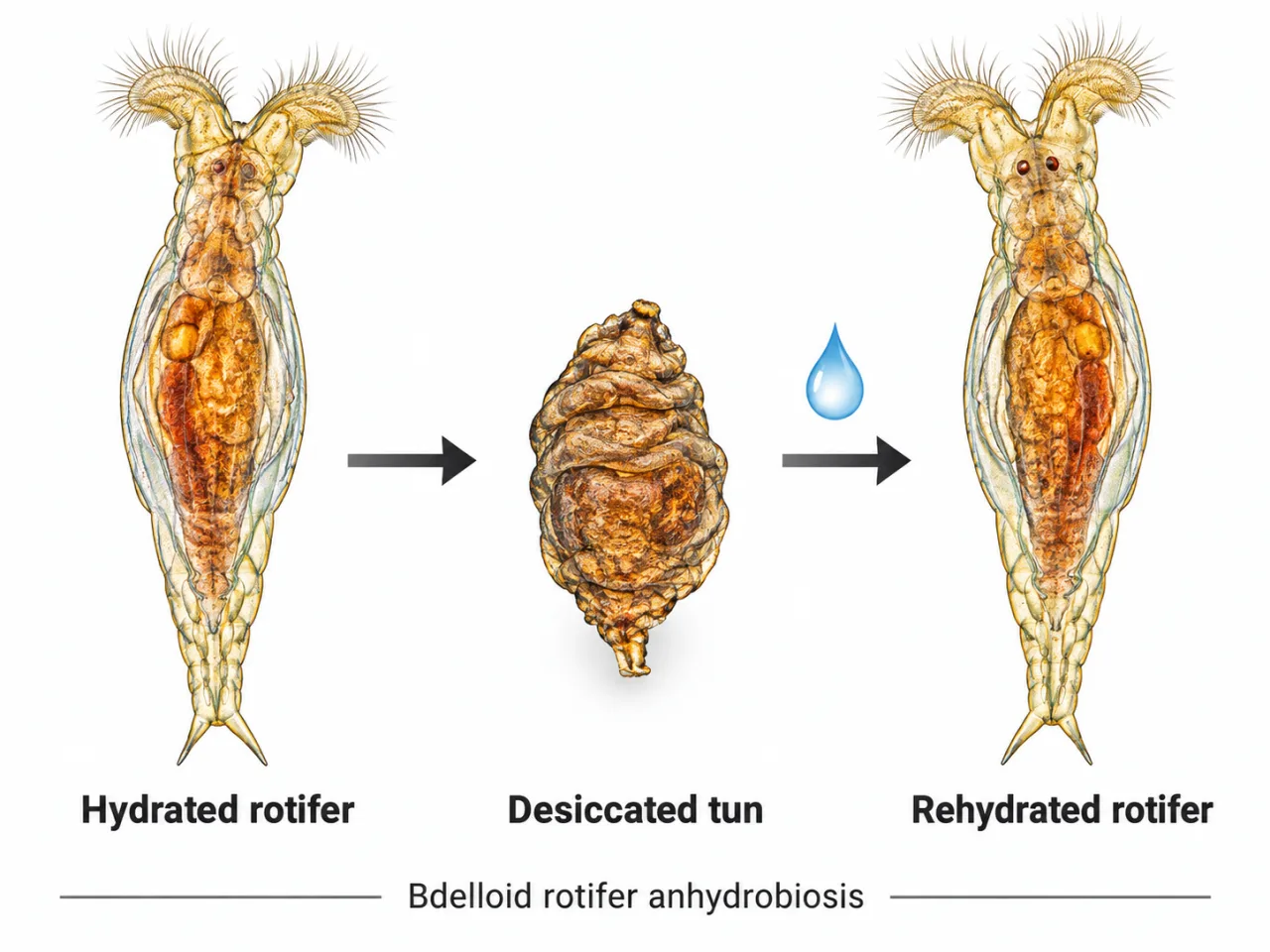
The microscopic mummy has awakened.
Researchers have demonstrated this remarkable process under controlled conditions, including experiments in which bdelloid rotifers recovered after seven days in a dried, dormant state.
And this ability isn't merely a laboratory curiosity. It helps explain how these animals survive in natural environments that repeatedly alternate between wet and dry conditions.
Mosses and lichens can provide tiny aquatic habitats when moisture is available. When those habitats dry out, bdelloid rotifers can enter dormancy instead of immediately dying. When rain or other moisture returns, surviving animals can resume their activities.
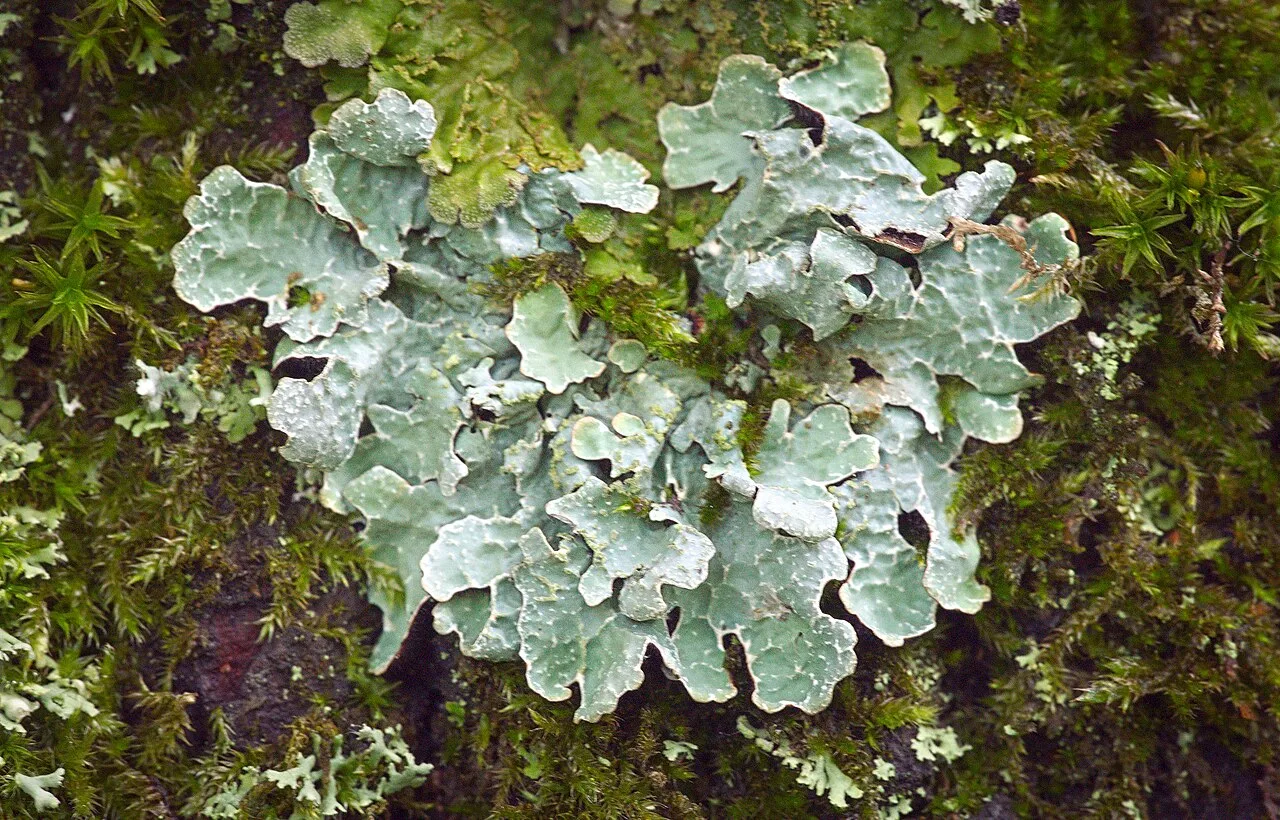
Incidentally, remember our earlier scandal about lichens being complicated biological partnerships? Apparently, some of those relationships have also acquired microscopic animal tenants who occasionally dry themselves into mummies.
The relationship status continues to become more complicated.
And there's one final distinction worth making. These animals aren't actually being resurrected. Successful anhydrobiosis allows them to remain viable through extreme dehydration. It doesn't reverse irreversible death, and not every individual survives.
Nevertheless, the result is extraordinary: a multicellular animal can endure a period of extreme water loss, suspend its normal activities, and later resume life when conditions improve.
For these microscopic mummies, the secret to coming back from the brink isn't an ancient curse or a forbidden resurrection ritual.
It's water.
Sources
-
Morphological response of a bdelloid rotifer to desiccation
Ricci, C., Melone, G., Santo, N., & Caprioli, M. (2003). Morphological response of a bdelloid rotifer to desiccation. Journal of Morphology, 257(2), 246–253.
Why this source matters: Original research showing how bdelloid rotifers contract into compact forms during dehydration and how drying conditions influence their ability to recover after seven days of dormancy.
-
Anhydrobiosis without trehalose in bdelloid rotifers
Lapinski, J., & Tunnacliffe, A. (2003). Anhydrobiosis without trehalose in bdelloid rotifers. FEBS Letters, 553(3), 387–390.
Why this source matters: Experimental research demonstrating that bdelloid rotifers can survive severe dehydration without accumulating trehalose, a protective sugar associated with desiccation tolerance in many other organisms.
-
Anhydrobiosis in Bdelloid Species, Populations and Individuals
Ricci, C., & Caprioli, M. (2005). Anhydrobiosis in bdelloid species, populations and individuals. Integrative and Comparative Biology, 45(5), 759–763.
Why this source matters: Reviews how bdelloid rotifers survive drying in intermittently wet habitats, including mosses and lichens, and explains how anhydrobiosis affects their dormancy, recovery, and life histories.
-
Spatial and temporal escape from fungal parasitism in natural communities of anciently asexual bdelloid rotifers
Wilson, C. G., & Sherman, P. W. (2013). Spatial and temporal escape from fungal parasitism in natural communities of anciently asexual bdelloid rotifers. Proceedings of the Royal Society B: Biological Sciences, 280(1765), 20131255.
Why this source matters: Field research showing that bdelloid rotifers can survive the drying of natural habitats and disperse to new locations, helping explain why anhydrobiosis is useful outside laboratory conditions.