

I picked up a copy of The Radium Girls: The Dark Story of America's Shining Women by Kate Moore and started reading.
When I got to the part about Mollie Maggia and her visit to the dentist, where her lower jawbone essentially came apart in his hands, I was both horrified and curious. (Because apparently, even a disintegrating jawbone can't stop my curiosity.)
I had to know more. How could something like this happen? How could an entire jawbone simply fall apart? And what happened next?
So, of course, I read the rest of the book. But I also started doing some digging of my own.
This is a genuine horror story, which is why I decided to feature it in the days leading up to Halloween. But it's also the story of a REAL scandal, involving an industry that tried to suppress evidence of the harm its products were causing.
Most importantly, though, it's the story of the courage and determination of the women who fought to have their suffering recognized, to receive compensation, and to help prevent the same tragedy from happening to others.
And there's one final detail that really brings home just how extraordinary this story is.
Decades later, company records discovered during an environmental cleanup were found to be radioactive themselves. The EPA had to scan the documents, and the digital copies eventually made their way into the National Archives.
Even the paperwork came with radiation exposure concerns!
Sometimes truth really is stranger than fiction.
The Real Story
In the early twentieth century, glow-in-the-dark watches were a remarkable innovation. Their luminous numbers allowed people to tell the time without turning on a light, an especially useful feature for soldiers during World War I.
The secret ingredient was radium, a radioactive element discovered by Marie and Pierre Curie in 1898. When combined with a phosphor such as zinc sulfide, radiation from radium caused the material to emit visible light. The resulting paint was used on watches, clocks, and instrument dials.
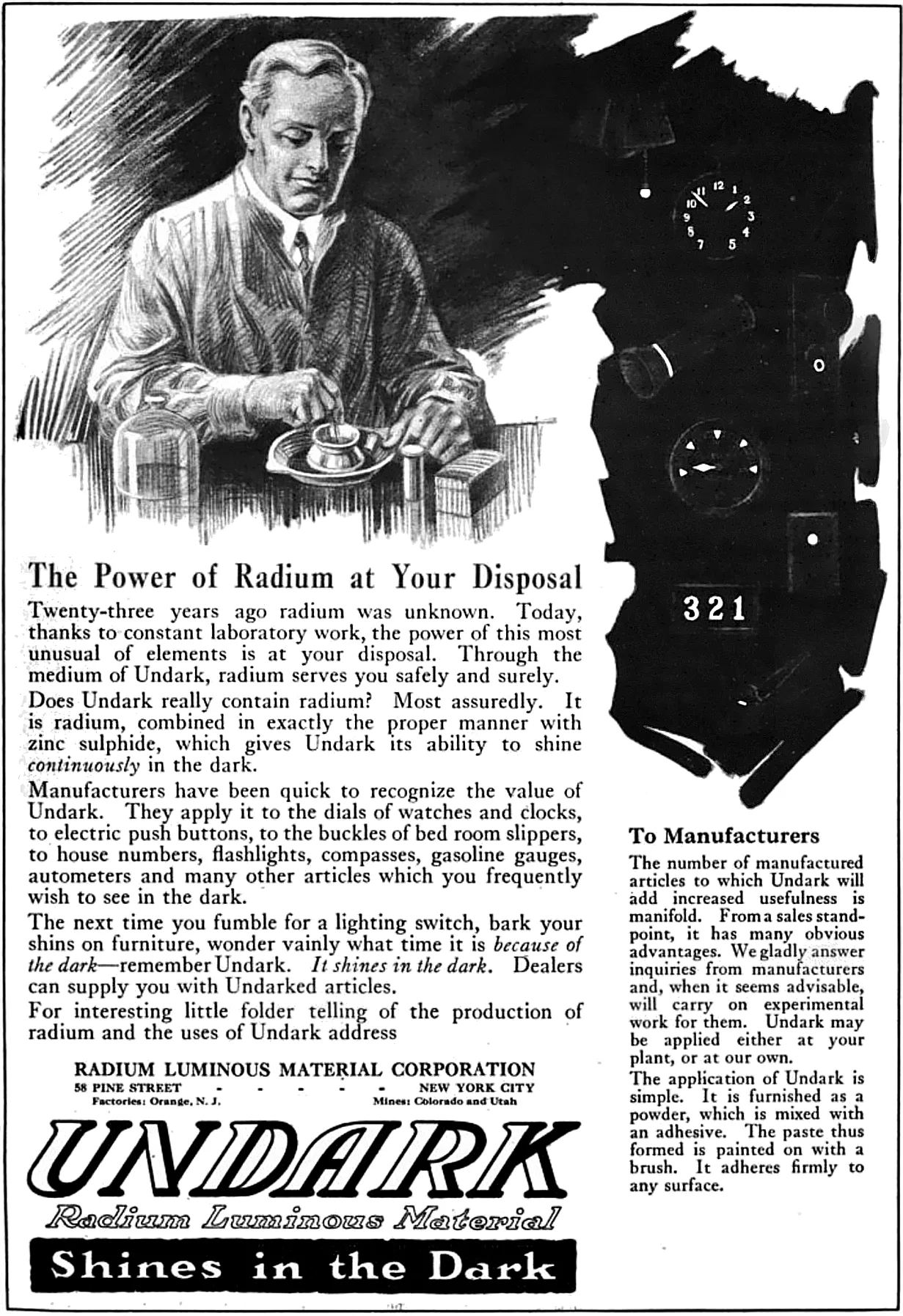
Factories hired young women to apply this paint with tiny brushes. To keep the brush tips sufficiently sharp for painting delicate numbers, workers were instructed to shape them with their lips. The technique, known as lip-pointing, meant that each time a worker put the brush in her mouth, she could swallow a small amount of radioactive paint.
The women were assured that the paint was safe. At the time, radium was widely promoted as a remarkable substance with supposed health and beauty benefits. Many workers had little reason to question what their employers told them.
Unfortunately, radium had a dangerous property that made swallowing it particularly hazardous.
Why Radium Attacked Their Bones
Radium belongs to the same chemical family as calcium, the alkaline earth metals. Both elements commonly form ions with a positive charge of two, and their chemical similarities allow radium to follow some of the same biological pathways as calcium.
Calcium is essential for building and maintaining bones and teeth. When radium is absorbed into the bloodstream, some of it can likewise become incorporated into bone mineral.
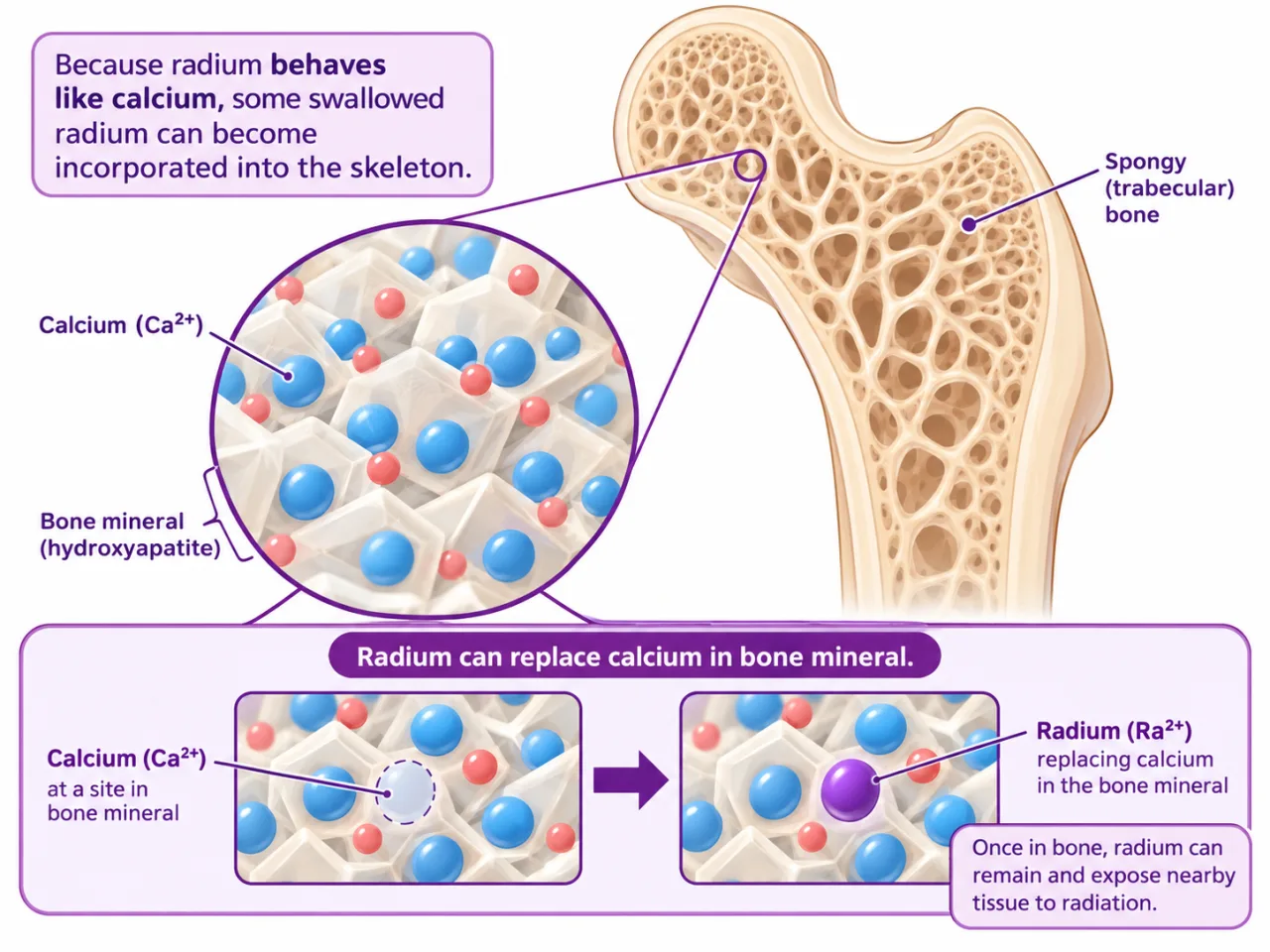
But unlike calcium, radium is radioactive.
One isotope, radium-226, has a physical half-life of approximately 1,600 years. That means its radioactive atoms decay extremely slowly. Once radium becomes incorporated into the skeleton, it can remain there and expose surrounding tissues to radiation for prolonged periods.
Radium-226 emits alpha particles when it decays. These particles travel only very short distances through tissue, but deposit substantial energy along their paths. They can damage DNA and other cellular structures, injuring or killing nearby cells. Radium's radioactive decay products contribute additional radiation exposure.
This makes the location of the radioactive material critically important. An alpha-emitting substance outside the body presents a very different hazard from the same substance swallowed, absorbed, and deposited in living tissue.
For the dial painters, repeated ingestion could produce a persistent source of radiation exposure inside their own skeletons.
Over time, the consequences could be devastating.
What Happened to Mollie Maggia?
One of the earliest and most horrifying cases involved Mollie Maggia, a young woman who worked at the radium dial factory in Orange, New Jersey.
Mollie began experiencing severe pain in her mouth. Her dentist removed several teeth, but the extraction sites failed to heal properly. Other teeth loosened and fell out, while the condition of her jaw continued to deteriorate.
During one examination, her jawbone was so badly damaged that it shattered at the touch of her dentist's hand.
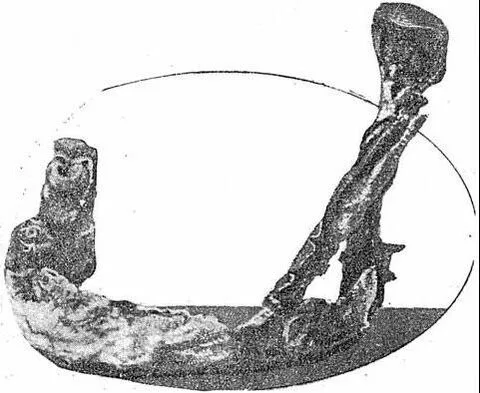
Mollie died in 1922, at just 24 years old.
The condition that came to be known as radium jaw involved severe destruction and necrosis of jawbone tissue. Necrosis means tissue death, and in the affected radium dial workers the damage could interfere with normal bone maintenance, healing, and structural integrity.
The jaw was not the only part of the skeleton at risk. Other exposed workers developed fragile bones, fractures, and serious blood disorders, including anemia. Some developed radiation-associated cancers after longer periods of latency.
Not every dial painter developed the same disease or experienced the same degree of exposure. Nevertheless, the appearance of similar devastating illnesses among women performing the same work increasingly pointed toward an occupational cause.
The Evidence Management Didn't Want to See
As workers became ill, physicians and industrial hygienists began investigating the conditions inside the factories.
At the U.S. Radium Corporation plant in Orange, company president Arthur Roeder commissioned an investigation by Harvard researchers Cecil Drinker, Katherine Drinker, and William Castle.
Their findings raised serious concerns. The factory contained widespread radioactive contamination, the workers lacked appropriate protection, and the practice of lip-pointing was exposing them to radioactive material.
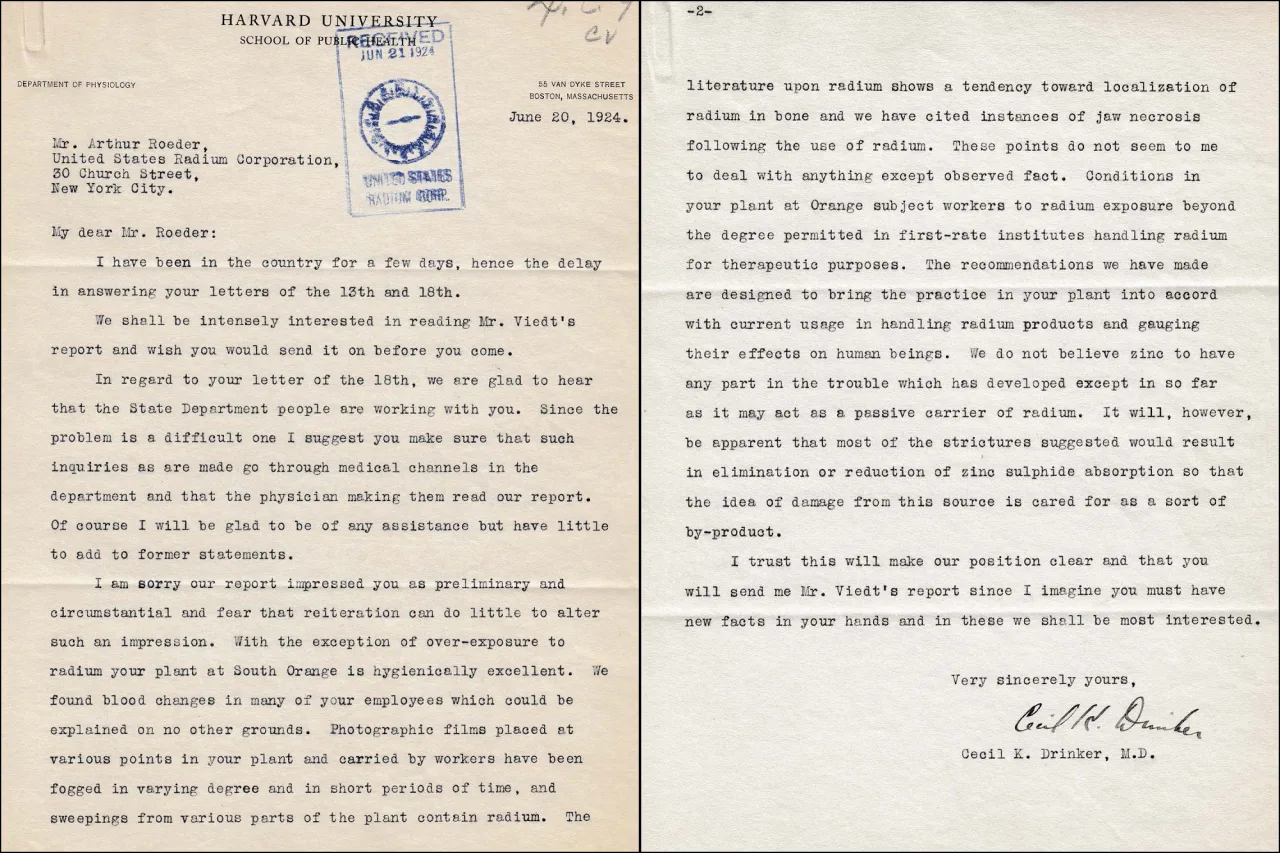
In a June 3, 1924 letter, Cecil Drinker informed Roeder that the investigators believed radium was responsible for the illnesses and urged immediate safety precautions. Roeder challenged the findings, describing them as preliminary and circumstantial and suggesting that zinc sulfide, rather than radium, might be responsible.
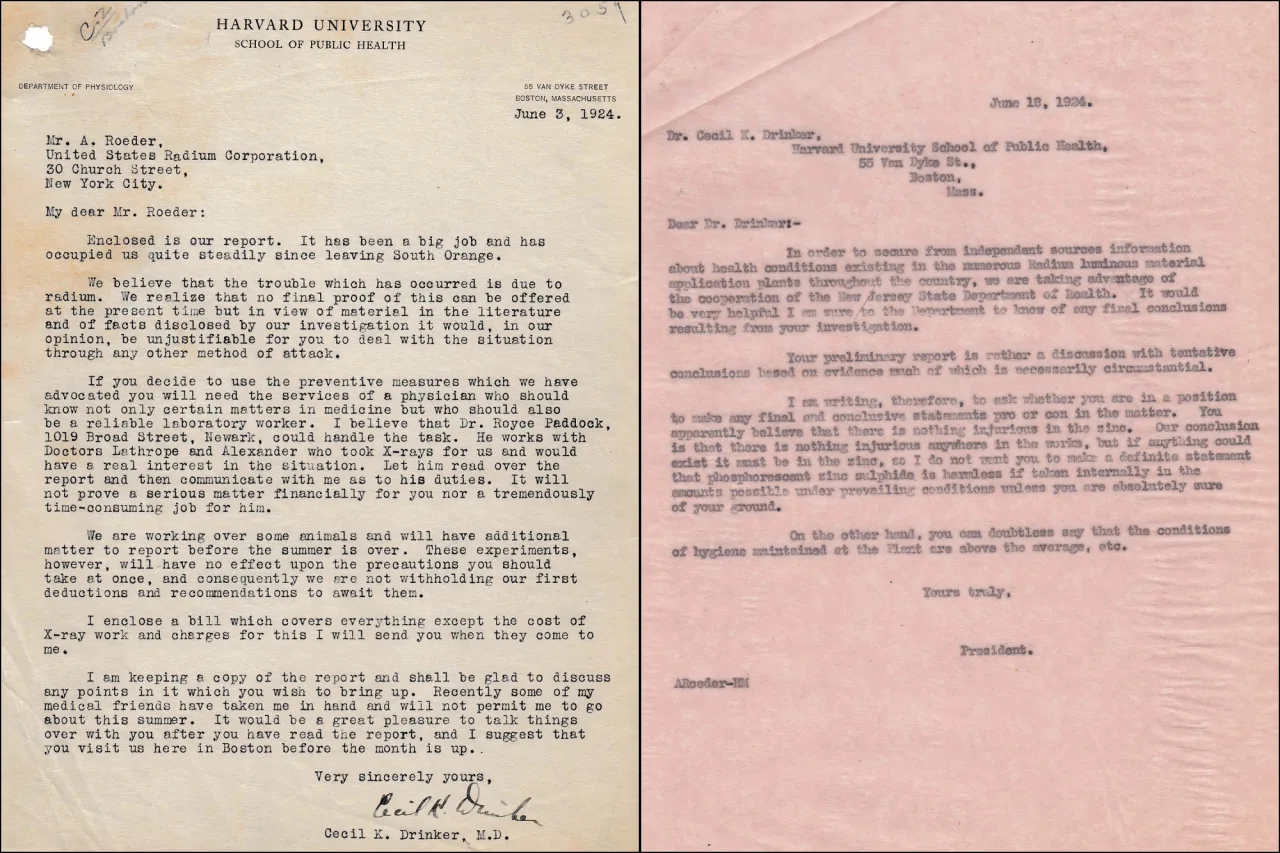
Drinker responded on June 20, citing abnormal blood findings, photographic evidence of radiation exposure, radium contamination throughout the factory, and established medical evidence of radium-induced jaw necrosis. He also rejected the zinc sulfide explanation, noting that it might act as a carrier of radium but was not itself responsible for the illnesses.
The scientific warning was explicit. But the company's handling of the investigation would become a scandal of its own.
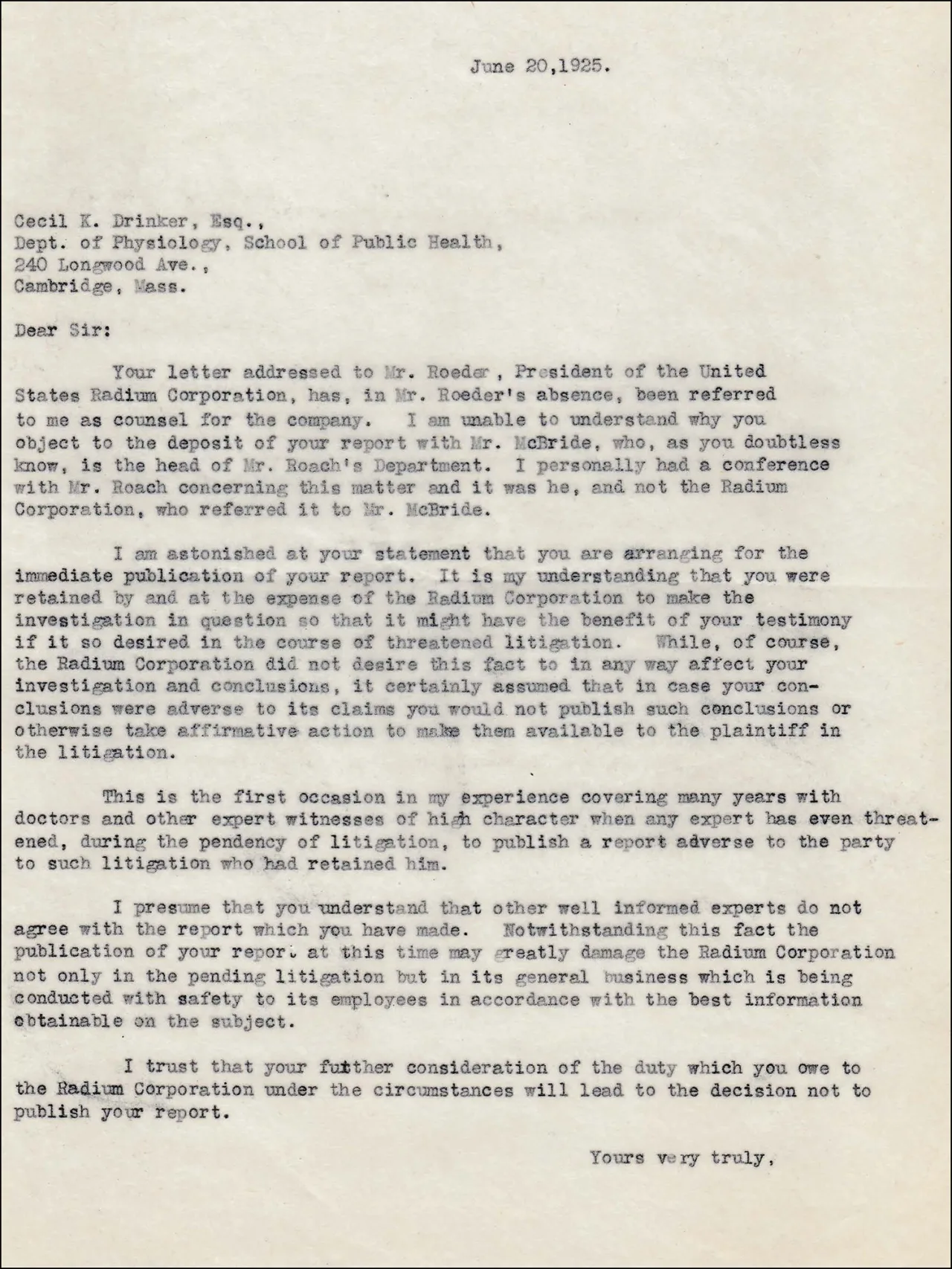
In June 1925, the company's legal counsel urged Drinker not to publish his findings, arguing that because U.S. Radium had paid for the investigation, it had expected unfavorable conclusions to remain undisclosed or withheld from the women pursuing legal action.
Harvard researcher Alice Hamilton subsequently learned that an altered version of Drinker's report had been submitted to the New Jersey Department of Labor. The revised document presented the workers' health in a far more favorable light than the investigators' actual findings supported.
After learning of the alteration, the Drinkers published their original report despite the threatened legal action.
The New Jersey labor commissioner ordered the recommended safety precautions implemented, contributing to the factory's closure.
The evidence was becoming increasingly difficult to dismiss. But recognition of the danger did not automatically bring justice to the women who had already been exposed.
The Women Fight Back
Former dial painters began pursuing compensation through the courts, facing powerful companies, disputed medical claims, legal deadlines, and the physical consequences of their illnesses.
Among the best-known New Jersey plaintiffs were Grace Fryer, Katherine Schaub, Edna Hussman, Albina Larice, and Quinta McDonald.
In June 1928, the five women reached an out-of-court settlement with U.S. Radium Corporation. The agreement provided financial compensation, annual payments, and medical expense coverage under specified conditions. The company did not admit liability.
But the tragedy was not confined to New Jersey.
Women employed by the Radium Dial Company in Ottawa, Illinois, also developed serious illnesses and sought recognition of their occupational injuries.
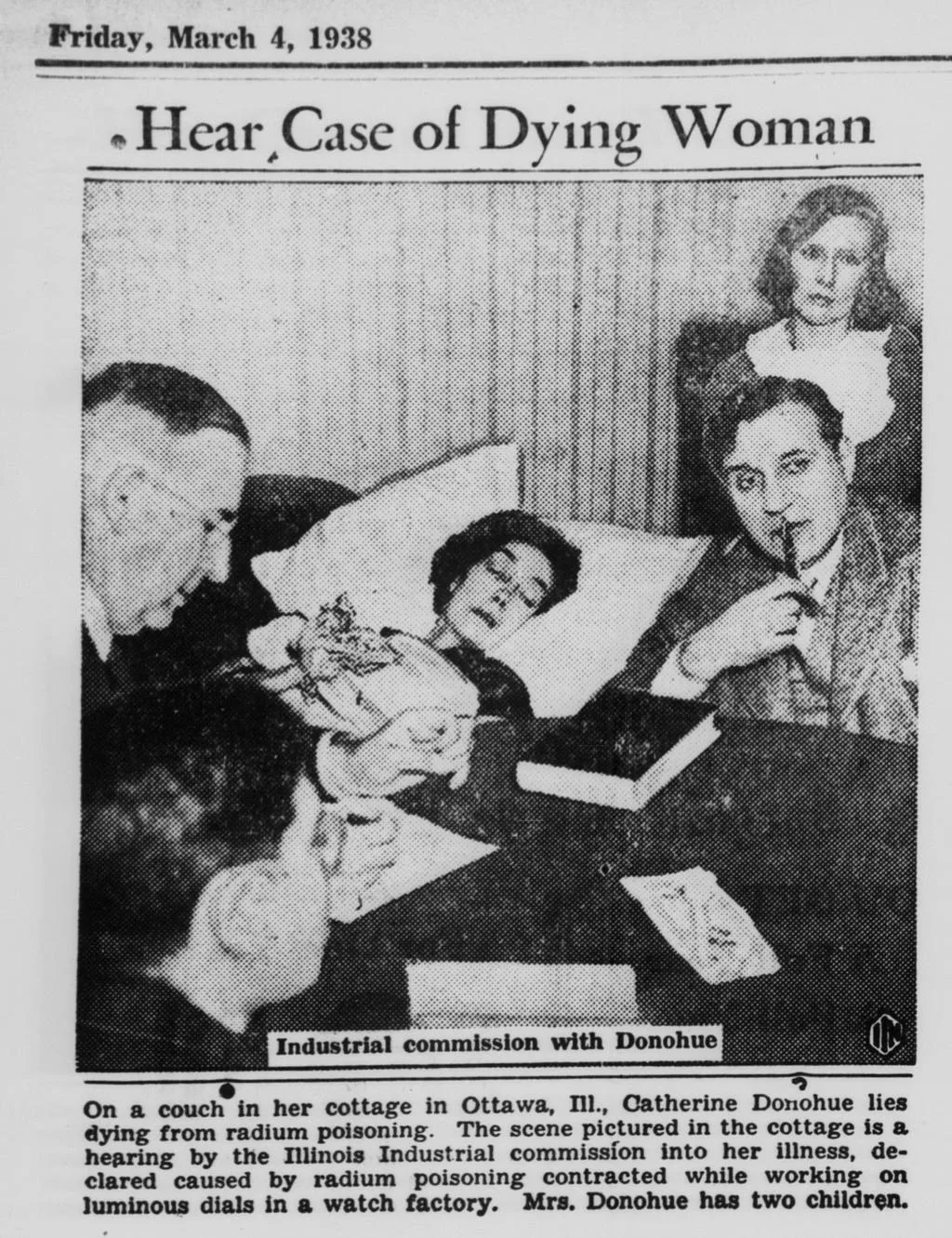
One of them, Catherine Wolfe Donohue, continued pursuing her case despite becoming gravely ill. The Illinois workers won a favorable decision in 1938, although appeals continued. Donohue died that July, before the legal proceedings were fully resolved.
In October 1939, the United States Supreme Court declined to hear the company's final appeal, leaving the lower court ruling intact.
The legal struggles of the Radium Girls became important milestones in the recognition of occupational diseases and helped strengthen awareness of the need for industrial hygiene, radiation protection, and employer accountability.
Their experiences also contributed to scientific understanding of the long-term biological consequences of radium retained inside the human body.
A Legacy That Still Matters
The Radium Girls were not simply victims of an unusual radioactive material. They were workers who trusted assurances about the safety of their jobs, suffered devastating consequences, and fought to establish that their illnesses were connected to their workplace.
Their cases helped expose the importance of investigating occupational hazards, documenting exposure, and protecting workers before irreversible damage occurs.
And their legacy extends beyond radium. The central lesson applies whenever a workplace introduces a potentially dangerous material or process: reassuring employees is not the same thing as demonstrating that the work is safe.
For a deeper account of the women's individual experiences, their families, and their extraordinary struggle for justice, I recommend The Radium Girls: The Dark Story of America's Shining Women by Kate Moore.
It is a haunting reminder that behind the history of workplace safety are real people who suffered, demanded answers, and helped change what future workers could expect from their employers.
Sources
-
The Radium Girls at the National Archives
Dabbs, Z. (2018, January 4). The Radium Girls at the National Archives. The Text Message. National Archives and Records Administration.
Why this source matters: Uses historical company records to document radium dial painting, the workers' exposure, the New Jersey lawsuits and settlements, and the discovery of radioactive company documents later preserved digitally by the National Archives.
-
New Jersey’s ‘Radium Girls’ and the NIST-Trained Scientist Who Came to Their Aid
Cowen, R. (2022, March 16). New Jersey’s ‘Radium Girls’ and the NIST-trained scientist who came to their aid. Taking Measure. National Institute of Standards and Technology.
Why this source matters: Documents Mollie Maggia's devastating jaw injuries, the health consequences of ingesting radium paint, and the scientific evidence presented during the New Jersey workers' legal battle.
-
Deadly occupation, forged report
Roeder, A. (2013, October 24). Deadly occupation, forged report. Harvard T.H. Chan School of Public Health.
Why this source matters: Reconstructs the Harvard investigators' findings at the U.S. Radium Corporation factory and documents the alteration of their report, the company's resistance to the findings, and the resulting workplace safety actions.
-
Radium Girls: Living Dead Women
Balkansky, A. (2019, March 19). Radium Girls: Living Dead Women. Headlines & Heroes. Library of Congress.
Why this source matters: Draws on historical newspaper coverage to document the Radium Girls' legal struggles, including the 1928 New Jersey settlement and Catherine Wolfe Donohue's later fight for compensation in Illinois.
-
Radionuclide Basics: Radium
U.S. Environmental Protection Agency. (n.d.). Radionuclide basics: Radium.
Why this source matters: Provides authoritative background on radium isotopes, radioactive decay, radium-226's approximately 1,600-year half-life, and the health risks associated with prolonged exposure.
-
RADIUM POISONING
Leake, J. P. (1932). Radium poisoning. JAMA, 98(13), 1077–1080.
Why this source matters: A contemporary medical discussion identifying radium dial painting as a serious occupational hazard and linking lip-pointing practices to jaw necrosis, anemia, and fatal radiation poisoning.