
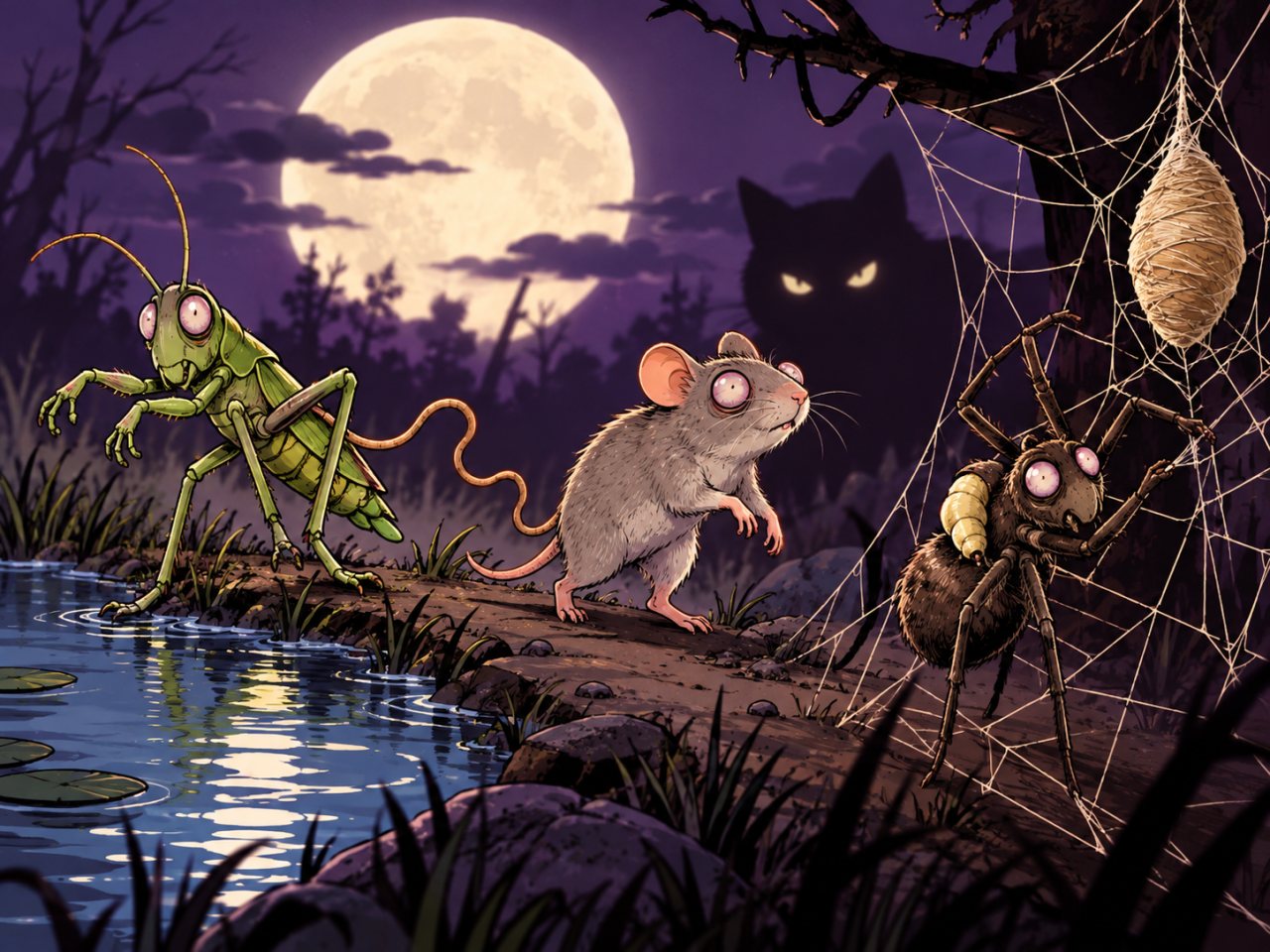
As Halloween approaches, it's time to bring out the walking dead!
But wait a minute... The dead can't walk. We'll actually cover that on Halloween itself. 😂
Instead, we're going to turn our attention today to the macabre true-life stories of zombies in nature! Zombies who existed long before humans were even around to invent zombies.
And, okay, these "zombies" are not exactly dead animals who came back to life. Instead, we have three stories of one organism being controlled by another organism to do its bidding.
Three stories of PARASITES and their hosts, and how parasites can manipulate the animals they infect to serve their own needs. Spooky! And brains are involved. Of course.
In our first story, a hairworm can infect grasshoppers and crickets and act on their nervous systems to make the poor hoppers jump into a body of water. At the risk of drowning themselves. Just so the worm can get into the right environment for the next stage of its life cycle. Rude!
Our second story investigates a protist that can infect rodents. This sneaky parasite needs a cat's body to reproduce sexually, so its solution? Make the rodents less afraid of cats! Rodents infected by this parasite can become less fearful of, and sometimes even attracted to, the smell of cats. Which, of course, the cats have no problem with. Their answer? Nom. Nom. Nom.
And our third story is about a wasp that lays an egg on a spider. The developing larva then forces the spider to build a different kind of web. Not a web to benefit the spider, but rather a web that benefits the wasp. The parasite-controlled spider makes a specially reinforced web to support the wasp's cocoon. And then the larva kills the spider and has it for breakfast.
[And if you want to review the fact that spiders spin different kinds of silk for different purposes, check out this previous article!]
Three very different situations. One common theme: the parasite turns its host into a zombie. An animal that no longer behaves entirely according to its own needs, but instead becomes a mindless automaton doing the parasite's bidding.
And if that's not spooky enough to get you into the Halloween spirit, I don't know what will!
The Real Story
The zombies in horror movies may be fictional, but nature has produced something remarkably similar: parasites that can change the behavior of living animals to benefit themselves.
A parasite is an organism that lives in or on another organism, called its host, and obtains resources at the host's expense. Some parasites go a step further. Rather than simply feeding on their hosts, they alter what those hosts do.
Scientists call this parasite-induced behavioral manipulation. The affected animal may perform behaviors that increase the parasite's chances of surviving, reproducing, or reaching another host.
And some of these behaviors are genuinely disturbing.
The Hairworm: A Deadly Swimming Lesson
Hairworms, also called gordian worms, are long, slender parasitic worms belonging to the group Nematomorpha. During their development, some species live inside terrestrial insects such as crickets and grasshoppers.
The worm grows inside its host, sometimes becoming considerably longer than the insect itself. Eventually, it must leave the insect because adult hairworms reproduce in water.
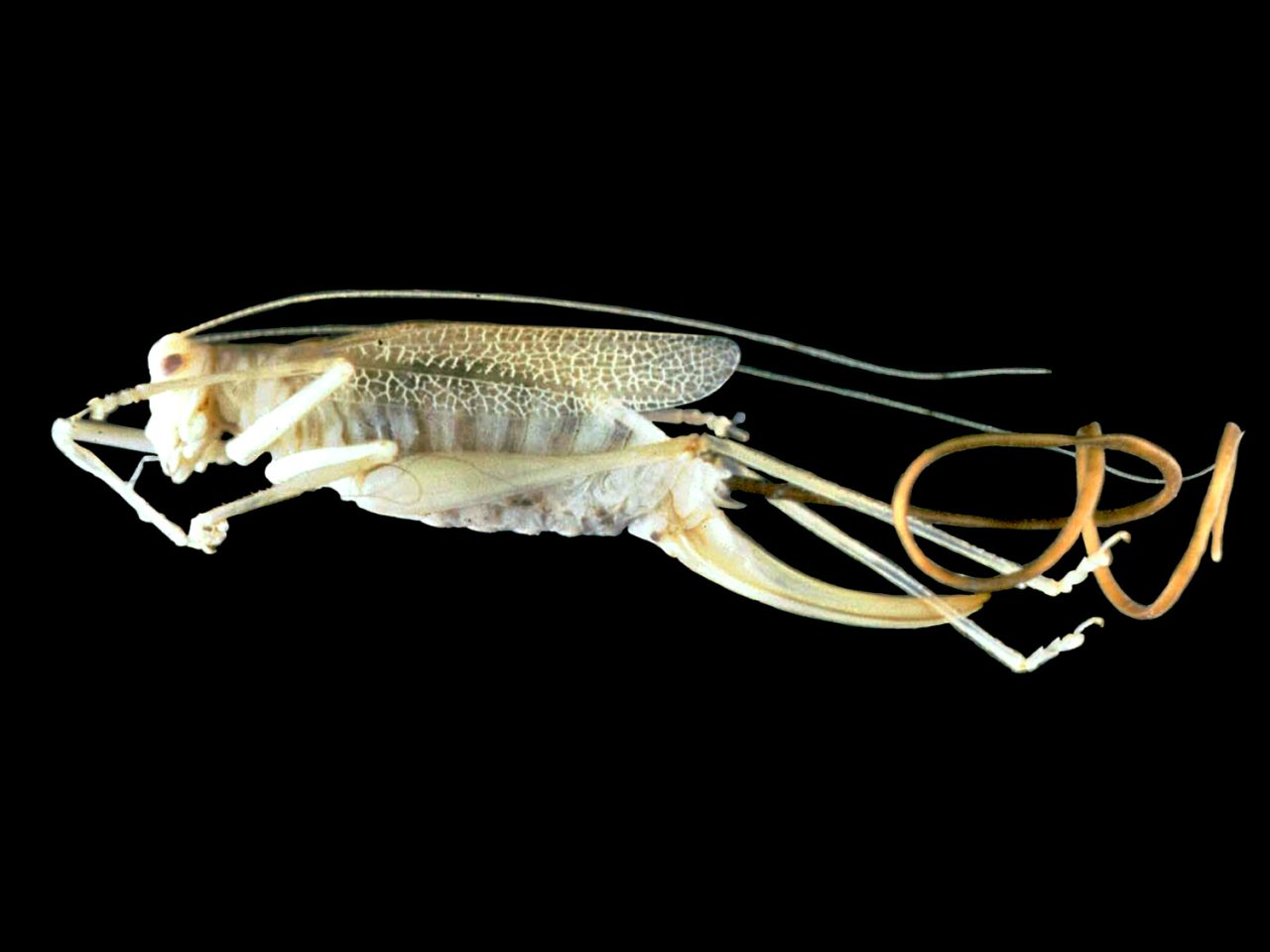
There's just one problem. The insect lives on land.
The parasite's solution is to alter its host's behavior.
In a 2002 study, researchers observed insects infected with hairworms entering water and releasing the parasites. Experiments comparing infected and uninfected crickets confirmed that infected individuals were more likely to enter water, even though doing so could be fatal.
Interestingly, the researchers found no evidence that infected crickets could detect distant water sources. Instead, the infection appeared to change their behavior in ways that made them more likely to encounter water and then enter it rather than avoid it.
But how does a worm inside an insect influence what that insect does?
Researchers studying infected grasshoppers have identified changes in proteins associated with nervous-system function. These findings suggest that hairworms interfere with the biological processes involved in their hosts' behavior, although the precise mechanisms are still being investigated.
Once the insect enters the water, the mature hairworm emerges, leaving its host behind. Some insects drown, but others survive the experience.
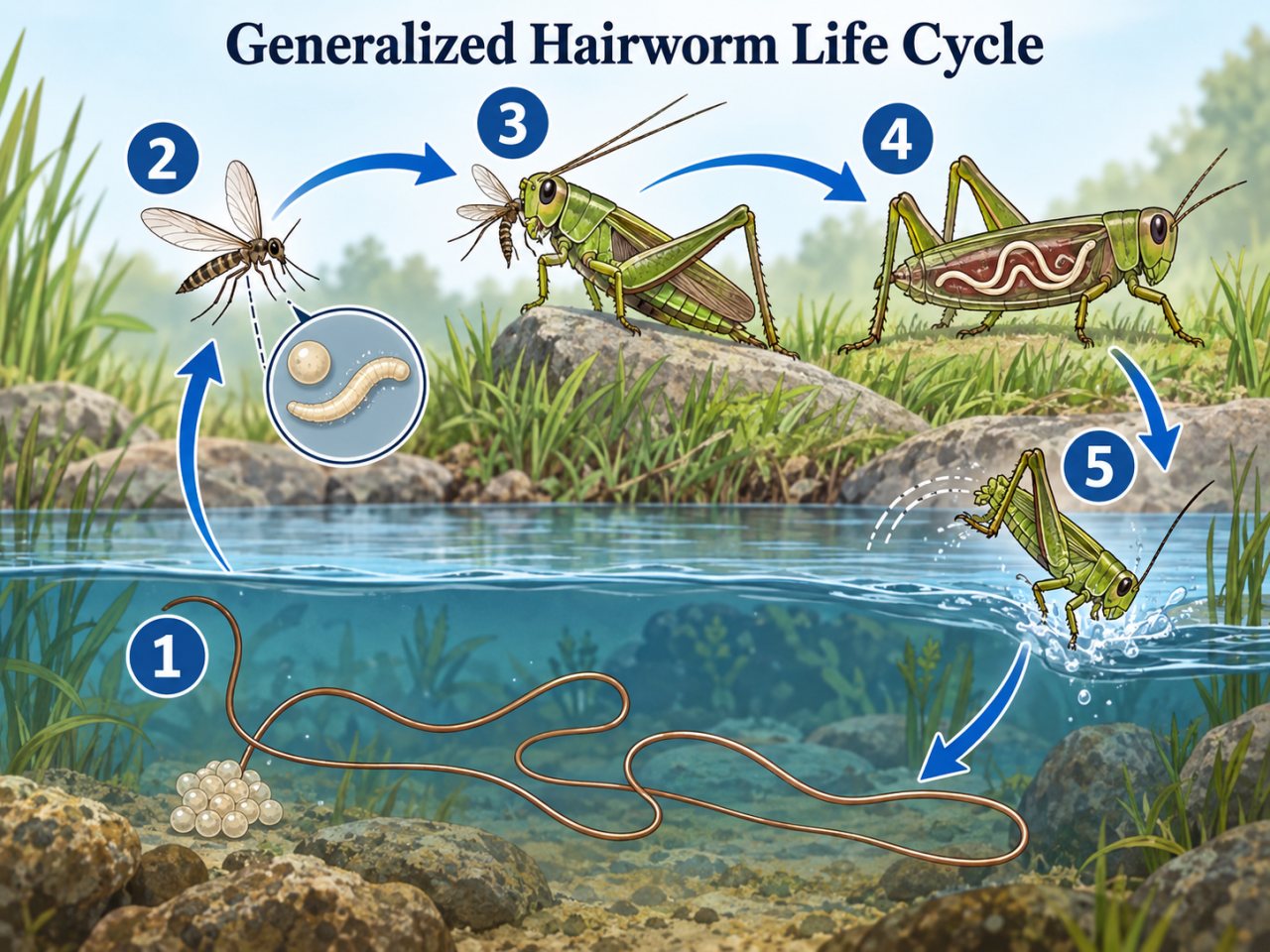
For the worm, the arrangement is ideal. It gets transported to the environment where it needs to reproduce.
For the cricket, the entire experience is considerably less rewarding. And sometimes fatal.
Toxoplasma: When Your Predator Starts Smelling Attractive
Our second example involves Toxoplasma gondii, a single-celled protist parasite capable of infecting many warm-blooded animals, including rodents, birds, and humans.
However, there's something special about cats.
Although Toxoplasma can multiply in other animals, sexual reproduction occurs in felids, making cats and their relatives essential to that part of its life cycle.
One way the parasite can reach a cat is through an infected rodent being eaten.
Normally, rats and mice have excellent reasons to avoid cats. Even the smell of cat urine can trigger defensive behavior.
But Toxoplasma infection can interfere with that response.
In laboratory experiments, researchers found that infected rodents showed reduced avoidance of cat odors. Some even approached odors that uninfected animals typically avoided.
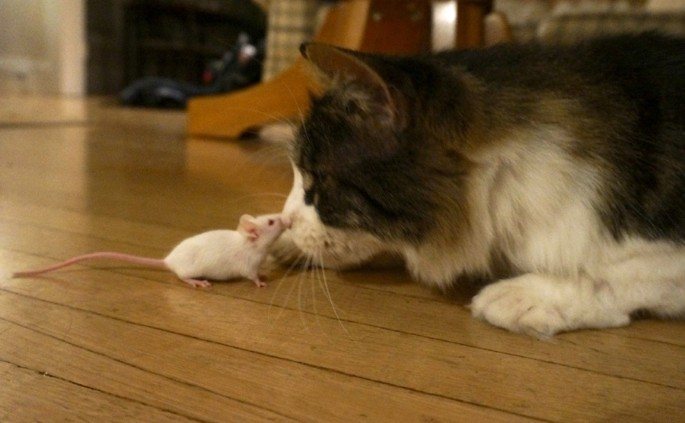
What makes this particularly interesting is that the changes were not necessarily part of a general loss of fear or intelligence. In one study, infected rodents retained many other normal responses, including learned fear and responses to non-feline threats.
The parasite appeared to influence a surprisingly specific aspect of behavior.
Researchers have also examined changes in activity within brain regions involved in fear, defensive responses, and attraction. One study found altered activity in these networks when infected rats encountered cat odors, suggesting that infection can change how the brain processes information about a potential predator.
However, scientists have not established a single, complete mechanism explaining these changes, and results can differ between experiments.
The evolutionary explanation is nevertheless compelling: a rodent that becomes less cautious around cats may be more likely to be eaten, potentially returning the parasite to the host where sexual reproduction can occur.
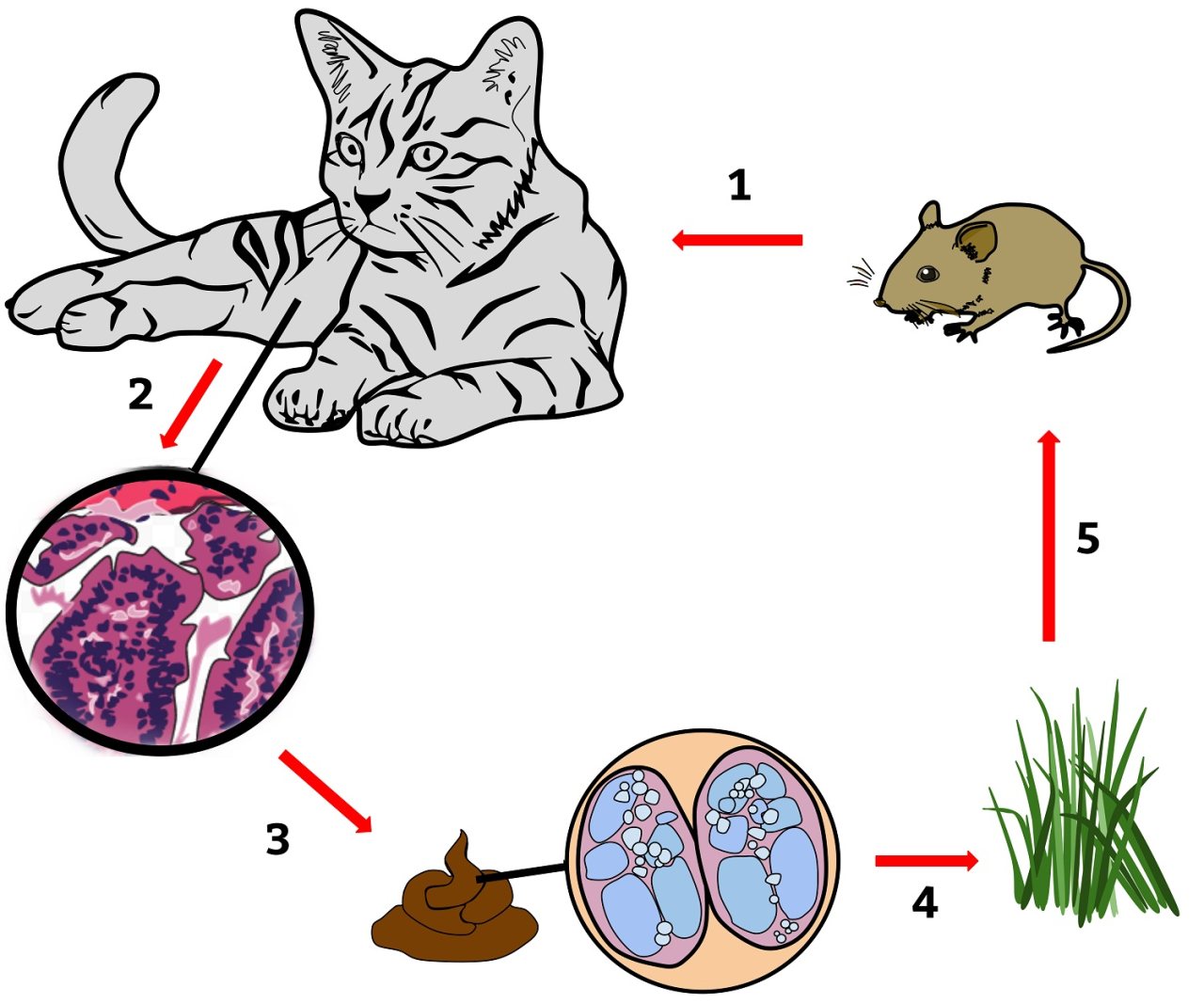
The rodent loses an important survival advantage.
The parasite gains an opportunity to complete its life cycle.
And the cat gets lunch.
And this is only the beginning of the Toxoplasma scandal. This parasite has been keeping plenty of other secrets, including some involving humans. But that's an investigation for another day. 👀
Parasitoid Wasps: Building a Nursery for Your Own Killer
Our final example involves certain parasitoid wasps and the spiders they exploit.
Unlike parasites that can survive for extended periods without killing their hosts, parasitoids typically develop at the expense of a host that they eventually kill.
Some parasitoid wasps take this relationship to an extraordinary extreme.
A female wasp lays an egg on a spider's abdomen. After hatching, the larva remains attached to the spider and feeds on its body fluids while the spider continues living and building webs.
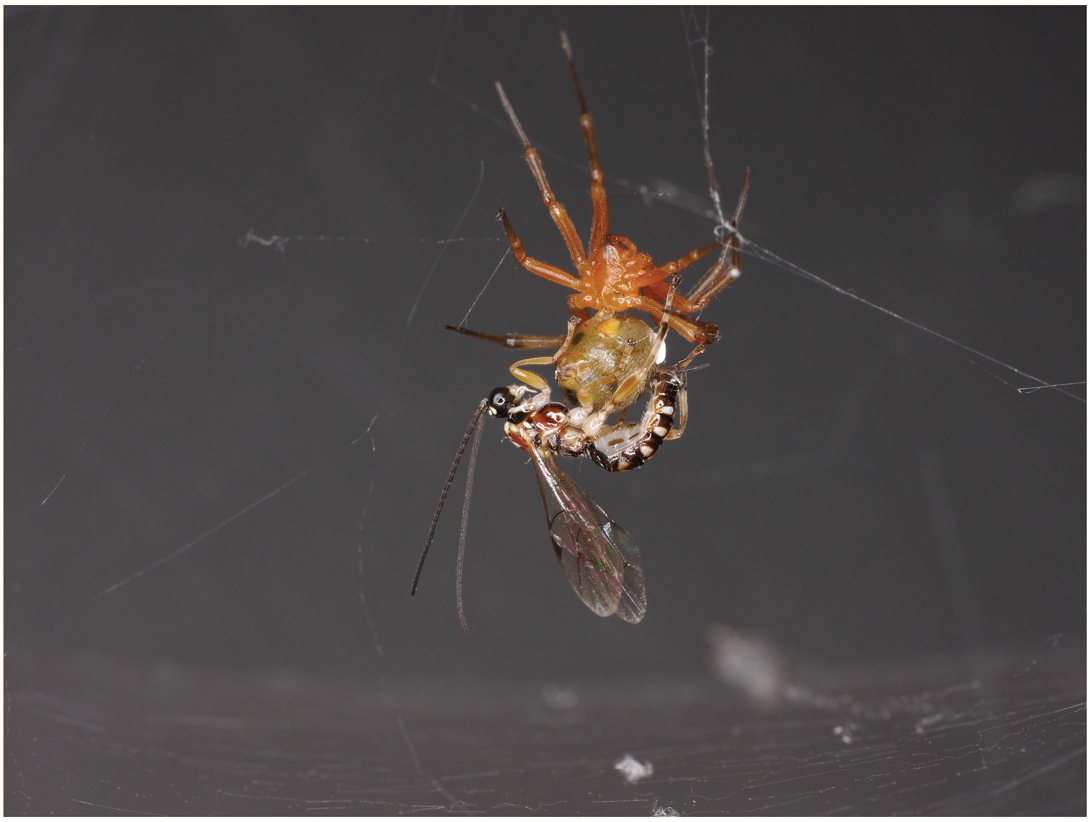
But as the larva approaches the next stage of its development, something remarkable happens.
The spider changes its construction plans.
Instead of producing its usual prey-catching web, the infected spider builds a modified structure that will support the wasp's cocoon.
Depending on the species involved, these special webs may contain reinforced supporting threads, altered arrangements of silk, or fewer of the sticky spirals normally used to capture insects.
The new structure is no longer primarily designed to catch the spider's dinner. It is better suited to supporting and protecting the developing wasp.
Once the spider finishes its final construction project, the wasp larva kills it, consumes its remaining tissues, and suspends its cocoon from the modified web.
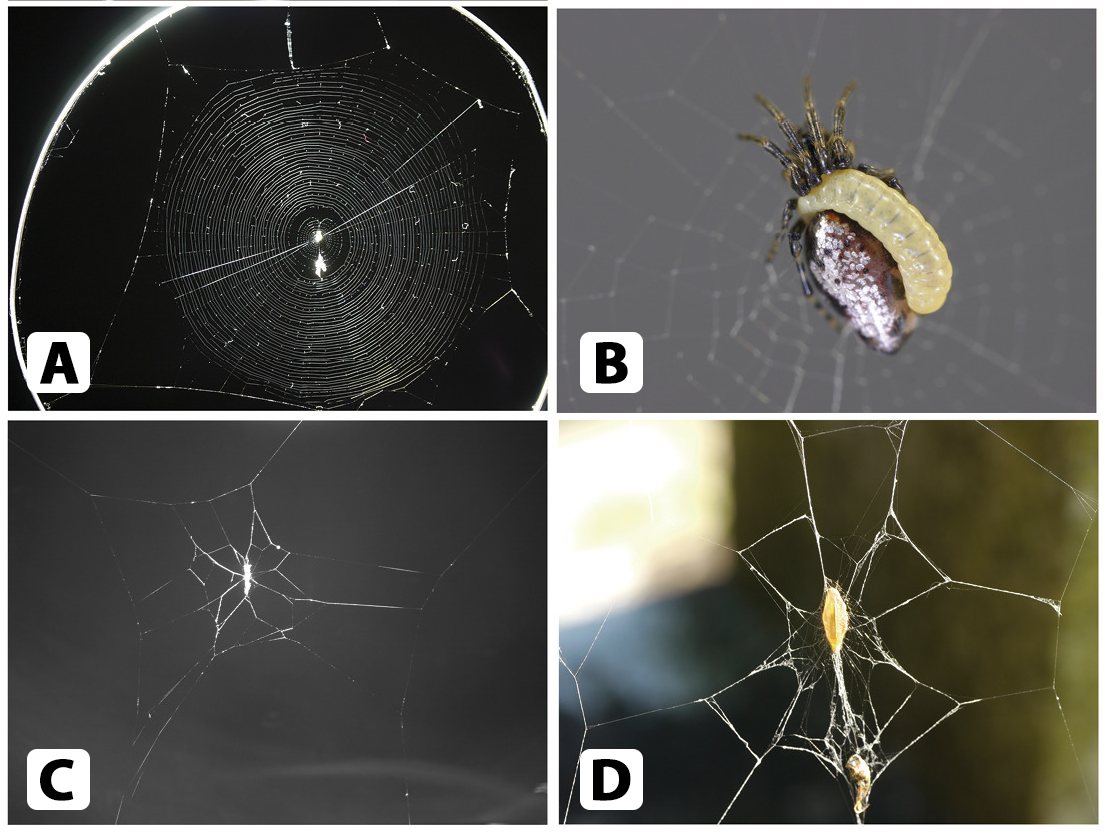
Researchers have demonstrated that this change in web-building behavior is associated with the developing parasitoid, rather than simply being an ordinary response to illness.
The mechanism is still being investigated, but evidence suggests that chemical signals may interfere with the spider's normal behavioral programs.
In some species, the altered webs resemble structures spiders ordinarily build before molting, when they shed their outer skeleton. A 2017 study found elevated levels of a molting-related hormone in spiders producing these modified webs, suggesting that parasitoids may exploit an existing biological program rather than creating an entirely new behavior.
In other words, the wasp does not need to teach the spider how to build a web.
It may only need to change which kind of web the spider builds, and when.
The spider supplies the labor, the building materials, and ultimately its own body.
The wasp gets a nursery.
Nature's Real Zombie Apocalypse
These three examples involve very different parasites, hosts, and biological mechanisms. Yet they share an extraordinary feature: infection can alter an animal's behavior in ways that benefit another organism.
Hairworms increase the likelihood that terrestrial insects enter water. Toxoplasma can change rodents' responses to predators. Certain parasitoid wasps redirect spiders' web-building behavior toward constructing shelters for their developing offspring.
None of these hosts is literally dead while performing these behaviors, and none has become a mindless puppet in the Hollywood sense. The parasites influence particular behaviors rather than taking complete control of every action.
Scientists are also careful to distinguish genuine adaptive manipulation from behavioral changes that merely result from illness. Not every unusual behavior in an infected animal is necessarily something the parasite evolved to produce.
Nevertheless, the evidence shows that some parasites have evolved remarkable ways of exploiting the behavior of other organisms.
They don't need to resurrect the dead.
They just need to make the living do something they ordinarily wouldn't.
And perhaps that's the more disturbing kind of zombie. 😬
Sources
-
Do hairworms (Nematomorpha) manipulate the water seeking behaviour of their terrestrial hosts?
Thomas, F., Schmidt-Rhaesa, A., Martin, G., Manu, C., Durand, P., & Renaud, F. (2002). Do hairworms (Nematomorpha) manipulate the water seeking behaviour of their terrestrial hosts? Journal of Evolutionary Biology, 15(3), 356–361.
Why this source matters: This experimental study demonstrated that crickets infected with hairworms were more likely to enter water than uninfected crickets, supporting the claim that these parasites alter host behavior to complete their life cycle.
-
Behavioural manipulation in a grasshopper harbouring hairworm: a proteomics approach
Biron, D. G., Marché, L., Ponton, F., Loxdale, H. D., Galéotti, N., Renault, L., Joly, C., & Thomas, F. (2005). Behavioural manipulation in a grasshopper harbouring hairworm: a proteomics approach. Proceedings of the Royal Society B: Biological Sciences, 272(1577), 2117–2126.
Why this source matters: Researchers examined protein-expression changes associated with behavioral manipulation in grasshoppers infected with hairworms, providing evidence that parasites may interfere with biological processes involved in nervous-system function.
-
Behavioral changes induced by Toxoplasma infection of rodents are highly specific to aversion of cat odors
Vyas, A., Kim, S.-K., Giacomini, N., Boothroyd, J. C., & Sapolsky, R. M. (2007). Behavioral changes induced by Toxoplasma infection of rodents are highly specific to aversion of cat odors. Proceedings of the National Academy of Sciences, 104(15), 6442–6447.
Why this source matters: This study found that Toxoplasma-infected rodents showed altered responses to feline odors while retaining several other normal behaviors, providing evidence for unusually specific parasite-associated behavioral changes.
-
Predator Cat Odors Activate Sexual Arousal Pathways in Brains of Toxoplasma gondii Infected Rats
House, P. K., Vyas, A., & Sapolsky, R. M. (2011). Predator cat odors activate sexual arousal pathways in brains of Toxoplasma gondii infected rats. PLOS ONE, 6(8), e23277.
Why this source matters: This neuroscience study examined changes in neural activity associated with exposure to cat odors in infected rats, supporting the hypothesis that Toxoplasma alters the processing of predator-related sensory information.
-
Spider manipulation by a wasp larva
Eberhard, W. G. (2000). Spider manipulation by a wasp larva. Nature, 406(6793), 255–256.
Why this source matters: This study documented a parasitoid wasp larva inducing its spider host to construct a special cocoon-supporting web shortly before killing it, demonstrating a remarkable alteration of normal web-building behavior.
-
Proximate mechanism of behavioral manipulation of an orb-weaver spider host by a parasitoid wasp
Kloss, T. G., Gonzaga, M. O., de Oliveira, L. L., & Sperber, C. F. (2017). Proximate mechanism of behavioral manipulation of an orb-weaver spider host by a parasitoid wasp. PLOS ONE, 12(2), e0171336.
Why this source matters: Researchers found elevated levels of the molting-related hormone 20-hydroxyecdysone in spiders producing parasitoid-induced cocoon webs, suggesting that some wasps may manipulate an existing web-building program associated with molting.