
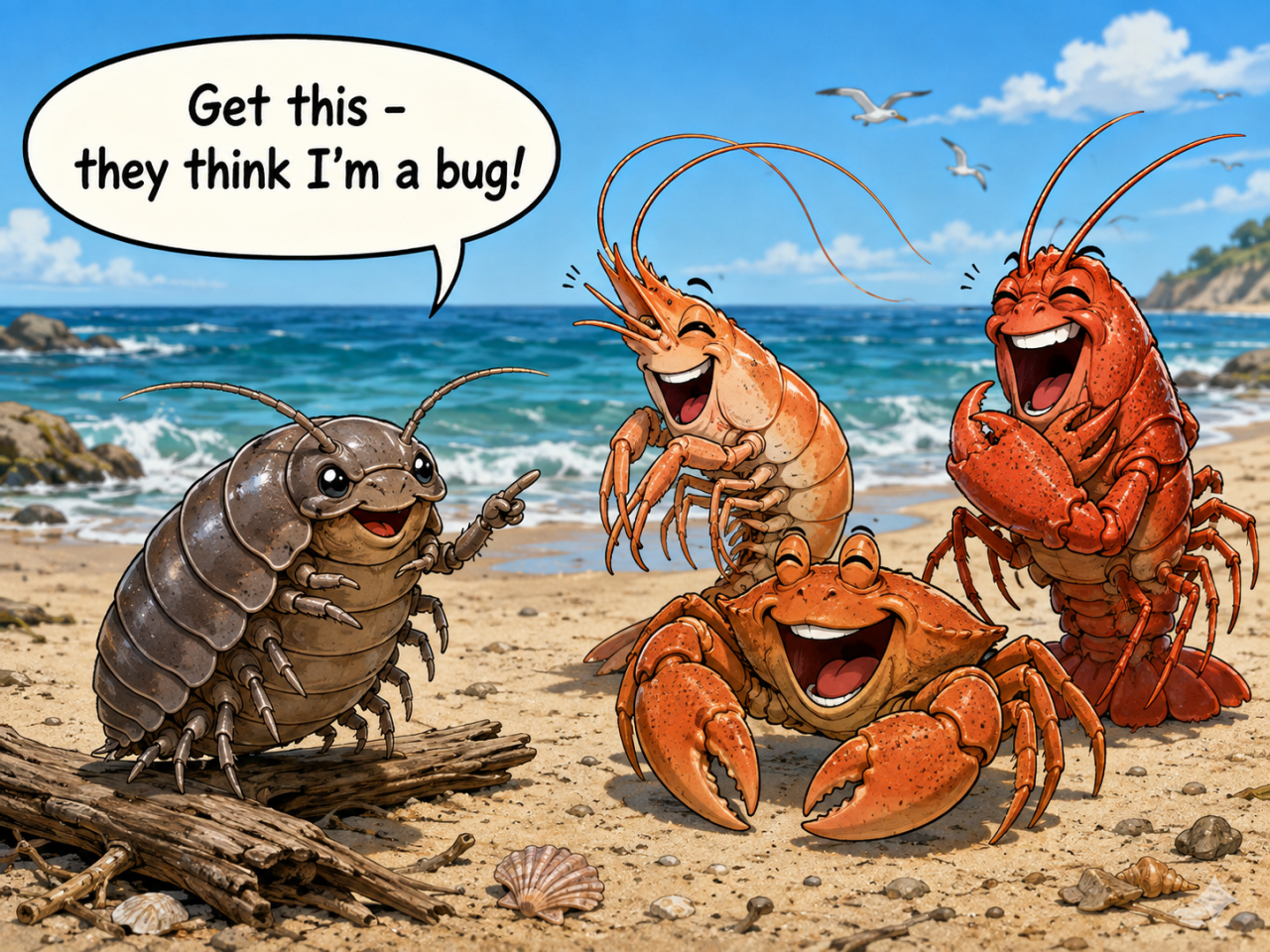
I was fascinated with roly-polies growing up. I even kept “roly-poly farms” in mason jars as a young girl.
Oh, who am I kidding.... I’m still fascinated with them! And that’s the weirdo in me who started Science Scandal in the first place. 😊
But I only recently learned that these fascinating little armored balls are not actually insects.
They are crustaceans!
That’s right. They are more closely related to crabs, shrimp, and lobsters than to the insects crawling around your yard.
(Now I’m wondering how they’d taste with some garlic butter.)
I’ve also discovered that these little critters are masters of disguise. Not only do they roll themselves into balls when threatened, but they seem to have collected enough aliases to avoid identification entirely.
They are a type of woodlouse, a name associated with their fondness for damp places such as old wood, logs, leaf litter, and mulch. Other kinds of woodlice are commonly called sowbugs or even wood pigs, depending on where you live.
But our particular little armored suspects have even more names.
Roly-polies are also called pillbugs, because when they curl into a ball they resemble a tiny pill. Depending on where you live, you may also hear names such as slaters, potato bugs, curly bugs, and doodle bugs.
Which is impressive for an animal that is not actually a bug at all!
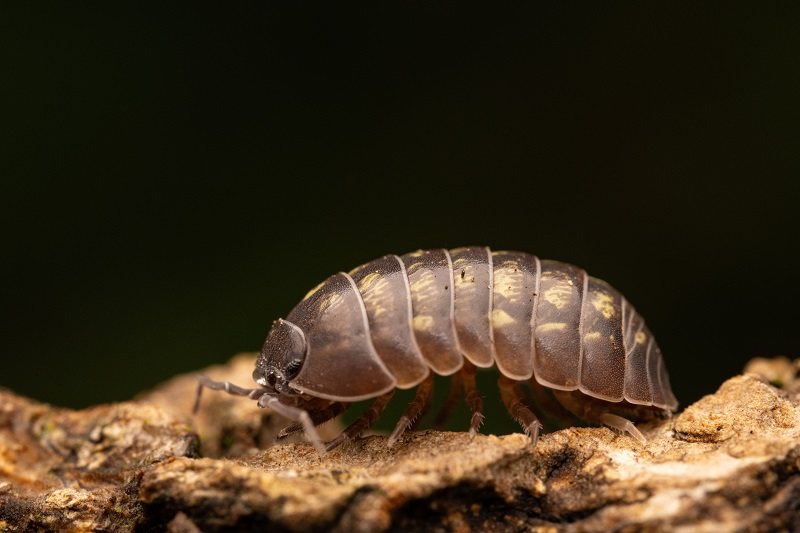
They belong to a group of crustaceans called isopods. The name comes from Greek words meaning roughly “equal feet,” referring to their generally similar walking legs. Adult pillbugs have seven pairs of them.
That’s fourteen legs.
Frankly, at this point the number of aliases is starting to seem reasonable.
And then there’s the family name: Armadillidiidae.
Yes. These tiny armored creatures that curl themselves into balls have a scientific family name that sounds suspiciously like “armadillo.”
See?
This guy has as many aliases as the FBI’s most wanted.
But don’t worry. The roly-poly is mostly harmless. It spends its time in damp corners eating decaying leaves, wood, and other plant material, helping break down organic matter as part of nature’s cleanup crew.
So I guess I’ll let them stay.
I’ll just say, “I see you!” when they roll themselves into a ball and pretend they’ve vanished.
And I’ll forgo the garlic butter.
For now, at least.
The Real Story
Roly-polies are not insects.
They are terrestrial isopods, a group of crustaceans that includes the familiar pillbugs and other woodlice. So although they spend their lives under mulch, logs, rocks, and flowerpots rather than swimming through the ocean, they belong to the same broad crustacean branch of the arthropod family tree as shrimp, crabs, and lobsters.
The word isopod comes from Greek roots meaning roughly “equal feet.” The name refers to the seven pairs of walking legs that are relatively similar to one another, rather than being heavily modified into different structures the way some other crustacean limbs are. Adult pillbugs therefore walk around on fourteen legs, one pair attached to each of the seven main thoracic segments.
And the names really are a mess.
Woodlouse is a broad common name for terrestrial isopods. Pillbug usually refers to woodlice such as Armadillidium vulgare that can curl themselves into a tight ball. Sowbugs are close relatives and fellow woodlice, but they are flatter and generally cannot roll completely into a ball. “Roly-poly” is therefore a particularly appropriate nickname for the pillbugs that perform this defensive maneuver.
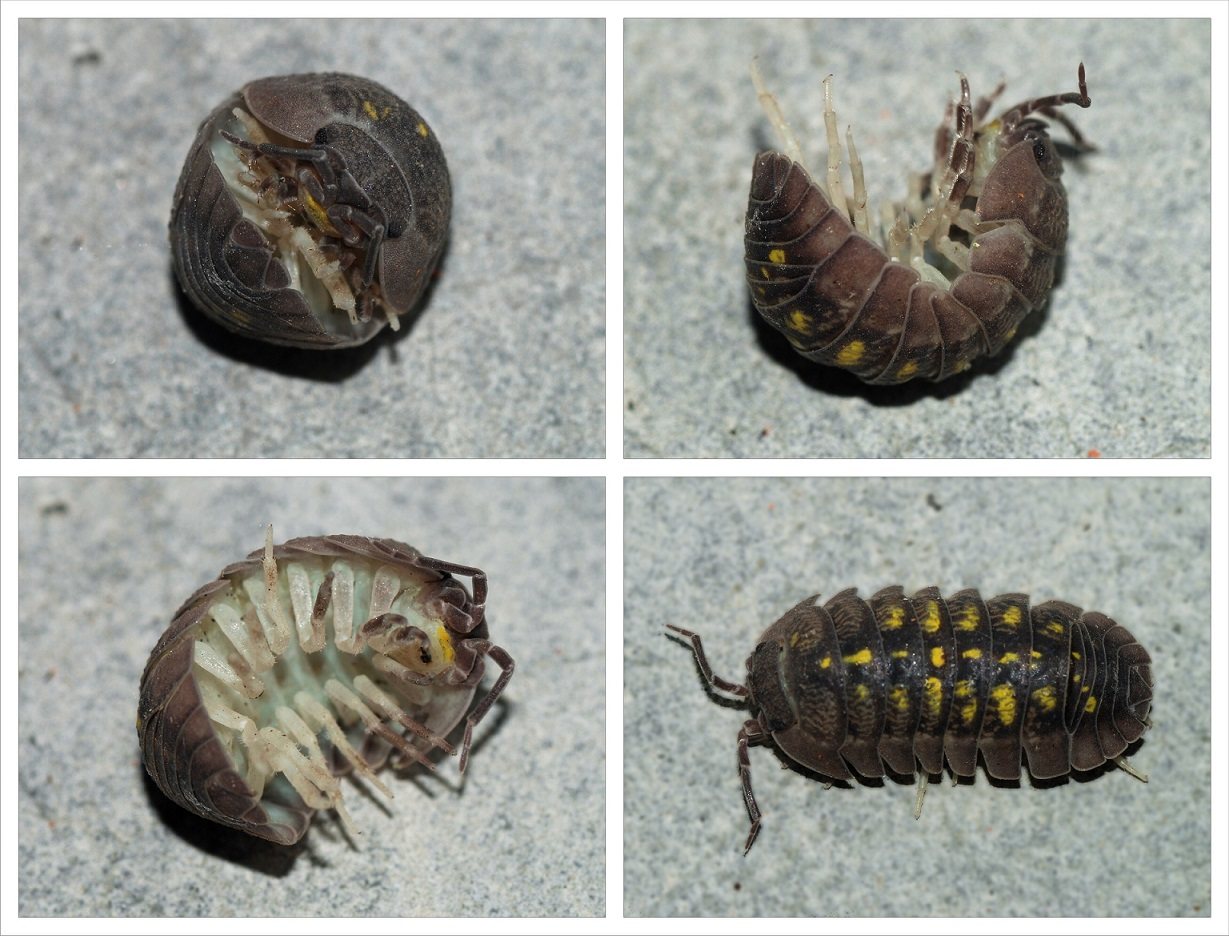
Rolling into a ball is called conglobation. It helps protect the softer underside and appendages from predators, and the compact posture can also help reduce water loss. Not every terrestrial isopod can do it, which means the ability to become a tiny armored marble is an impressive trick, not a universal woodlouse job requirement.
Their fondness for damp hiding places also makes much more sense once you know they are crustaceans.
Woodlice descended from aquatic ancestors and had to acquire a collection of adaptations for life on land. Gas exchange occurs through structures associated with abdominal appendages called pleopods, and many terrestrial species have evolved specialized air-breathing structures often called pleopodal lungs or pseudotracheae. Even with those adaptations, terrestrial isopods remain vulnerable to drying out, which is one reason they usually retreat during the day beneath damp leaves, mulch, stones, logs, and other sheltered places.
So while they are fully capable of living on land, they have not exactly forgotten where the family came from.
As for what they are doing under your flowerpots, mostly they are eating dead stuff.
Pillbugs feed primarily on decaying leaves and other decomposing plant material. By shredding and consuming that material, terrestrial isopods help break down leaf litter and move nutrients through soil ecosystems. Studies have found that their feeding can influence decomposition, nutrient availability, and other soil processes.
They can occasionally nibble seedlings, roots, fruits, or other living plants and become minor garden pests, especially when populations are high. But most of the time, the roly-poly under your mulch is not plotting the destruction of your garden.
It is working sanitation.
So the little gray creature that generations of children have collected in jars and casually filed under “bug” is actually a fourteen-legged terrestrial crustacean with aquatic ancestry, specialized breathing structures, an armored exoskeleton, a talent for recycling dead plants, and enough common names to make identification unnecessarily dramatic.
The shrimp family has apparently been living under the flowerpot this entire time.
Sources
-
Pillbug, Roly-Poly, Woodlouse Armadillidium vulgare (Latreille) (Malacostraca: Isopoda: Armadillidiidae)
Franklin, J. A., Byron, M. A., & Gillett-Kaufman, J. L. (2015, revised 2025). Pillbug, Roly-Poly, Woodlouse Armadillidium vulgare (Latreille) (Malacostraca: Isopoda: Armadillidiidae). UF/IFAS Extension.
Why this source matters: Primary species-level source. Supports pillbugs as terrestrial crustaceans and isopods; the distinction between pillbugs, sowbugs, and woodlice; rolling behavior; seven pairs of legs; humid habitat preferences; feeding on decaying plant material; occasional feeding on living plants; molting; and ecological effects of detritivory.
-
Terrestrial crustaceans (Arthropoda, Crustacea): taxonomic diversity, terrestrial adaptations, and ecological functions
Marin, I. N., & Tiunov, A. V. (2023). Terrestrial crustaceans (Arthropoda, Crustacea): taxonomic diversity, terrestrial adaptations, and ecological functions. ZooKeys, 1169, 95–162.
Why this source matters: Peer-reviewed review supporting the broader terrestrial-crustacean context, including woodlice as especially successful terrestrial crustaceans, adaptations for air breathing and water conservation, pleopodal respiratory structures, vulnerability to desiccation, and their ecological roles as litter processors and components of soil food webs.