
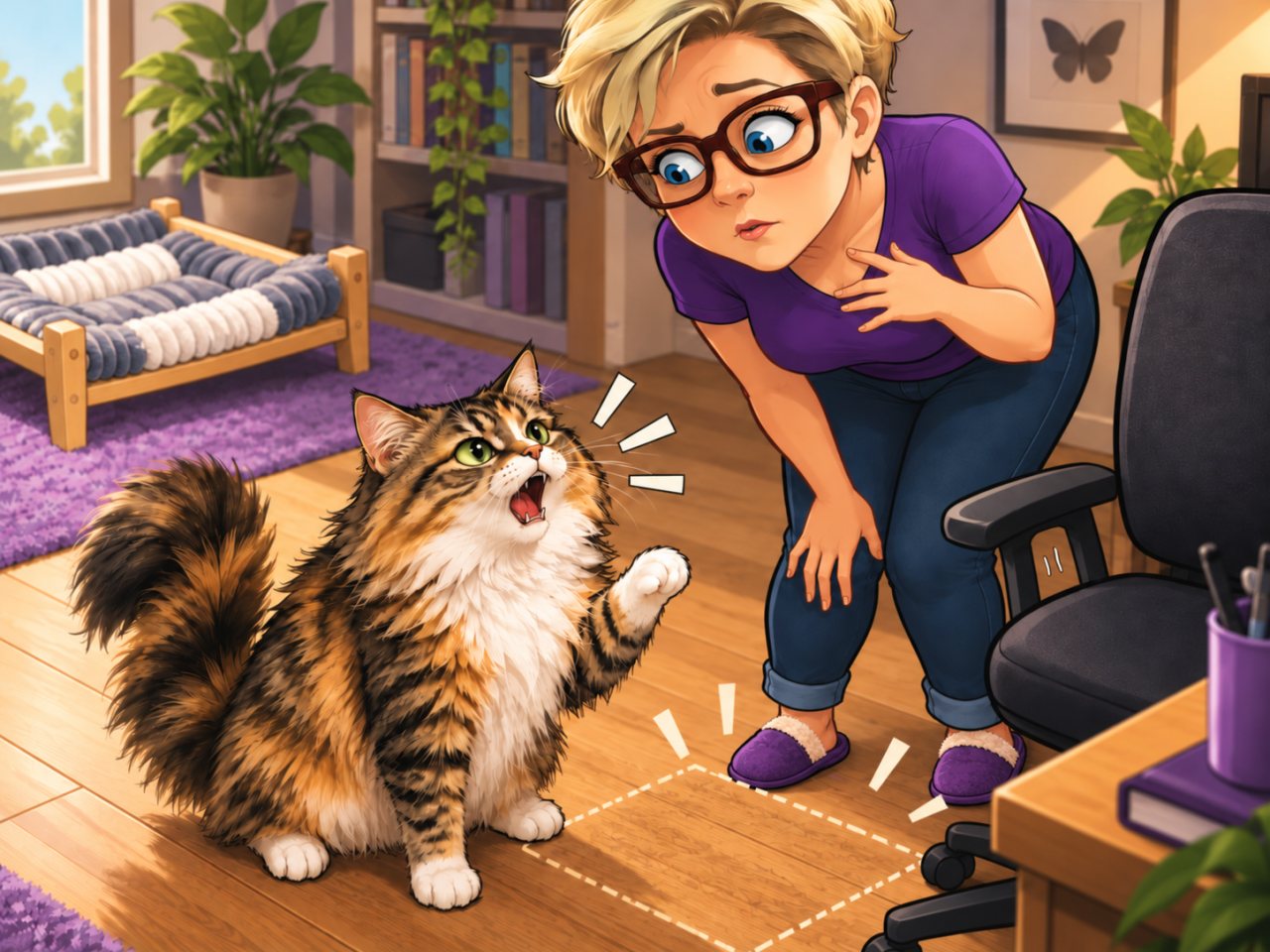
This is Millie. I hijacked Momma’s keyboard to write this post. 🐾
Humans are such weird creatures. So scandalous. And they think WE have issues?!?!
Today I will be exposing the truth about the species Homo sapiens, including their disturbing obsession with moving perfectly good furniture. Someone needed to document what happened.
For several weeks, I chose not to sleep in my hammock. This was a personal decision and, I assumed, a private matter. At no point did I surrender ownership, authorize disposal, or approve amendments to the household floor plan.
I may not have wanted to sleep in the hammock.
But at no point did I relinquish my option to sleep in the hammock.
Nevertheless, Momma apparently concluded that “Millie is not using this right now” meant “I may relocate it wherever I please.”
She moved my hammock.
I noticed.
I filed an immediate complaint.
Then I repeated it.
Multiple times.
Management attempted to explain that I had been sleeping elsewhere lately and that the hammock was “in the way.” Neither argument was relevant.
After sustained negotiations, the hammock was restored to its proper location beside Momma’s office chair. I then climbed into it immediately, because sometimes humans require a visual demonstration before they understand basic concepts.
The issue has now been resolved.
However, the incident raises a larger scientific question: Why can moving an apparently unused resting place matter so much to a cat?
Since the human involved clearly lacked the necessary expertise, I investigated. 🐈⬛📰
The Real Story
Cats do not experience a home as a collection of interchangeable bowls, beds, boxes, chairs, and scratching posts. They learn the layout of their surroundings and develop patterns around where important resources are located.
Feline environmental guidelines emphasize that cats tend to do best when their surroundings provide familiarity, predictability, and a sense of control. Knowing their physical and social environment helps cats navigate it comfortably, while routine and predictability can improve their ability to cope with changes or potential stressors.
Resting and sleeping locations are among those important environmental resources. Cats commonly develop patterns of resting and hiding within the home, and veterinary guidelines recommend providing several appealing resting areas rather than assuming one designated cat bed will satisfy every occasion.
That means the location of a resting place can matter along with the object itself. A bed beside a favorite human, a perch overlooking a window, and a secluded chair in another room offer different combinations of proximity, visibility, activity, privacy, and escape options. Moving the same bed across the room does not necessarily create an equivalent resting place from the cat's perspective.
Choice is important, too. The AAFP and ISFM environmental-needs guidelines specifically recommend providing cats with multiple locations for key resources, including resting and sleeping areas, so cats can choose among them. Those choices help give cats a greater sense of control over their surroundings.
That may help explain why an apparently unused cat bed should not automatically be considered irrelevant. A cat does not have to occupy every available resting place every day for the option itself to remain useful. Cats may rotate among preferred locations depending on time of day, household activity, temperature, social circumstances, or simply individual preference.
Which brings us back to the Hammock Incident.
Millie had stopped sleeping regularly in the hammock beside the author's office chair and was choosing other resting places instead. Management therefore moved the hammock out of the way. Millie objected repeatedly until it was returned to its former location and then promptly climbed back into it.
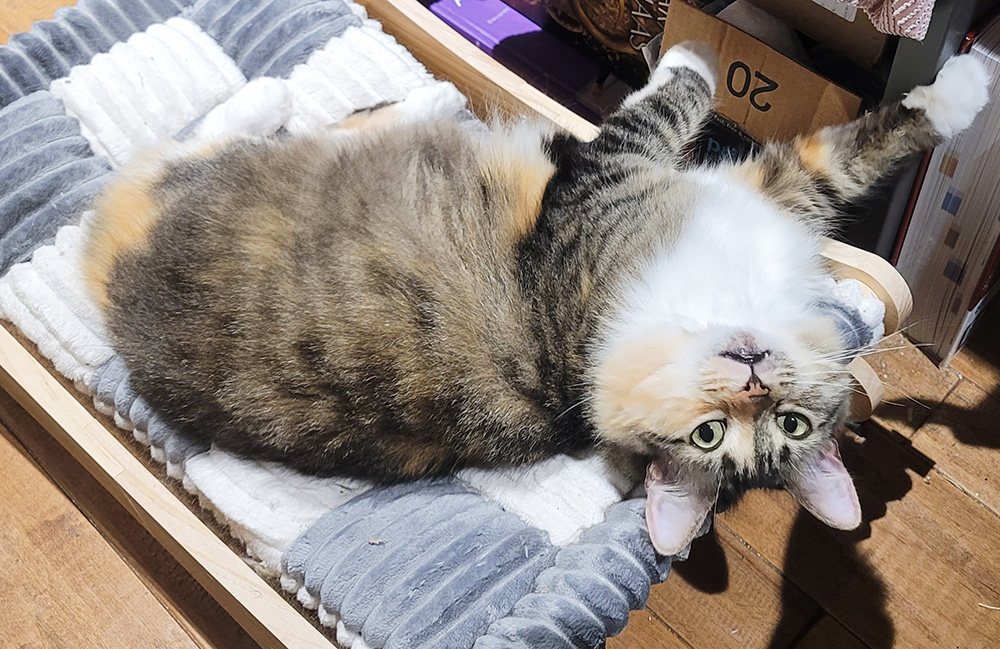
One incident cannot tell us exactly what mattered to Millie. Perhaps she preferred that particular spot beside her human. Perhaps the hammock was simply one familiar option in a larger collection of resting places. Perhaps she noticed a change in an established part of her environment and wanted it reversed.
What we can say is that her response fits well with what feline-behavior research and veterinary guidance tell us: cats benefit from familiar, predictable environments with access to multiple resources and the freedom to choose among them.
In other words, Millie may not have been using the hammock.
She was apparently still keeping it on retainer. 😹
Sources
-
AAFP and ISFM Feline Environmental Needs Guidelines
Ellis SLH, Rodan I, Carney HC, et al. AAFP and ISFM Feline Environmental Needs Guidelines. Journal of Feline Medicine and Surgery. 2013;15(3):219-230.
Why this source matters: Primary source for the article’s discussion of familiarity, predictability, routine, sense of control, multiple environmental resources, and providing cats with choices among resting and sleeping locations. The guideline explicitly identifies resting/sleeping areas as key environmental resources and recommends multiple locations.
-
2021 AAHA/AAFP Feline Life Stage Guidelines
Quimby J, Gowland S, Carney HC, DePorter T, Plummer P, Westropp J. 2021 AAHA/AAFP Feline Life Stage Guidelines. Journal of Feline Medicine and Surgery. 2021;23(3):211-233.
Why this source matters: Supports the discussion that cats develop patterns of resting and hiding within the home and that an appropriate feline environment should provide plentiful, thoughtfully distributed resources, including multiple appealing resting areas.