
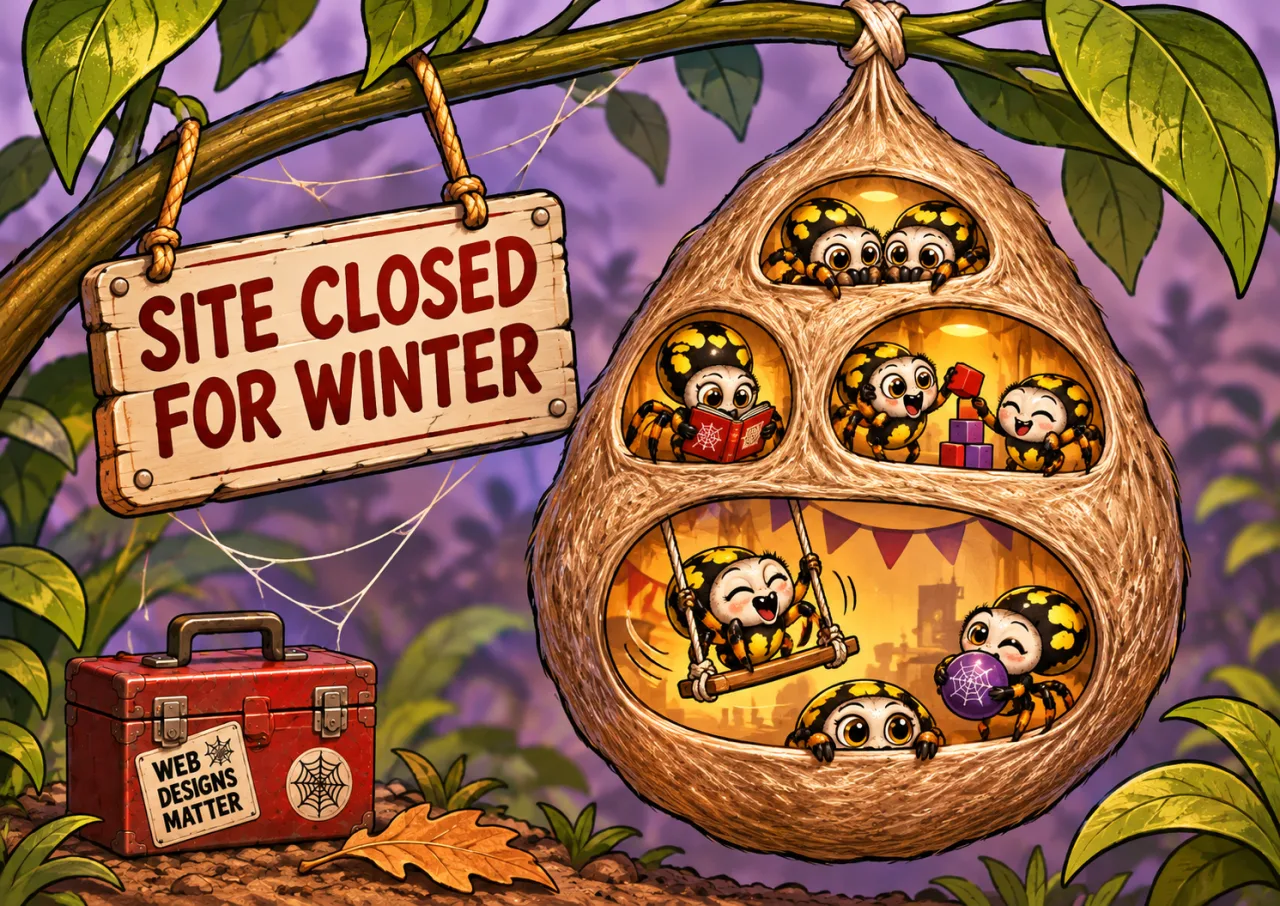
It's November. Sylvie is missing.
For months, she occupied the same general corner of the garden, sitting proudly in the middle of a web large enough to inconvenience humans and insects alike.
I got used to seeing her there.
I would walk outside, glance toward the garden, and there she was: black and yellow, suspended in the middle of her latest construction project as though she had personally reviewed the blueprints that morning.
Then the weather cooled.
The web emptied.
And I genuinely missed seeing her.
Science Scandal immediately opened a missing-spider investigation.
The usual workstation was unattended. No Sylvie. No website builder extraordinaire glaring at passing web-destroying mammals. Just an increasingly weather-beaten web and, nearby, a strange brown papery bundle attached to the vegetation.
An inspector took one look at the empty web and marked the property:
VACANT.
Sylvie would like to know whether they actually inspected the nursery.
Because while the adult garden-spider season may be winding down, the next generation may already be tucked inside that brown silk bundle, waiting out the cold months behind walls their mother built before she disappeared from view.
Apparently, the website is closed for winter.
The nursery is not.
The Real Story
The empty web does not mean the garden spider story is over.
For a yellow garden spider (Argiope aurantia), late summer and autumn are the conspicuous part of an annual cycle that has been unfolding much more quietly for months. By late summer, adult females are large enough that humans finally notice them sitting in broad orb webs with their unmistakable black-and-yellow abdomens on display. In Georgia, those adults remain visible into fall, mating and producing egg sacs before cold weather brings the adult season to an end.
Before that happens, the female has already invested in next year’s population.
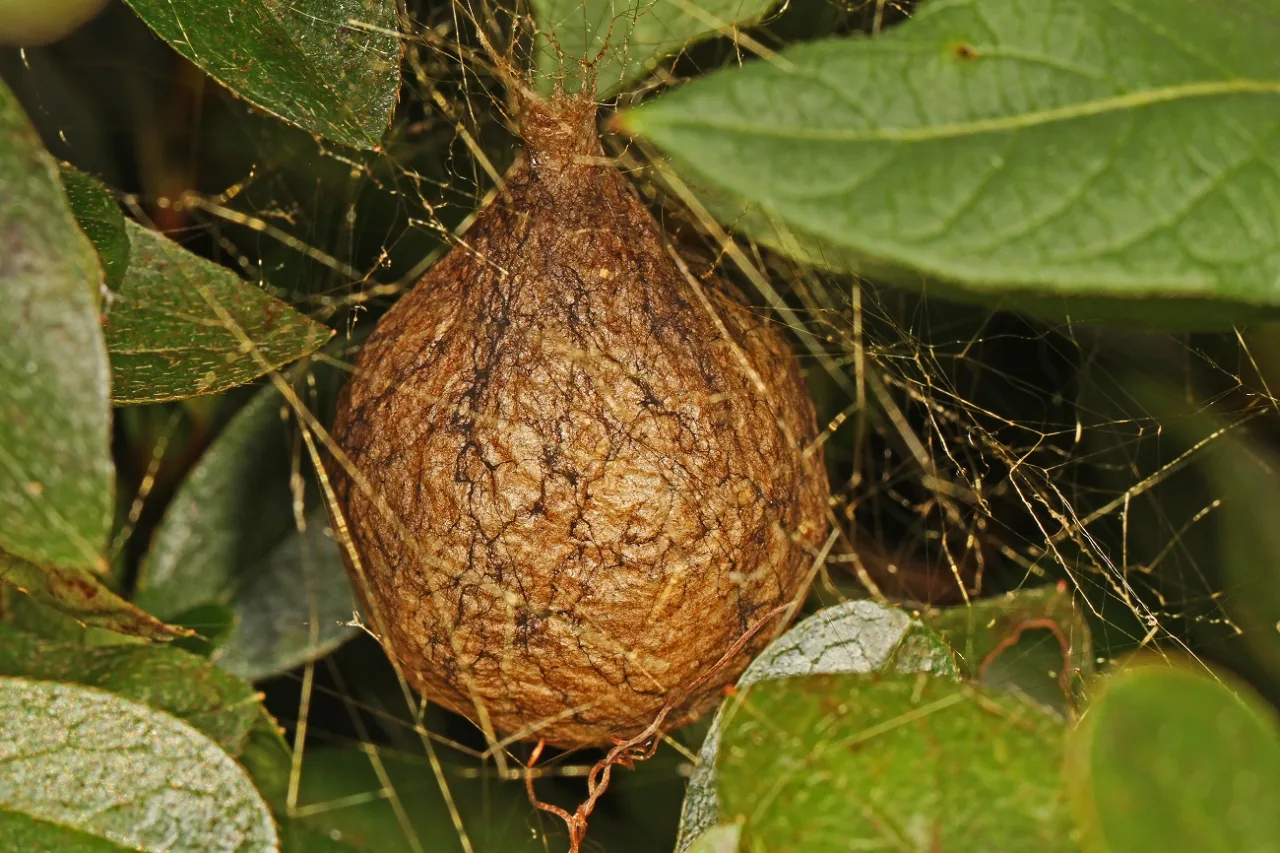
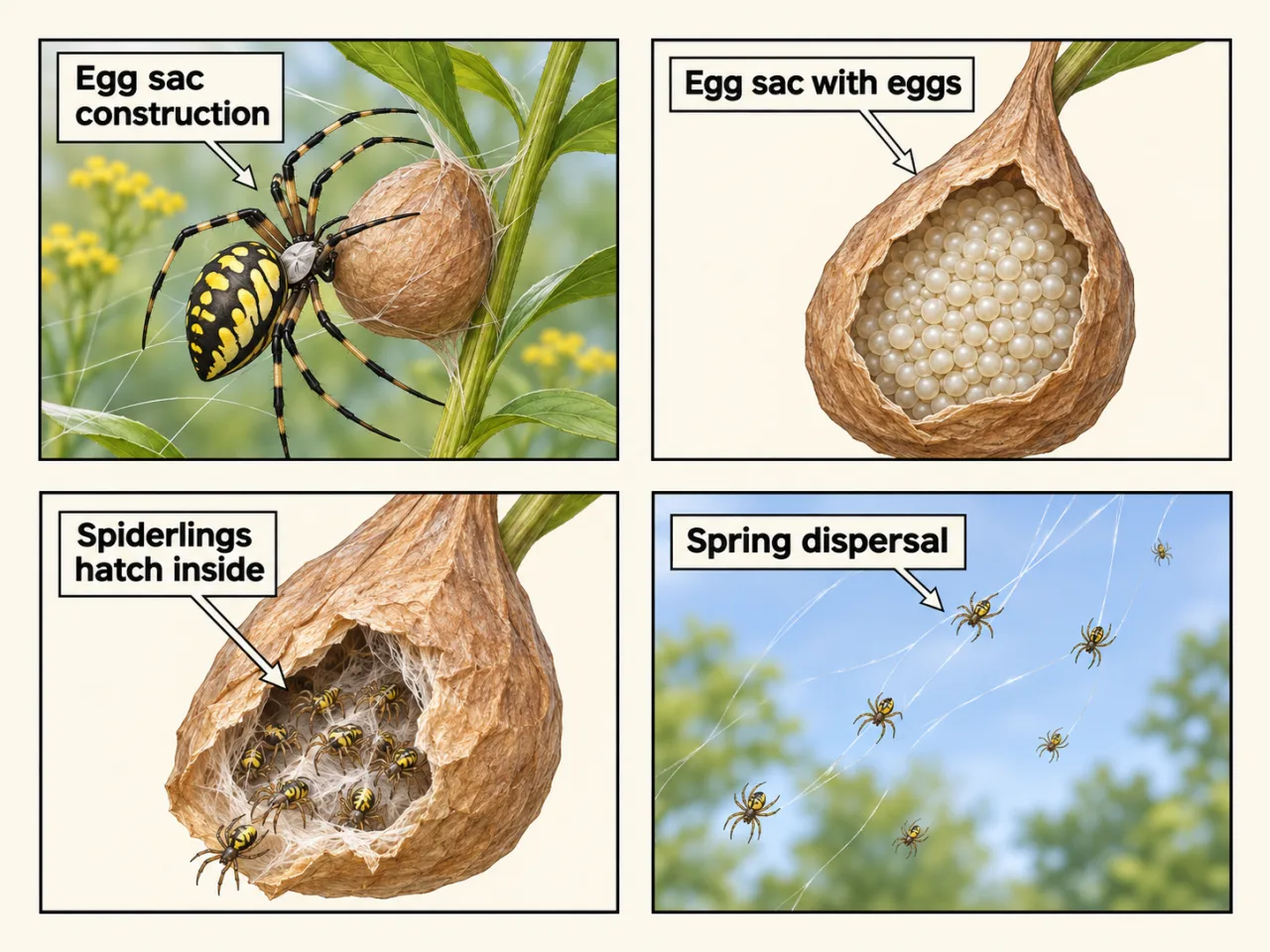
Around September or October, a female yellow garden spider can produce an egg sac and attach it near her web. The University of Georgia (UGA) describes the finished sac as resembling a brown fig, which unfortunately means that anyone searching through autumn vegetation for one is looking for an object whose camouflage strategy appears to be “look exactly like something Nikki would walk past seventeen times.” 🙃
The sac is more sophisticated than a simple silk bag.
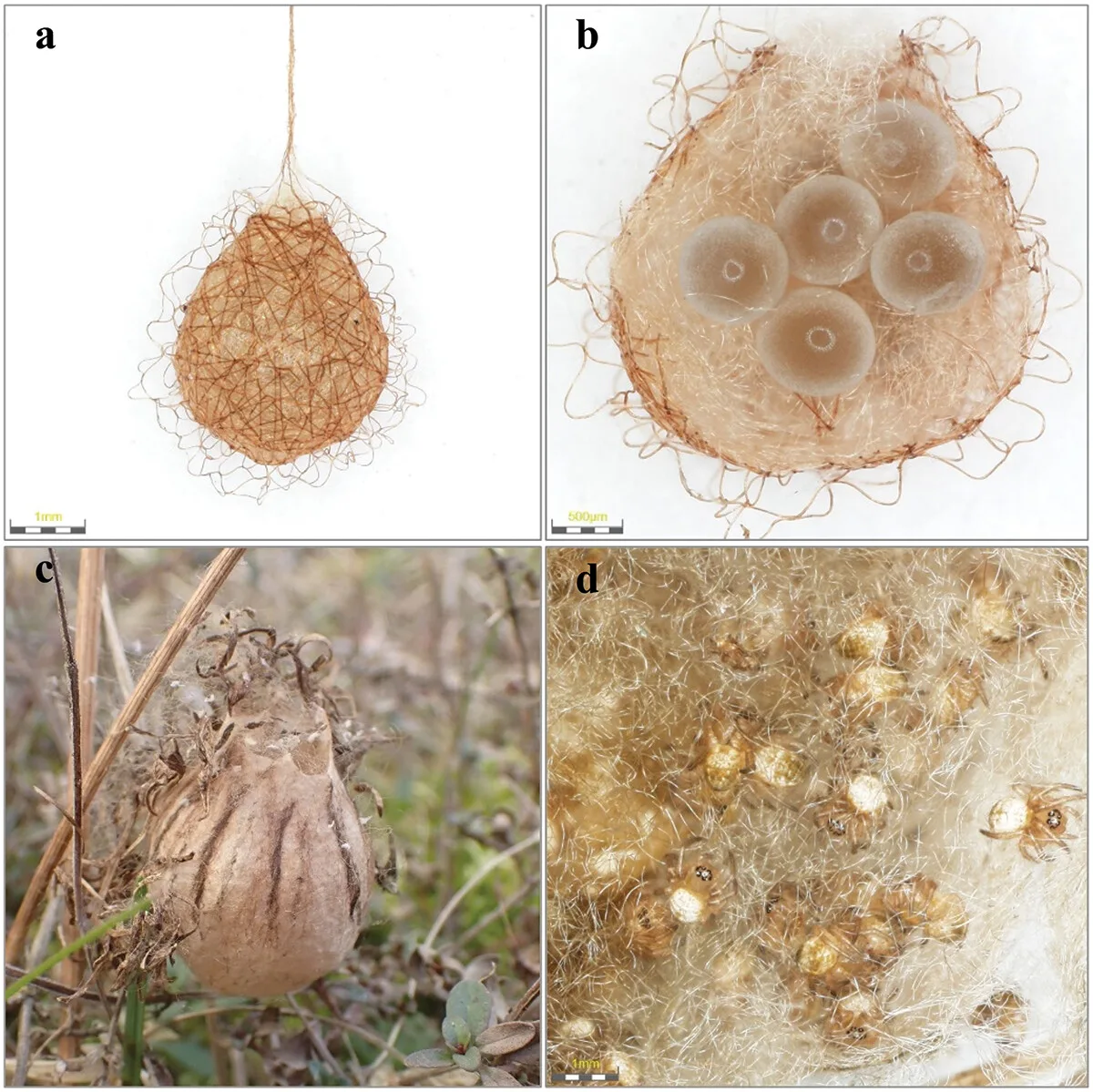
UF/IFAS describes A. aurantia egg sacs as multilayered structures. The eggs sit behind a wool-like layer of silk that helps buffer the developing young against short-term temperature fluctuations, with an outer covering surrounding the protected interior. Females often place the sacs beneath vegetation or broad leaves, where the surrounding plant material provides additional cover.
And there can be a lot going on inside.
Yellow garden spider egg sacs may contain hundreds of eggs, and some reported sacs contain up to a thousand or more. That means the unassuming brown bundle beside an apparently abandoned web can hold an entire future generation of tiny web builders.
Hatching and leaving home are two different events
This is the particularly sneaky part of Sylvie’s winter nursery.
In Georgia, the eggs can hatch during the fall.
But the spiderlings do not necessarily leave.
UGA describes the newly hatched young remaining inside the egg sac through winter and emerging the following spring. In other words, months can separate hatching from emergence. A spiderling may already be out of its egg while still remaining safely tucked behind the silk walls of the nursery.
That distinction is easy to miss because, from outside, nothing appears to be happening.
The adult spider disappears. The web deteriorates. The vegetation turns brown. The egg sac sits there looking remarkably like dead plant material.
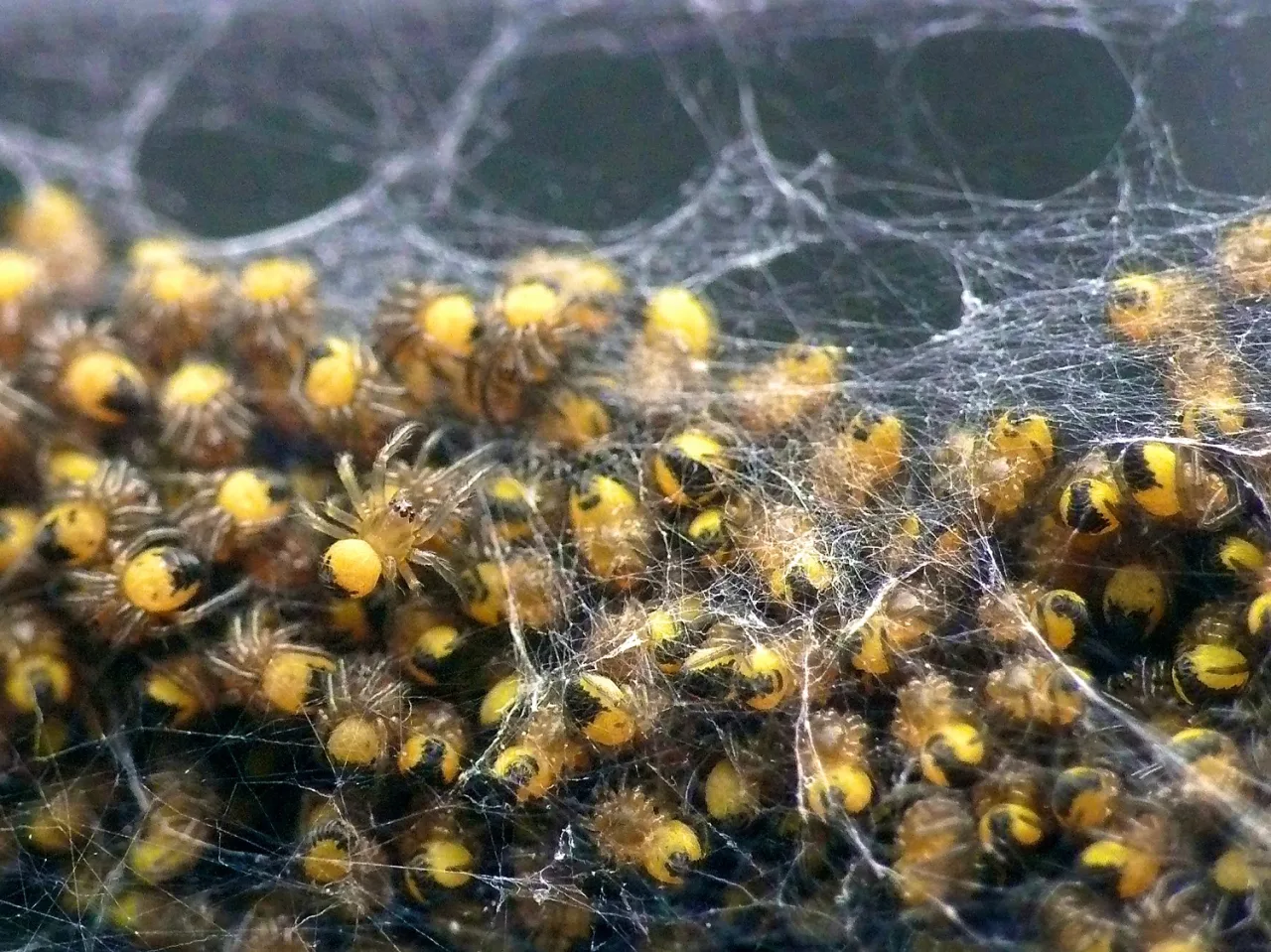
Meanwhile, the nursery may already contain hundreds of tiny spiders.
The website is closed.
The babies are still at home.
What happens to the adult?
For adult yellow garden spiders in Georgia, autumn is the end of the season.
University of Georgia Extension notes that orb-weaving spiders remain active in fall while mating and producing egg sacs, but the first hard frost kills the adults that remain. Yellow garden spiders have already spent the spring and summer growing; humans simply notice them disproportionately in late summer and fall because that is when the females have reached their dramatic adult size.
That does not mean every garden spider vanishes on the same date, or that an empty web proves its owner died in a particular frost.
A spider can leave a web. A web can be damaged or abandoned. An individual may disappear before freezing weather arrives. So finding an empty web tells us that the contractor is no longer at that workstation. It does not provide a cause-of-death report for the spider who built it.
Rogue Gallery Sylvie, naturally, has declined mortality altogether. She will be back with more stories. 😂
Spring brings the nursery evacuation
When conditions warm, the surviving young leave the egg sac and disperse.
UF/IFAS reports that juvenile yellow garden spiders disperse from their egg-sac location in spring, often using silk carried by air currents in a behavior commonly called ballooning. Very young spiders can therefore spread away from the place where their mother built her web rather than establishing hundreds of miniature websites around one increasingly alarmed plant.
The youngsters are also much easier to overlook than their mother was.
Young A. aurantia build much smaller webs. The University of Arkansas Arthropod Museum notes that spring juveniles tend to construct small webs low in vegetation. As the spiders grow, their webs become larger and more conspicuous and tend to appear higher in the vegetation.
That produces a seasonal illusion.
In autumn, the garden seems full of enormous orb-weavers.
Then they disappear.
Months later, people announce that the garden spiders have “come back.”
But some of those spiders may have been there all along: first inside eggs, then as hatchlings spending winter behind silk walls, then as nearly invisible juveniles operating tiny websites down among the plants.
By the time humans finally notice them again, the new contractors have already been working for months.
Sylvie’s website may close for winter.
Her succession plan does not.
Sources
-
Golden garden spiders trap insects in garden
Hinkle, N. C., & Roche, A. (2006, February 16). Golden garden spiders trap insects in garden. University of Georgia College of Agricultural and Environmental Sciences Field Report.
Why this source matters: Provides Georgia-specific seasonal information for yellow garden spiders, including September–October egg-sac production, the characteristic brown fig-like appearance of the sac, autumn hatching, overwintering of spiderlings inside the sac, and spring emergence. It is the key source for distinguishing hatching from emergence.
-
Yellow Garden Spider, Writing Spider Argiope aurantia (Lucas) (Arachnida: Araneae: Araneidae)
Griffith, T. B., & Gillett-Kaufman, J. L. (2020). Yellow garden spider, writing spider Argiope aurantia (Lucas) (Arachnida: Araneae: Araneidae). EDIS, 2020(3).
Why this source matters: Authoritative species profile covering egg-sac structure and placement, including the protective wool-like silk layer, as well as spring dispersal of juvenile yellow garden spiders and changes in web size as the spiders mature. The current UF/IFAS record states that the publication was revised in March 2026.
-
Autumn spiders
Hinkle, N. C. (2009, October 1). Autumn spiders. University of Georgia College of Agricultural and Environmental Sciences Field Report.
Why this source matters: Provides Georgia-specific context for the autumn life cycle of large orb-weaving spiders. It documents that yellow garden spiders have been present and growing throughout summer, become conspicuous in late summer, produce overwintering egg sacs in fall, and that the first hard frost ends the season for remaining adults.
-
Yellow Garden Spider
University of Arkansas Arthropod Museum. (n.d.). Yellow garden spider.
Why this source matters: Useful life-history reference for Argiope aurantia. It reports that egg sacs may contain up to a thousand or more eggs, spiderlings overwinter inside the sacs and disperse in spring, and young spiders initially build small webs low in vegetation before constructing larger, more conspicuous webs as they grow.