
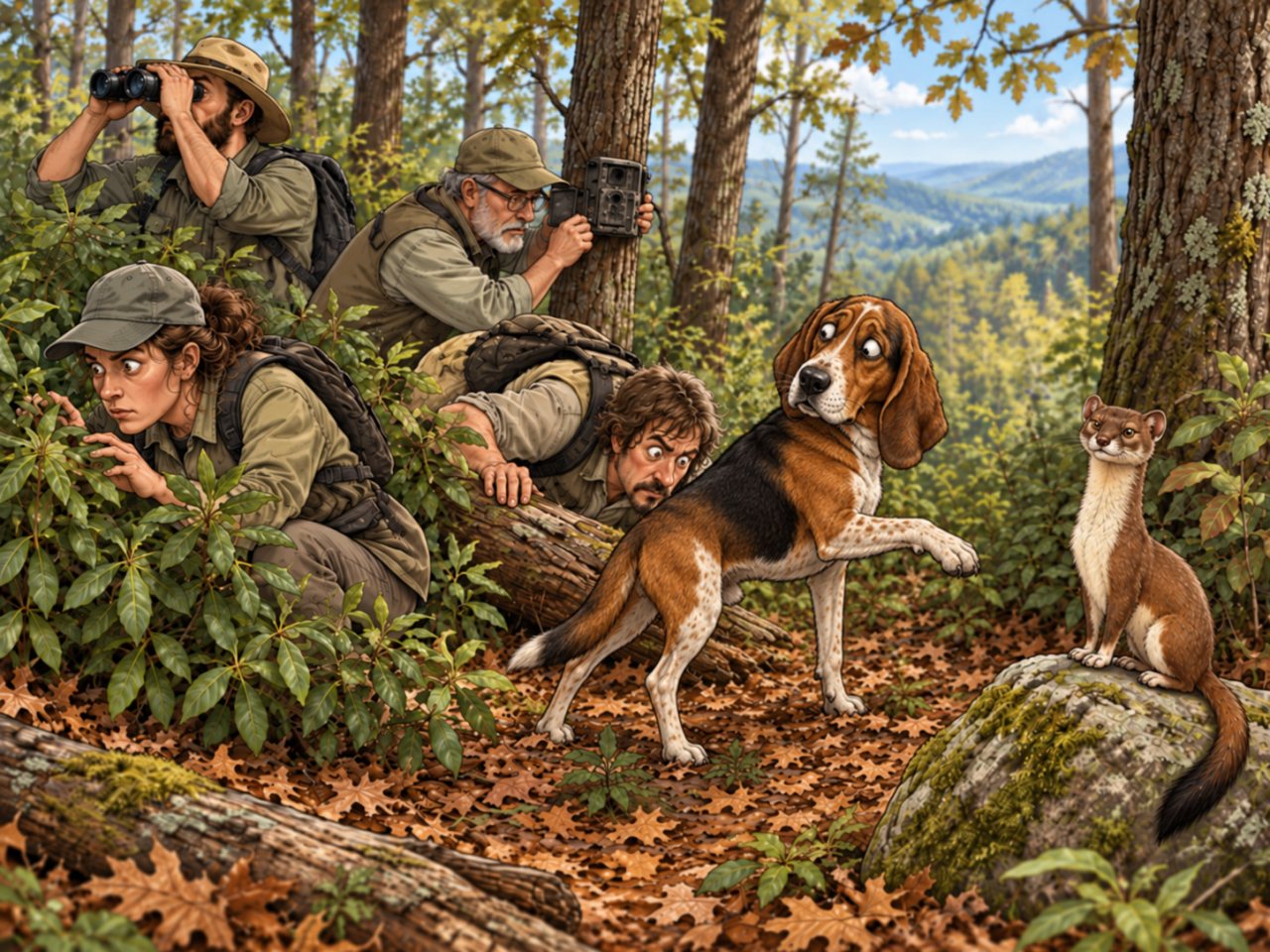
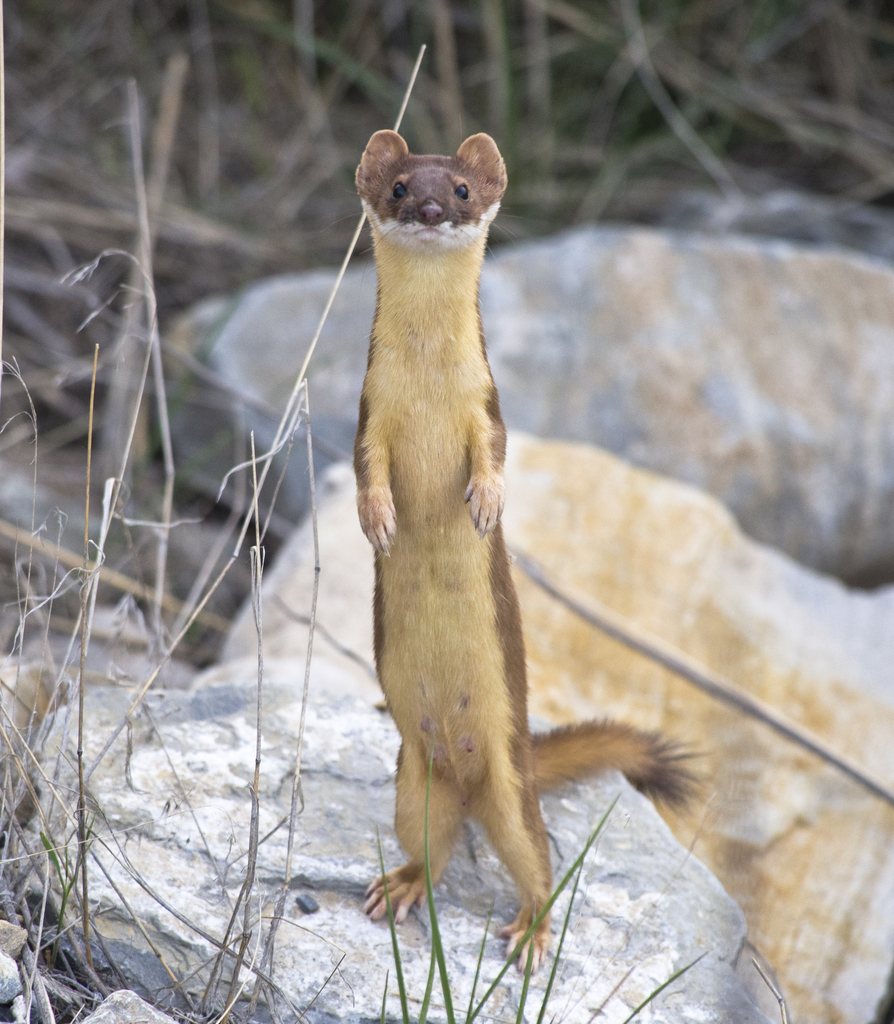
The long-tailed weasels that live in Georgia are camera shy. They value their privacy and don't want others in their business. Apparently.
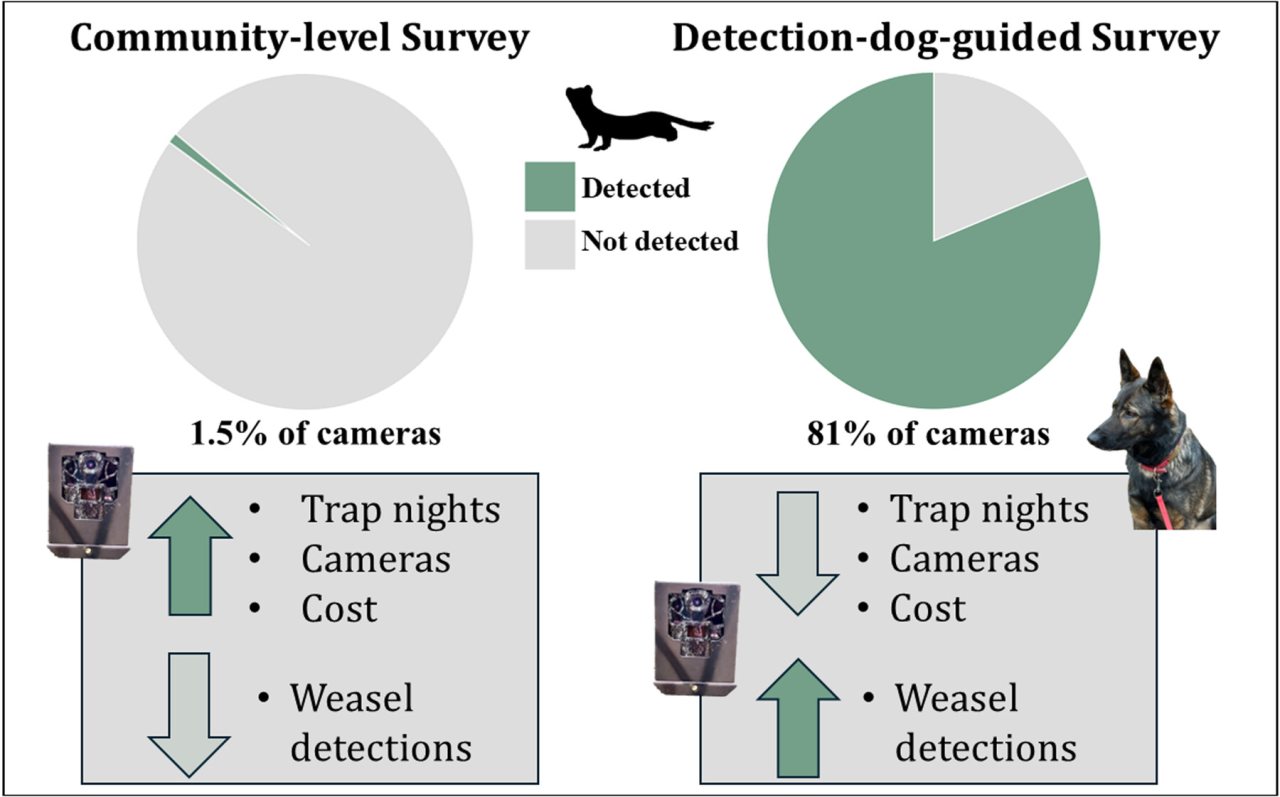
Because a broad wildlife survey conducted in northern Georgia barely caught any on camera. Researchers used 60 cameras rotated among almost 600 locations, and weasels were detected at only 1.5% of the camera locations.
Now... that could mean one of two things....
-
Weasel populations are declining in northern Georgia.
-or-
- The researchers sucked at putting cameras where the weasels actually go. 😂
A declining weasel population would be concerning, but it's also hard in science to "prove" an absence.
So, before panicking, the researchers had a cunning plan. What if they used dogs to sniff out weasel locations BEFORE placing the cameras?
So, researchers brought in scent-trained detection dogs to search for signs of weasels and waited for a dog to indicate:
🐕 “WEASEL STUFF HAPPENED HERE.”
After placing cameras at locations the dogs indicated were good weasel areas, the rate of detection went up to 81% of the camera locations!
Even more amazingly, researchers later applied what they'd learned from the new detection strategy at wildlife management areas across Georgia. They found long-tailed weasels in the Southeastern Plains, where the species had not been documented for more than 30 years. And they documented weasels in the Southern Coastal Plain near the Okefenokee, where long-tailed weasels had never previously been detected!
So, the take-home message isn't that the weasel population suddenly expanded and exploded. It's that Georgia scientists discovered they were lousy at finding weasels. 😂
But, more seriously, it showed that not detecting an animal is NOT the same thing as demonstrating that the animal isn't there. And also that changing the detection method can reveal animals that conventional methods missed.
Oh. And also that the weasels have now had their cover blown and can expect the paparazzi to descend at any moment.
Blame the dogs! 🐕
The Real Story
Long-tailed weasels (Neogale frenata) were not new to Georgia. The problem was that wildlife researchers had surprisingly little information about where they still occurred or how common they were, in part because weasels are exceptionally difficult to detect.
At Cooper’s Creek Wildlife Management Area in the mountains of northern Georgia, researchers were already running a broad camera survey designed to monitor the entire community of medium-sized carnivores. They used 60 physical cameras, rotating them through 599 locations during 2023. Each location was monitored for about four weeks.
The cameras worked well enough for many mammals.
The weasels, however, were apparently declining all requests for publicity.
Across 15,905 camera nights, long-tailed weasels appeared at only 9 of the 599 locations, meaning just 1.5% of camera placements detected one. The problem was that researchers could not tell whether weasels were truly rare at the site or whether the survey method was simply bad at finding them.
Enter the dogs
Researchers brought in two scent-detection dogs trained to recognize long-tailed weasel odor. The dogs searched roads and habitat for signs that weasels had been present, and their behavior helped researchers identify areas worth watching more closely.
The dogs did not replace the cameras. They helped decide where to put them.
Researchers ultimately placed 16 cameras in four areas where the dogs had detected weasel scent. Those cameras stayed in place much longer than the rotating community cameras, accumulating 4,187 camera nights.
This time, weasels appeared on 13 of the 16 cameras, or about 81% of them. The researchers recorded 77 independent weasel videos on 55 different days. Calculated per camera night, the dog-guided survey produced a detection rate about 33 times higher than the broad community survey.
That does not mean dogs magically made Georgia grow more weasels.
The two surveys were designed differently. One spread cameras broadly to monitor many carnivore species; the other deliberately concentrated cameras in places a trained dog had already suggested were promising weasel habitat.
And that distinction is the point.
If your scientific question is simply, “Does this large area contain weasels at all?”, a broad camera survey may be adequate. But if you need enough detections to estimate where weasels live, what habitats they use, or how their populations change over time, a method that almost never photographs them creates a serious problem.
In ecology, failing to detect an animal can create a false absence: the species is present, but the survey misses it. Better detection methods help researchers separate “we looked and genuinely found no evidence” from “we looked in a way that wasn't very good at finding this particular animal.”
Then they took the lesson across Georgia
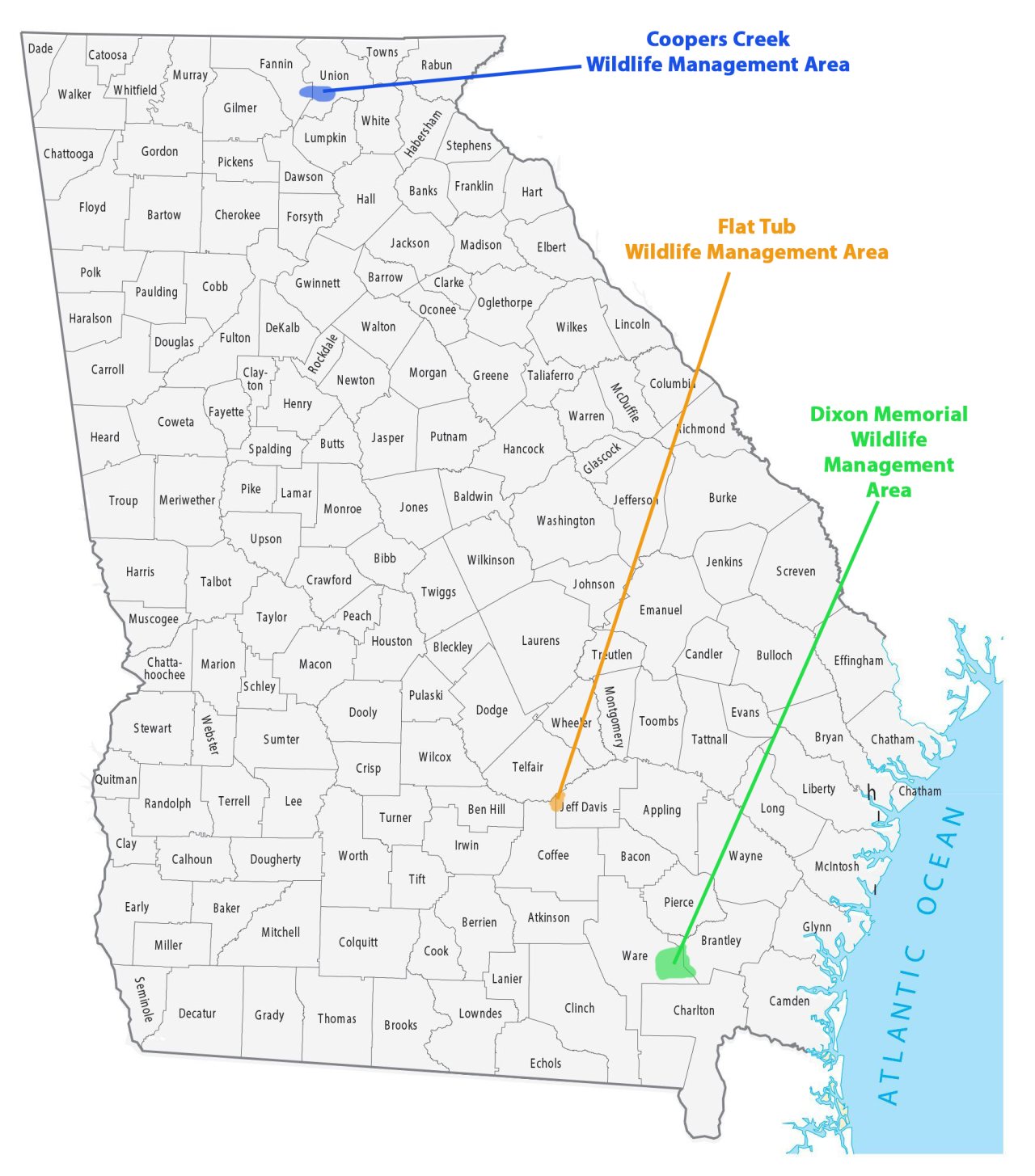
Researchers later applied what they had learned at 20 wildlife management areas across Georgia, deploying 756 cameras over two survey periods.
Long-tailed weasels were detected in four of the five sampled regions.
At Dixon Memorial Wildlife Management Area near the Okefenokee Swamp, researchers documented long-tailed weasels in the Southern Coastal Plain, where the species had not previously been detected.
They also found weasels in the Southeastern Plains at Flat Tub Wildlife Management Area near Denton, where it had been more than 30 years since a weasel had been recorded.
Those records do not demonstrate that long-tailed weasels recently moved into those regions or that their populations suddenly recovered.
They demonstrate something much more fundamental to wildlife science:
You can only find what your method is capable of detecting.
Change the method, and sometimes the wildlife map changes with it.
The weasels may have been there all along.
The dogs just ruined their privacy. 🐕😂
Sources
-
Detection-Dog-Guided Camera Placement Increases Efficiency of Surveys for Long-Tailed Weasels (Neogale frenata)
Myers, J. B., Dingerson, A. A., Rushton, E., Johannsen, K. L., Conner, L. M., & Castleberry, S. B. (2026). Detection-dog-guided camera placement increases efficiency of surveys for Long-tailed Weasels (Neogale frenata). Wildlife Letters, e70050.
Why this source matters: Primary research comparing a broad community-level camera survey with a species-specific survey in which detection dogs guided camera placement at Coopers Creek Wildlife Management Area in northern Georgia. It provides the verified survey design, camera-night totals, 1.5% versus 81% camera-location detection results, 33-fold difference in detection rate per camera night, and the methodological discussion explaining why non-detection can create false absences and why survey design must match the ecological question.
-
There are weasels in Georgia
University of Georgia. (2026, September 16). There are weasels in Georgia. UGA Today.
Why this source matters: Provides the later statewide application of the detection strategy beyond the published North Georgia comparison study. UGA reports surveys at 20 wildlife management areas across five regions and documents long-tailed weasels in four regions, including the first detections reported from the Southern Coastal Plain near the Okefenokee and records from the Southeastern Plains after an absence of more than 30 years. It also includes researcher commentary explaining the distinction between true absence and failure to detect an animal.