
I hate Georgia summers. And this past summer has been especially brutal, with the heat index going over 100°F (37.8°C) for several weeks in a row. Thank goodness for air conditioning!
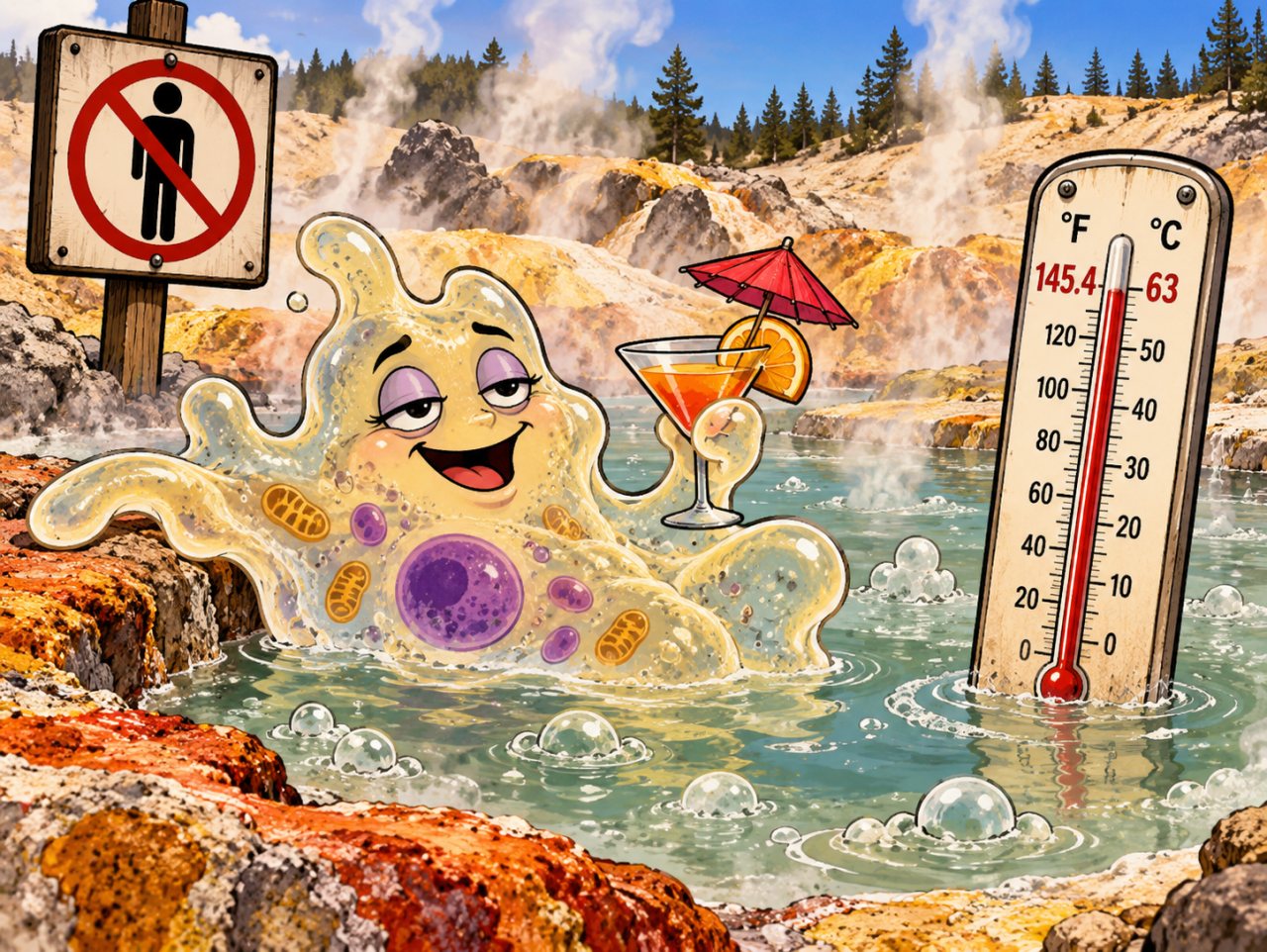
But there is one eukaryote who apparently thrives in the heat. A new species of amoeba has been discovered that can not only tolerate high temperatures, but can actively divide at temperatures of 145.4°F (63°C)!
I hear some of you saying, “So what?” Scientists have been finding microbes in absurdly hot places for decades.
Bacteria? Yes. Archaea? Of course. Those little extremists have been making themselves at home in geothermal hellscapes for ages.
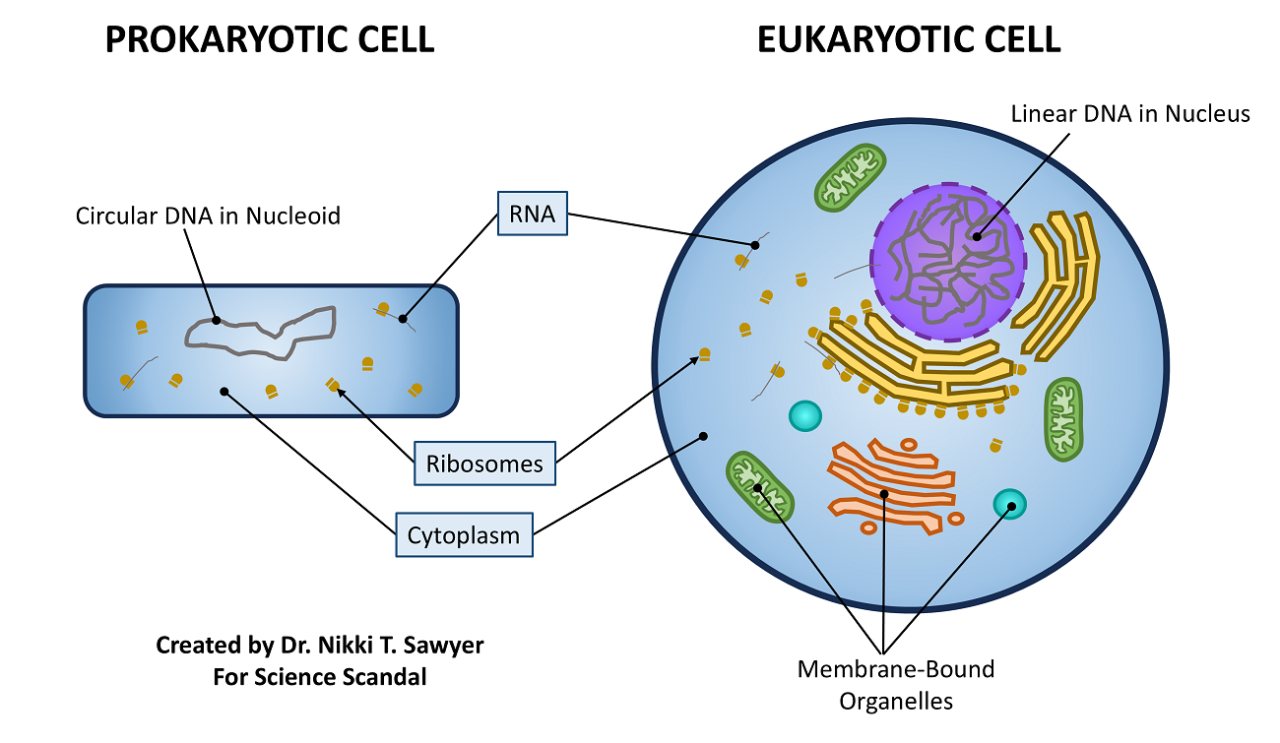
But an amoeba is different. An amoeba is a more complex form of life called a eukaryote, which makes it more closely related to you or me than to bacteria or archaea.
So this discovery has pushed the known upper temperature limit for eukaryotic growth! Which makes this little amoeba found in a hot stream in Lassen Volcanic National Park in the Cascades a big star.
And I absolutely love how the scientists decided to name this new species. They bestowed it with the name Incendiamoeba cascadensis, which literally translates to “fire amoeba from the Cascades,” apparently deciding subtlety was unnecessary.
Meanwhile, when I searched Lassen Volcanic National Park’s hot springs, Google's AI helpfully informed me: "You cannot soak in natural hot springs inside Lassen Volcanic National Park because the hydrothermal waters are scalding hot, acidic, and strictly for viewing only."
Which feels a little insulting, frankly.
I am also a eukaryote.
Apparently I’m just not as impressive as the Fire Amoeba.
And that's just as well... I don’t plan to test my fitness for 145.4°F (63°C) anytime soon. I already think Georgia summers are plenty hot enough, thank you.
The Real Story
Incendiamoeba cascadensis is a newly described species of amoeba collected from a geothermal stream in Lassen Volcanic National Park in northern California. It belongs to the Amoebozoa, making it a eukaryote: an organism whose cells contain a nucleus and other membrane-bound internal structures. Humans, animals, plants, fungi, and many single-celled organisms are all eukaryotes too.
That distinction matters because scientists have known about extremely heat-tolerant microbes for a long time. Some bacteria and archaea can grow at temperatures far above anything a human could survive. The current record for cellular growth belongs to the archaeon Methanopyrus kandleri, which can grow at temperatures up to about 122°C (251.6°F). But prokaryotes such as bacteria and archaea have a simpler cellular organization than eukaryotes. They lack a nucleus and the membrane-bound organelles found inside eukaryotic cells.
Eukaryotic cells have historically appeared much more limited by heat. Before this discovery, the highest confirmed growth temperature for a eukaryote was about 60°C (140°F), recorded in a few fungi and red algae. Another heat-loving amoeba, Echinamoeba thermarum, had been reported growing up to about 57°C (134.6°F).
Then the Fire Amoeba barged in and moved the thermometer.
Researchers cultured Incendiamoeba cascadensis across a range of temperatures and found that it grew robustly at 60°C and continued reproducing at 63°C (145.4°F). They did not infer reproduction merely from an increase in cell numbers. Using microscopy, they actually observed cells undergoing mitosis at that temperature. That makes 63°C the highest confirmed temperature at which any known eukaryotic organism can currently grow and divide.
And 63°C is not even the point at which the amoeba immediately gives up.
Using heated live-cell microscopy, the researchers found that I. cascadensis remained motile (moving around) at 64°C (147.2°F). At 66°C (150.8°F), the cells began adopting a rounded shape and entering a protective state. When exposed to 70°C (158°F) for five minutes, they formed cysts and could later recover when returned to a cooler 60°C environment. Exposure to 80°C (176°F), however, was too much: the cells did not recover.
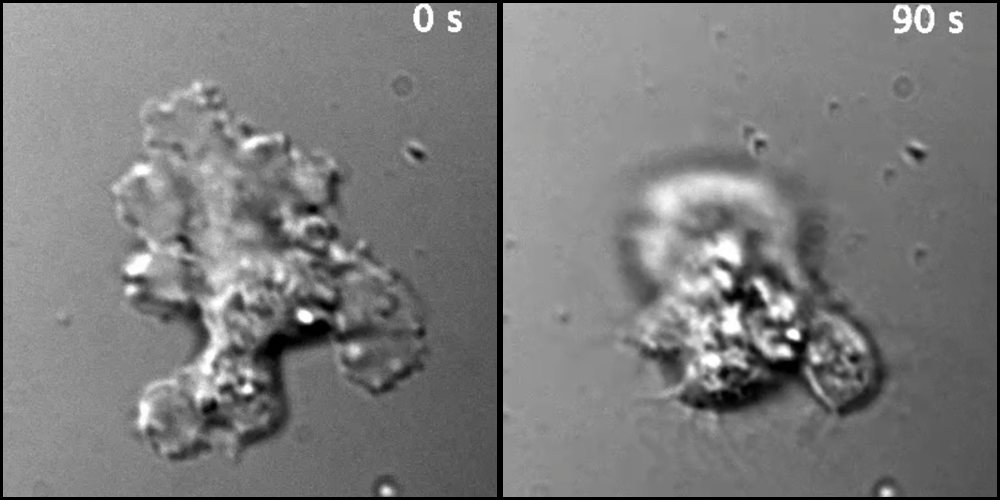
That difference between growth, activity, and survival is important. The new record is not simply that the amoeba can briefly endure 63°C, but that it can perform the complicated business of cellular reproduction there. At somewhat higher temperatures it stops reproducing but can remain active, and at still higher temperatures it survives temporarily by entering a dormant protective state.
Why is extreme heat such a problem for eukaryotic cells in the first place?
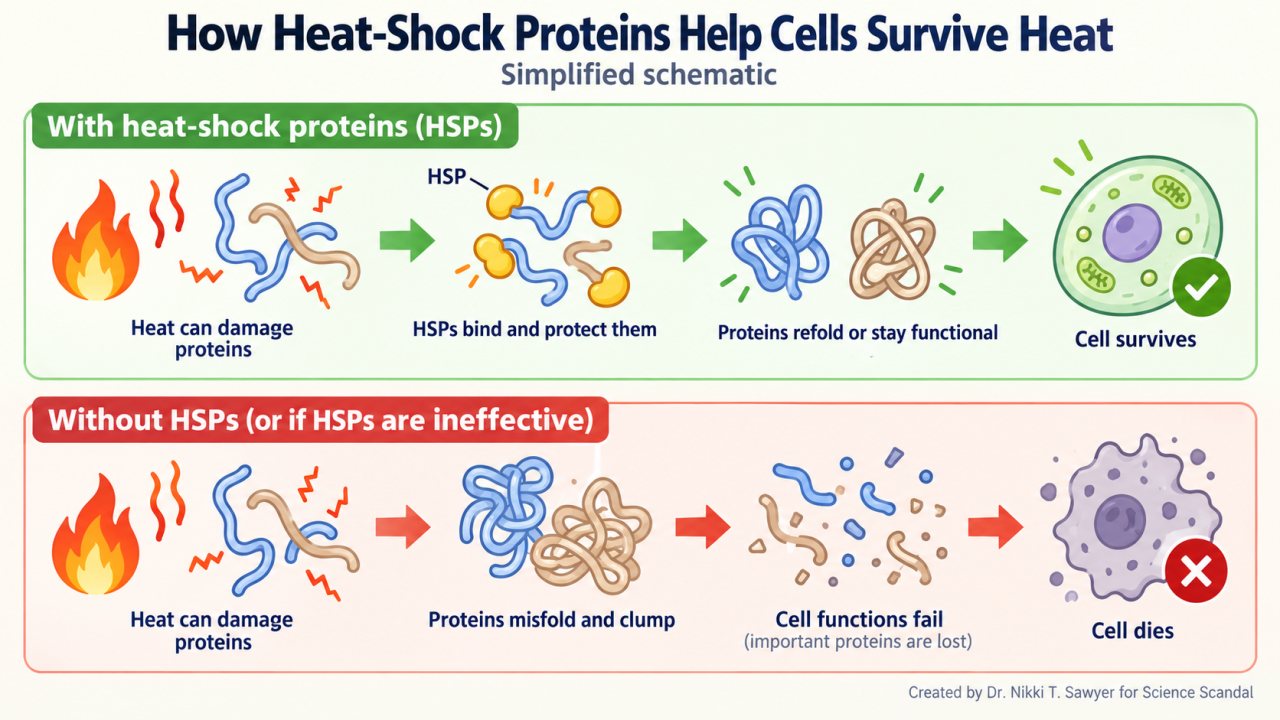
Heat can destabilize proteins, interfere with their folding, alter membrane fluidity, damage DNA, and disrupt the many coordinated cellular structures required for normal function. Eukaryotes have additional internal membranes surrounding structures such as the nucleus, mitochondria, and endoplasmic reticulum, so keeping all of that cellular machinery intact presents an extra challenge at very high temperatures. A theoretical upper limit of about 62°C had even been proposed partly because researchers suspected eukaryotic organelle membranes might simply become too unstable beyond that point. Incendiamoeba has now demonstrated that at least one eukaryotic cell can cross that boundary.
The researchers therefore looked at its genome and gene activity for clues to how it manages the heat.
Compared with more moderate-temperature amoebae, I. cascadensis showed enrichment in genes associated with proteostasis, the systems cells use to keep proteins properly folded, repaired, and functioning. These included molecular chaperones and heat-shock proteins, which are part of a broader cellular stress-response network and can help prevent damaged proteins from clumping together or assist with refolding them. At high temperatures, the amoeba also increased activity in pathways related to DNA repair and membrane trafficking.
Its proteins themselves may also be unusually heat resistant. The researchers found that predicted Incendiamoeba proteins tend to have more positively charged amino acids exposed on their surfaces. Similar features occur in heat-loving bacteria and archaea and may help proteins remain stable instead of unfolding or aggregating under thermal stress. That raises the intriguing possibility that very distantly related organisms have independently arrived at some of the same molecular solutions for surviving extreme heat.
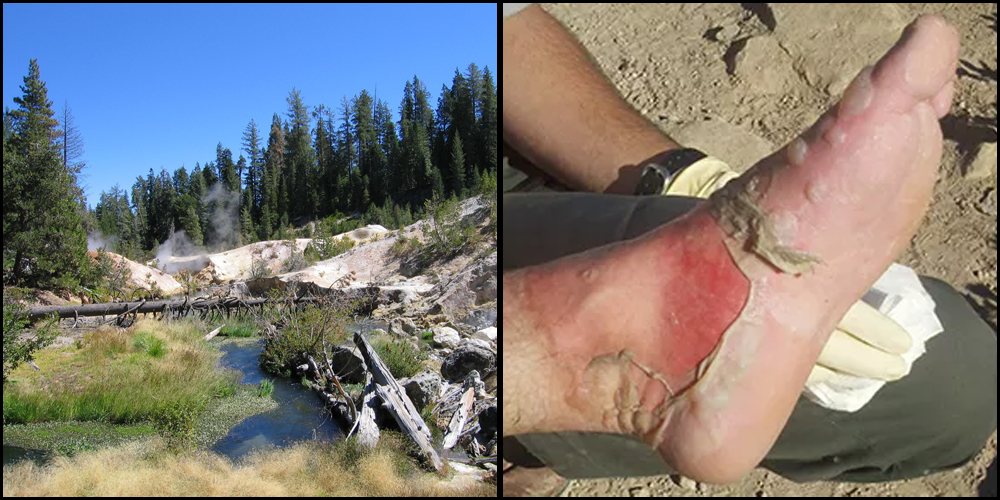
The amoeba is not merely enduring an artificial laboratory torture chamber, either. Researchers repeatedly recovered it from geothermal sites along a tributary of Hot Springs Creek where temperatures ranged roughly from 49°C to 65°C (120.2°F to 149°F). Genetic searches also turned up closely related sequences in geothermal environments in New Zealand and Yellowstone National Park, suggesting that other heat-loving relatives may be waiting to be discovered.
And that may be the biggest lesson from the fire amoeba.
The old 60°C record was not necessarily a hard biochemical wall beyond which eukaryotic life could never exist. It was the hottest temperature at which scientists had found and demonstrated eukaryotic growth so far. Incendiamoeba cascadensis has now moved that line to 63°C.
There is no guarantee that it will stay there.
Somewhere in another geothermal spring, an even hotter eukaryote may already be minding its own business and waiting for scientists to notice it. 🔥
Sources
-
A geothermal amoeba sets a new upper temperature limit for eukaryotes
Rappaport, H. B., Petek-Seoane, N. A., Tyml, T., Niblo, J. K., Mikus, F., Gilbert, N. E., LaButti, K., Ani, G., MacVicar, E., Shepherd, R. M., de la Higuera, I., Lord, S. J., Dey, G., Wolfe, G. V., Dudin, O., Katz, L. A., Stedman, K. M., Sukenik, S., Skruber, K., Schulz, F., Mullins, R. D., & Oliverio, A. M. (2026). A geothermal amoeba sets a new upper temperature limit for eukaryotes. Cell.
Why this source matters: This is the primary source for essentially the entire article: taxonomic description, growth at 63°C, mitosis, motility at 64°C, encystment/recovery after 70°C exposure, genome analysis, heat-response pathways, protein properties, and environmental distribution.
-
NASA-Funded Research Finds Complex Life Defying Record Heat
Gronstal, A. (2026, September 22). NASA-funded research finds complex life defying record heat. NASA Science.
Why this source matters: Excellent authoritative secondary source for explaining prokaryotes versus eukaryotes to general readers, the earlier 60°C eukaryotic record, the distinction between growth and survival temperatures, protein/DNA effects of heat, and the astrobiology significance. NASA also supported the research.
-
Meet the ‘fire amoeba,’ a record-breaking survivor of extreme heat
Buehler, J. (2026, September 22). Meet the ‘fire amoeba,’ a record-breaking survivor of extreme heat. Science News.
Why this source matters: Useful secondary confirmation of the 63°C growth record, previous 60°C eukaryotic record, 70°C cyst survival, protein-stability adaptations, and researchers’ interpretation that 63°C should not necessarily be treated as an absolute ceiling.