
Ever heard of uroscopy?
No?
Uroscopy technically means examining urine to help diagnose disease or other medical conditions. For centuries, practitioners scrutinized its color, clarity, sediment, and other visible characteristics.
But apparently looking wasn't enough.
They also smelled it.
And sometimes they TASTED it.
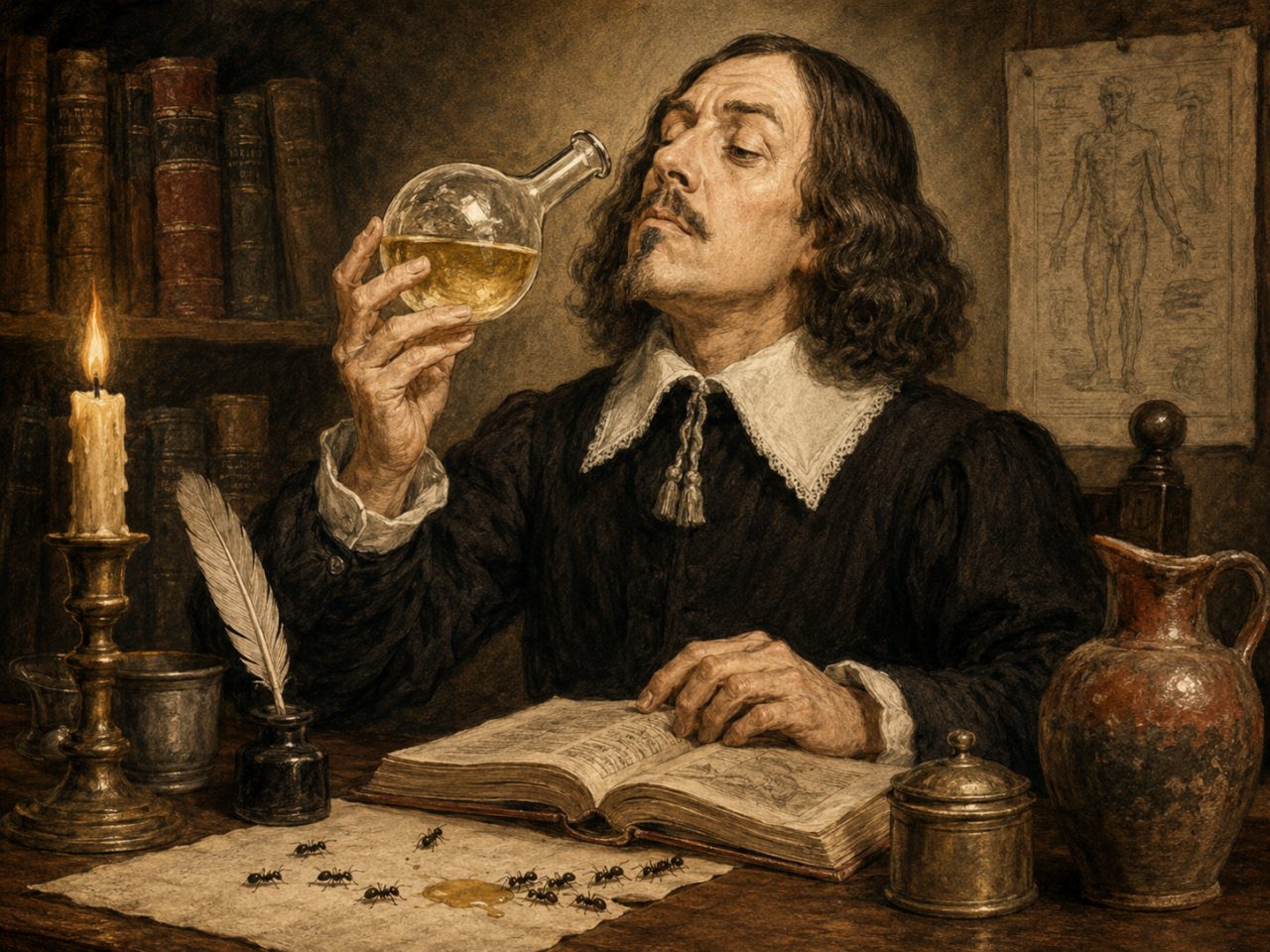
Yes, you read that correctly. Medical practitioners back in the day tasted urine when they suspected a condition known as diabetes.
The word diabetes, by the way, comes from Greek and refers to “passing through” or a “siphon.” It described a striking symptom of the disease: a patient could be extremely thirsty, drink enormous amounts of fluid, and then pass enormous amounts of urine.
The connection between unusually sweet urine and disease goes back thousands of years. Ancient Indian physicians even noted that certain patients' urine attracted ants.
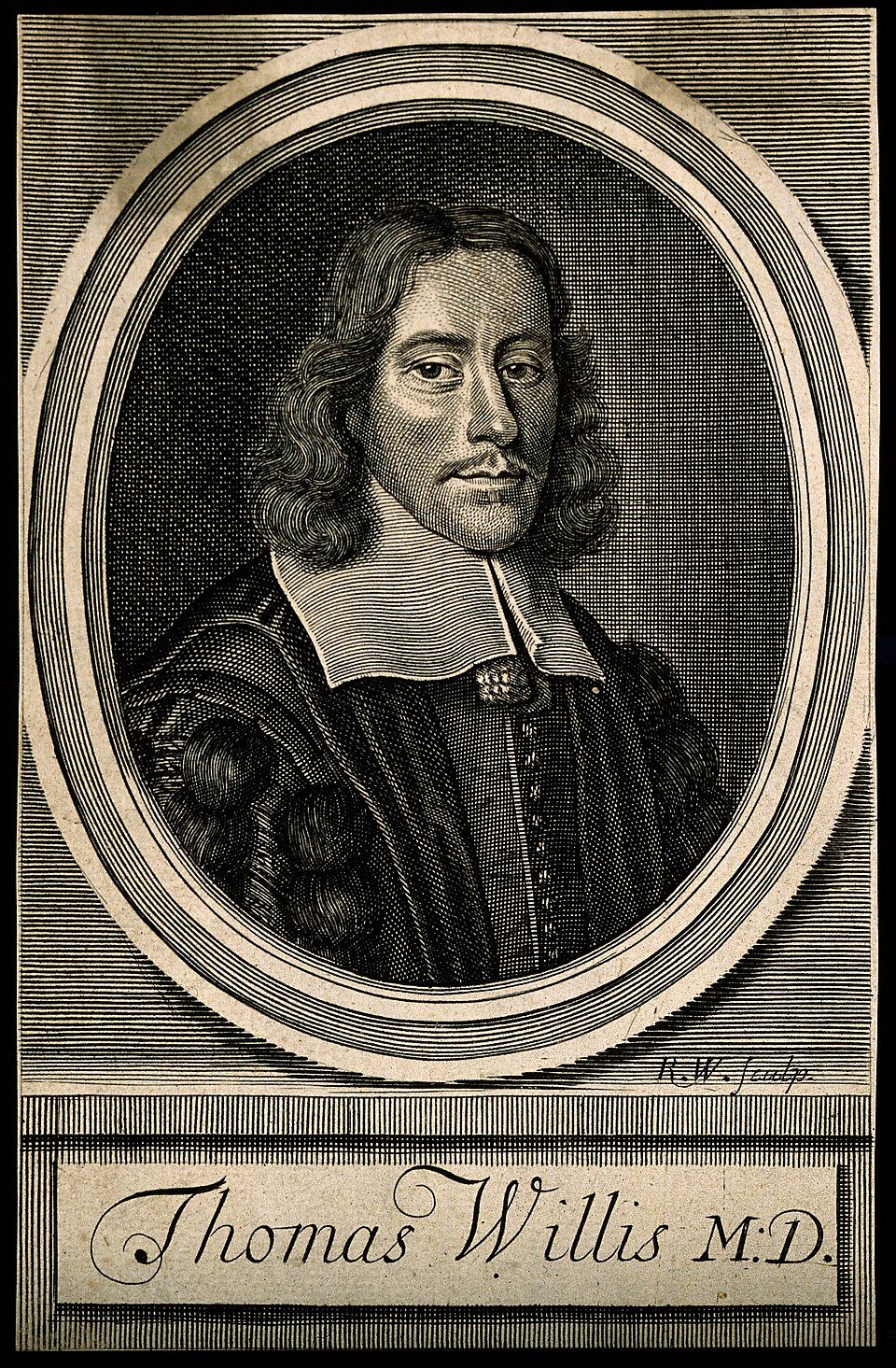
Then, in 1674, English physician Thomas Willis famously described the urine of people with diabetes as extraordinarily sweet, comparing it to honey or sugar.
And yes. He knew this because he tasted it.
This was medically useful information, because there are actually two very different disorders carrying the name diabetes, and both can produce copious amounts of urine.
Diabetes mellitus, the condition most people mean today when they simply say “diabetes” and the internet occasionally insists on calling “diabeetus”, is characterized by abnormally high blood glucose, or blood sugar. When blood glucose rises high enough, the kidneys cannot reabsorb all of the glucose they filter, so some of it gets released into the urine.
Which makes the urine sweet.
The name gives away the whole scandal: mellitus means “honey-sweet.”
Then there is diabetes insipidus, which involves a problem with the body's vasopressin, or antidiuretic hormone, system. It also causes excessive urination, but the urine is very dilute rather than sugary.
And insipidus means “tasteless” or “without flavor.”
So for physicians faced with patients who were both producing astonishing quantities of urine, taste eventually provided one decidedly hands-on clue:
- Sweet? Diabetes mellitus.
- Not sweet? Possibly diabetes insipidus.
Fortunately, humans also discovered another diagnostic organism.
Ants.
Long before anyone had glucose meters or laboratory test strips, observers noticed that ants were attracted to the urine of some people with diabetes.
I can just imagine a young understudy learning the available testing options:
- Physician: “Taste the urine.”
- Apprentice: “Counterproposal: I put it on the ground and outsource this to ants.”
Thankfully, advances in chemistry eventually replaced sensory urine examination with actual laboratory tests for glucose. Those methods ultimately gave way to increasingly sophisticated blood and urine testing, including the glucose meters and test strips available today.
So the next time you complain about modern medical care, whether it's the insurance company, the preauthorization paperwork, or the thirty-seven forms asking you to write your birth date again, remember:
At least nobody is handing your healthcare provider a cup and asking for tasting notes.
The Real Story
As bizarre as it sounds now, tasting urine was not random medical hazing. For centuries, urine was one of the few biological samples physicians could examine easily, and uroscopy became an important diagnostic practice. Practitioners evaluated characteristics such as color, clarity, sediment, odor, and sometimes taste. Modern laboratory medicine eventually replaced this sensory approach with chemical analysis, but that transition did not really take hold until the late 18th and 19th centuries.
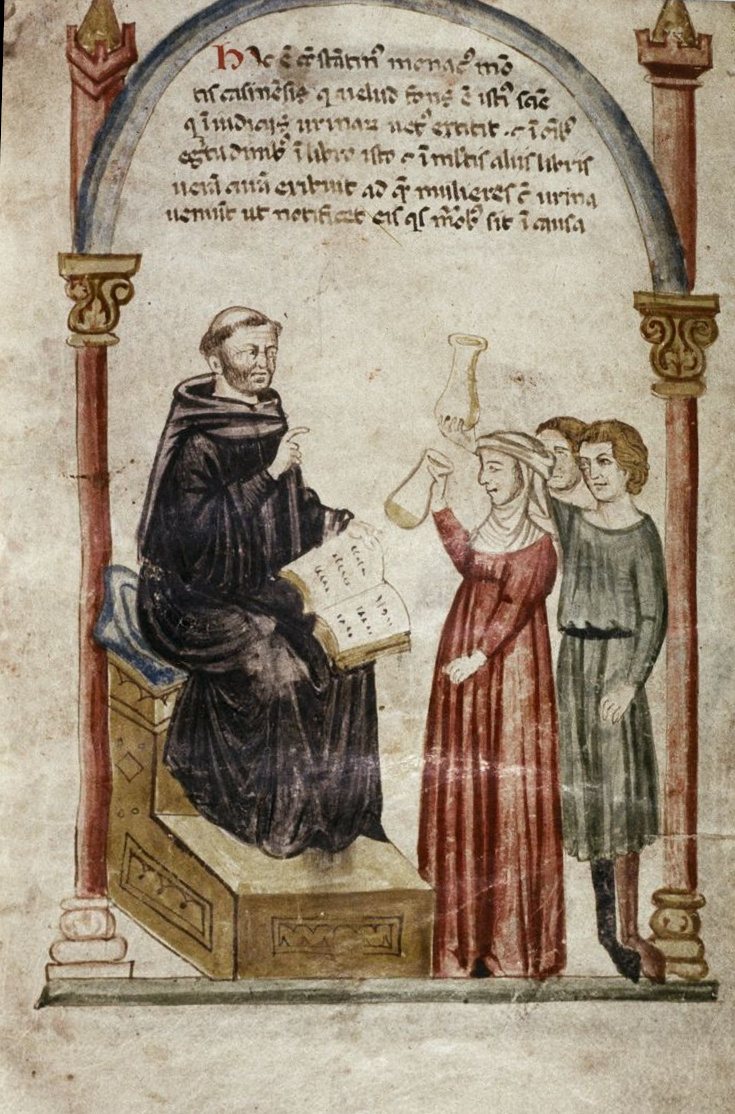
Diabetes was recognized long before anyone understood insulin, blood glucose regulation, or even exactly what the kidneys were doing. The name itself comes from a Greek word associated with a siphon or with fluid “passing through,” reflecting one of the disease’s most obvious symptoms: patients could become extremely thirsty while producing unusually large amounts of urine.
But physicians eventually realized that not everyone producing enormous quantities of urine had the same condition.
In what we now call diabetes mellitus, the defining problem is abnormally high glucose in the blood. “Blood sugar” is the familiar everyday phrase, but the sugar being measured is specifically glucose.
Normally, glucose is filtered out of the blood by the kidneys and then reclaimed so that very little is lost in the urine. But when blood glucose rises high enough, the kidneys cannot reabsorb all of it. Some glucose remains in the urine, a condition called glucosuria.
And glucose is sweet.
That fact had been noticed remarkably early. Ancient Indian medical writings described a condition called madhumeha, or “honey urine,” and noted that the urine of affected patients attracted ants. Historical accounts from other parts of the world also recognized unusually sweet urine centuries before anyone knew what glucose actually was.
Then came Thomas Willis.
Yes. That Thomas Willis.
If you survived an anatomy class involving the Circle of Willis, congratulations: you have already met the man who also made an important contribution to the history of diabetes by tasting urine.
In 1674, Willis published an account describing the urine of patients with diabetes as remarkably sweet, comparing it with honey or sugar. He recognized that this sweetness could distinguish diabetes from other conditions that also caused excessive urination.
A century later, English physician Matthew Dobson moved the investigation from taste buds toward actual chemistry. He demonstrated that the sweetness came from sugar present in the urine and showed that sugar was also present in the blood of people with diabetes.
That distinction mattered because there is another disorder historically called diabetes insipidus.
Diabetes insipidus also causes excessive thirst and the production of very large amounts of urine, but it is not a blood-glucose disorder. Instead, it results from problems involving vasopressin, also called antidiuretic hormone, or the kidneys' response to it. Without normal vasopressin signaling, the kidneys cannot conserve water properly, so the urine remains extremely dilute.
And unlike the glucose-containing urine of diabetes mellitus, it is not sweet.
That difference eventually became immortalized in the names themselves.
Mellitus refers to sweetness or honey.
Insipidus means essentially tasteless or lacking flavor.
So two completely different disorders wound up sharing the word diabetes because both caused patients to pour out remarkable amounts of urine, while the second word distinguished whether that urine was sweet.
Fortunately for everyone involved, laboratory chemistry eventually rendered the tongue unnecessary. During the 19th century, chemical tests capable of detecting glucose in urine became increasingly practical. Fehling's reagent, introduced in 1848, became one widely used method, and by the 20th century urine test strips and blood-glucose testing had transformed diabetes diagnosis and monitoring.
Modern medicine still asks patients for urine samples.
It has simply developed the courtesy of letting chemistry "taste" them instead.
Sources
-
The urine examination: a modern technological test with a very ancient history
Daves M, Jani E, Panella R, Buonocore R, Pastori S, Roccaforte V. The urine examination: a modern technological test with a very ancient history. Advances in Laboratory Medicine / Avances en Medicina de Laboratorio. 2026;7(1):10–15.
Why this source matters: Supports the history of urine examination and uroscopy, including sensory examination of urine, and the gradual transition to chemical urinalysis. Also supports the development of 19th-century glucose testing, including Fehling’s reagent, and later urine test strips. The article was published online September 1, 2025, but appears in the 2026 volume.
-
A history of diabetes mellitus or how a disease of the kidneys evolved into a kidney disease
Eknoyan G, Nagy J. A history of diabetes mellitus or how a disease of the kidneys evolved into a kidney disease. Advances in Chronic Kidney Disease. 2005;12(2):223–229.
Why this source matters: Key historical source for the article. Supports ancient recognition of sweet diabetic urine, Thomas Willis’s 1674 description of the sweet taste of diabetic urine, and Matthew Dobson’s later demonstration that the sweetness was caused by sugar present in both urine and blood. It also supports Willis’s use of sweetness to distinguish diabetes from other causes of polyuria.
-
Diabetes Research and Care Through the Ages
Zinman B, Skyler JS, Riddle MC, Ferrannini E. Diabetes Research and Care Through the Ages. Diabetes Care. 2017;40(10):1302–1313.
Why this source matters: Provides an authoritative overview of the history of diabetes, including ancient descriptions, the origin and evolution of the terminology, recognition of sweet urine, and the historical progression toward modern understanding and testing. Useful for cross-checking the historical timeline and terminology rather than relying on a single historical review.
-
Changing the Name of Diabetes Insipidus: A Position Statement of the Working Group for Renaming Diabetes Insipidus
Arima H, Cheetham T, Christ-Crain M, et al. Changing the Name of Diabetes Insipidus: A Position Statement of the Working Group for Renaming Diabetes Insipidus. Journal of Clinical Endocrinology & Metabolism. 2023;108(1):1–3.
Why this source matters: Supports the modern distinction between diabetes mellitus and diabetes insipidus and explains that diabetes insipidus results from arginine vasopressin deficiency or resistance rather than abnormal blood glucose. Also provides historical context for the name diabetes insipidus. The article was published online in December 2022 and appears in the 2023 volume.