
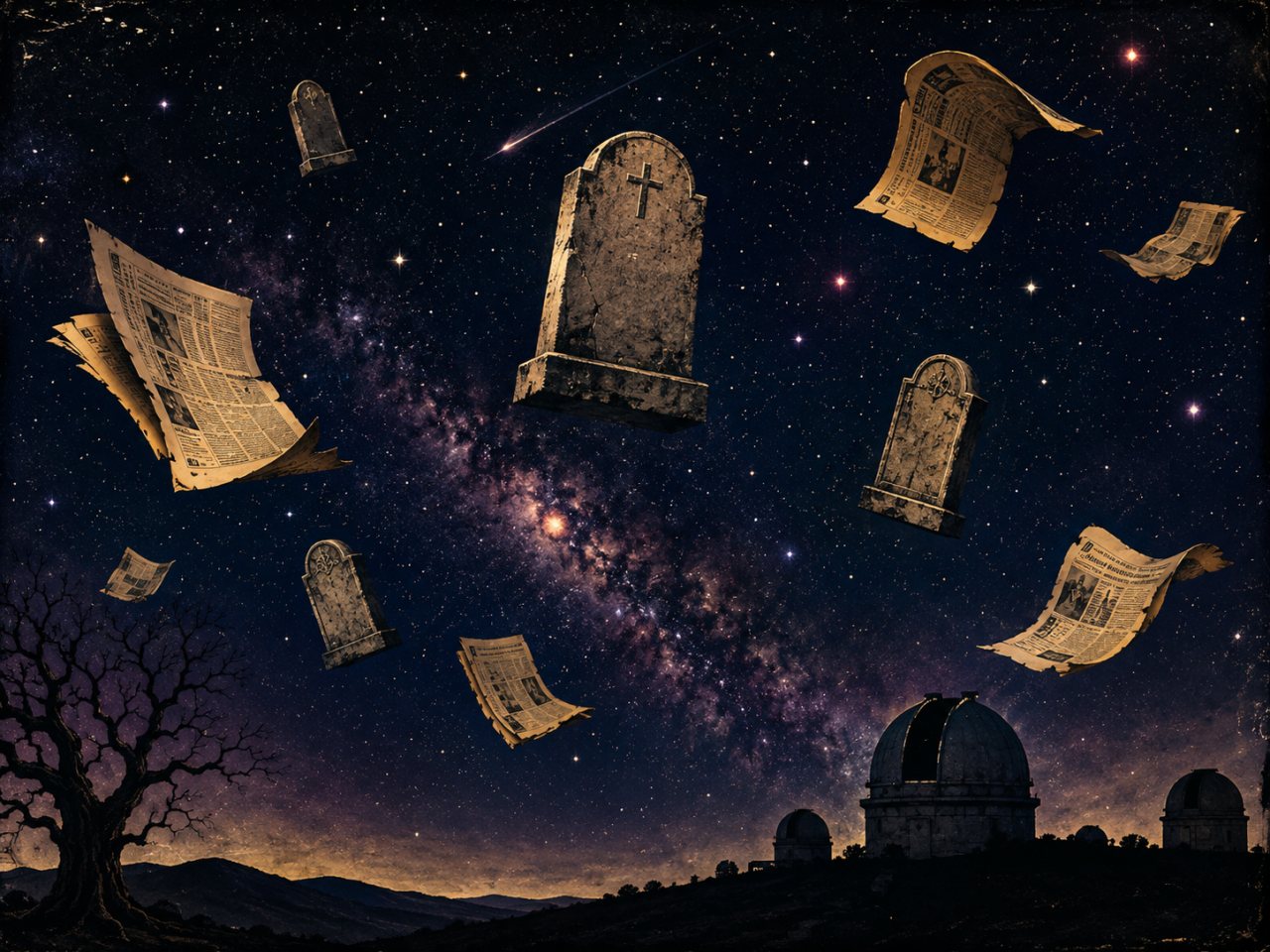
Want to look back in time? Easy! Just go outside at night and look up.
Not a single star in the sky is giving you a “current” status report. Not even our own star, the Sun.
Yep, that’s right. Even sunlight is already about eight minutes stale by the time it reaches Earth. Meanwhile, the Sun itself is eight minutes older and has moved on to new business.
And the news reports from other stars? They only get staler.
Some dispatches are four years late. Some are hundreds or thousands of years late. And if we expand beyond the stars we can see with our naked eyes, some of the “breaking news” arriving from distant galaxies is billions of years overdue.
Even if we witness a supernova blazing in the night sky, we aren’t watching a star die right then. The actual explosion happened before its light ever began crossing the enormous distance between that star and us. By the time Earth gets the scoop, the event itself is already history.
Now... does that mean most of the stars we see are already dead?
Nope.
That’s a popular version of the story, but the universe has apparently been accused of a much larger body count than the evidence supports.
Most of the stars visible to the naked eye belong to our own Milky Way and are relatively nearby on astronomical scales. They are probably still very much in business. But the light reaching you is still old news. Even our nearest neighboring star, Proxima Centauri, is reporting from more than four years ago, and many of the stars overhead are sending us dispatches that left hundreds or thousands of years before they finally reached your eyes.
So the next time you’re gazing at the stars, don’t assume you’re staring into a celestial cemetery.
You’re reading the universe’s most delayed newspaper.
Every headline is old news.
The Real Story
Light moves astonishingly fast: about 300,000 kilometers (186,000 miles) every second. But the universe is so enormous that even light needs time to get from one place to another. That means whenever you look into space, you are seeing objects not as they are at this instant, but as they were when the light reaching your eyes began its journey.
Astronomers describe these enormous distances using light-years. Despite the name, a light-year is a measure of distance, not time: it is the distance light travels in one year, roughly 9.5 trillion kilometers, or nearly 6 trillion miles. If an object is ten light-years away, the light reaching us today left it ten years ago.
Our own Sun provides the most local example. Earth is about eight light-minutes from the Sun, so the sunlight hitting your face left the Sun roughly eight minutes earlier. If something dramatic happened at the Sun this instant, Earth would remain blissfully uninformed for another eight minutes.
Then the reporting delays start getting ridiculous.
Proxima Centauri, the nearest star beyond our Sun, is about 4.25 light-years away. When you observe Proxima Centauri, you are seeing light that began traveling toward Earth more than four years ago.
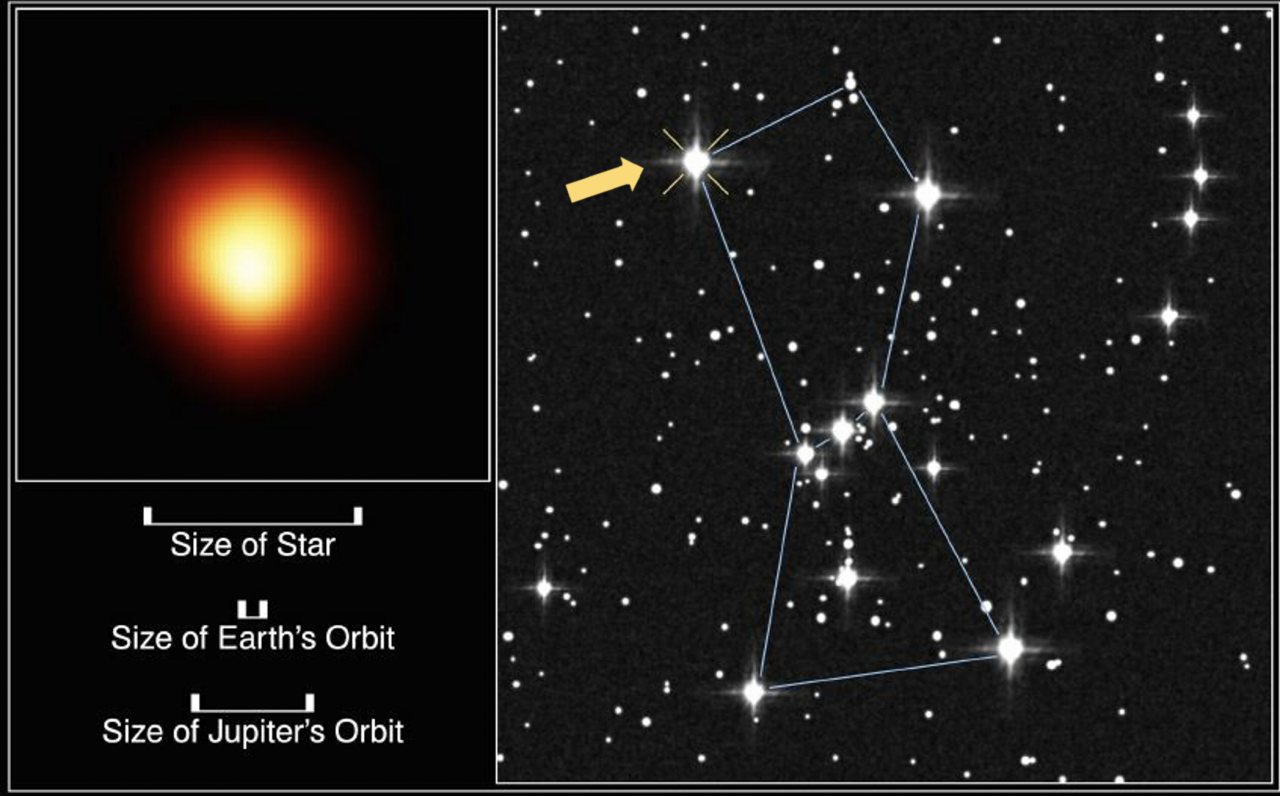
Betelgeuse, the bright red supergiant in Orion, is hundreds of light-years away. Estimates of its exact distance have varied, but NASA commonly describes it as roughly 700 light-years from Earth. That means observations made today show events that actually happened there roughly seven centuries ago. Betelgeuse is also a massive star approaching the end of its life, which makes all that delayed reporting particularly interesting.
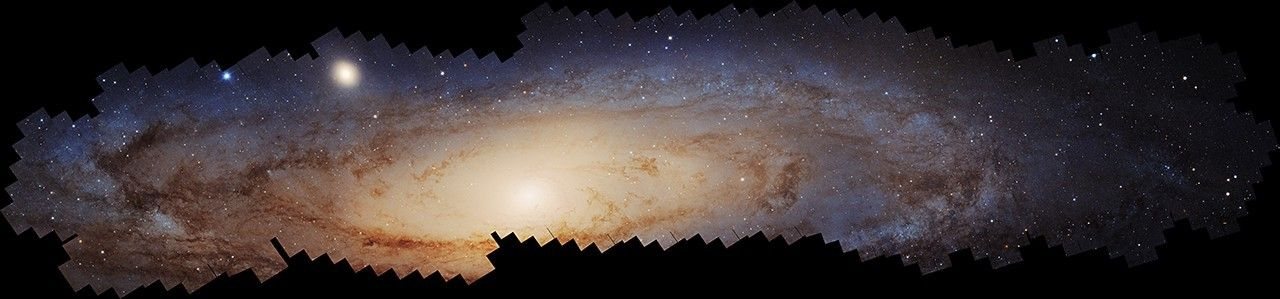
And we can still go outside and see something much farther into the past without a telescope. Under sufficiently dark skies, the Andromeda Galaxy is visible to the unaided eye. It lies about 2.5 million light-years away, so the light we see from Andromeda today began its journey about 2.5 million years ago. We are not seeing our neighboring galaxy as it is today. We are seeing it as it existed when early members of the human genus were living on Earth.
Modern telescopes push this principle to astonishing extremes. When astronomers detect galaxies whose light has traveled for billions of years, those observations become direct views of much earlier periods in cosmic history. Looking farther into space literally means looking farther back in time.
That delay also applies when a star dies.
In 1054, observers on Earth recorded a spectacular “guest star” bright enough to be visible during the day. Today we know they were witnessing the supernova that produced the Crab Nebula. But the explosion itself had occurred roughly 6,500 years earlier. Its light simply didn't deliver the news to Earth until 1054.
So does that mean the stars above us are mostly dead and we just haven't heard about it yet?
No.
The fact that starlight is old does not mean the star that emitted it is dead. Stellar lifetimes are generally enormous compared with the travel times of light from stars within our part of the Milky Way. Depending largely on their mass, stars can live anywhere from a few million years to many billions of years, with some low-mass stars potentially surviving for trillions.
Massive stars burn through their fuel much more rapidly and can change dramatically on astronomical timescales, so an individual distant star could have evolved or died since the light we currently see left it. But distance alone does not justify declaring a star deceased.
The real scandal is stranger than a sky full of stellar ghosts.
There is no live broadcast from the universe.
Every photon arriving at Earth carries information about something that has already happened. The Sun is eight minutes behind schedule. Proxima Centauri is more than four years behind. Betelgeuse is centuries behind. Andromeda is millions of years behind. The deepest observations of the universe arrive billions of years late.
The night sky isn't necessarily a graveyard.
It's an archive.
Sources
-
Time Travel: Observing Cosmic History
NASA Science. Time Travel: Observing Cosmic History. Hubble Space Telescope, NASA.
Why this source matters: Primary source for the article’s central concept that observing distant objects means seeing them in the past. Supports the examples of Proxima Centauri, Betelgeuse, the Crab Nebula supernova, Andromeda, and billion-year lookback observations.
-
What Is a Light-Year?
NASA. What Is a Light-Year? NASA Space Place.
Why this source matters: Supports the definition of a light-year, the finite speed of light, and the explanation that greater astronomical distance means observing further into the past.
-
Star Basics
NASA Science. Star Basics. NASA.
Why this source matters: Supports the discussion of stellar lifetimes and the correction that old arriving light does not imply that the emitting star is already dead.