
It was surprisingly difficult to choose the tabloid-style headline for this article. I almost went with "Mosquitoes Forced to Submit Stool Samples for Virus Testing!" But I simply had to have mosquito toilet in the headline, so that one prevailed.
Both headlines raise some fascinating questions, chief among them, "How do you build a mosquito toilet?" and "How do you make a mosquito use a toilet?" And I think combining the two headlines gets us a little closer to the actual truth.
The toilet in question was a 3D-printed funnel positioned underneath a container housing 50 mosquitoes. The mosquitoes were fed sugar water containing red food coloring over an 18-hour period, and their excreta collected in a tiny tube beneath the funnel for scientists to analyze.
So yes… both a toilet and unconsented stool collection.
And also yes, the results of the study were scientifically fascinating. They even included evidence of a virus related to one named after a character from Harry Potter! But we'll get to that in THE REAL STORY.
First, I'd like to take one more moment to appreciate the absurdity of collecting mosquito stool samples.
Somewhere in New Jersey, fifty mosquitoes are furious that their collective bathroom activities have been quantified, sequenced, and published in a scientific journal.
Privacy is dead. Even in the insect kingdom. 🦟🚽🤣
The Real Story
As ridiculous as it sounds, researchers at Rutgers University have developed a new way to collect and analyze mosquito waste, potentially making it easier to monitor viruses and other microorganisms circulating in the environment.
Traditional mosquito surveillance usually involves trapping insects, identifying them by species, combining them into groups, and grinding them up for laboratory testing. This process can be time-consuming, particularly when researchers are monitoring large numbers of mosquitoes across multiple locations.
But mosquitoes have another way of providing biological samples. As they feed and digest their meals, they excrete tiny amounts of liquid waste containing genetic material from viruses and other organisms they have encountered.
Researchers have previously demonstrated that this waste can be tested for pathogens. The new study takes the concept further by combining an efficient collection device with a technique capable of identifying a broad range of genetic sequences.
The collection device uses a superhydrophobic surface, meaning it strongly repels water. Instead of sticking to the sides of the specially coated funnel, liquid droplets bead up and slide into a collection tube.
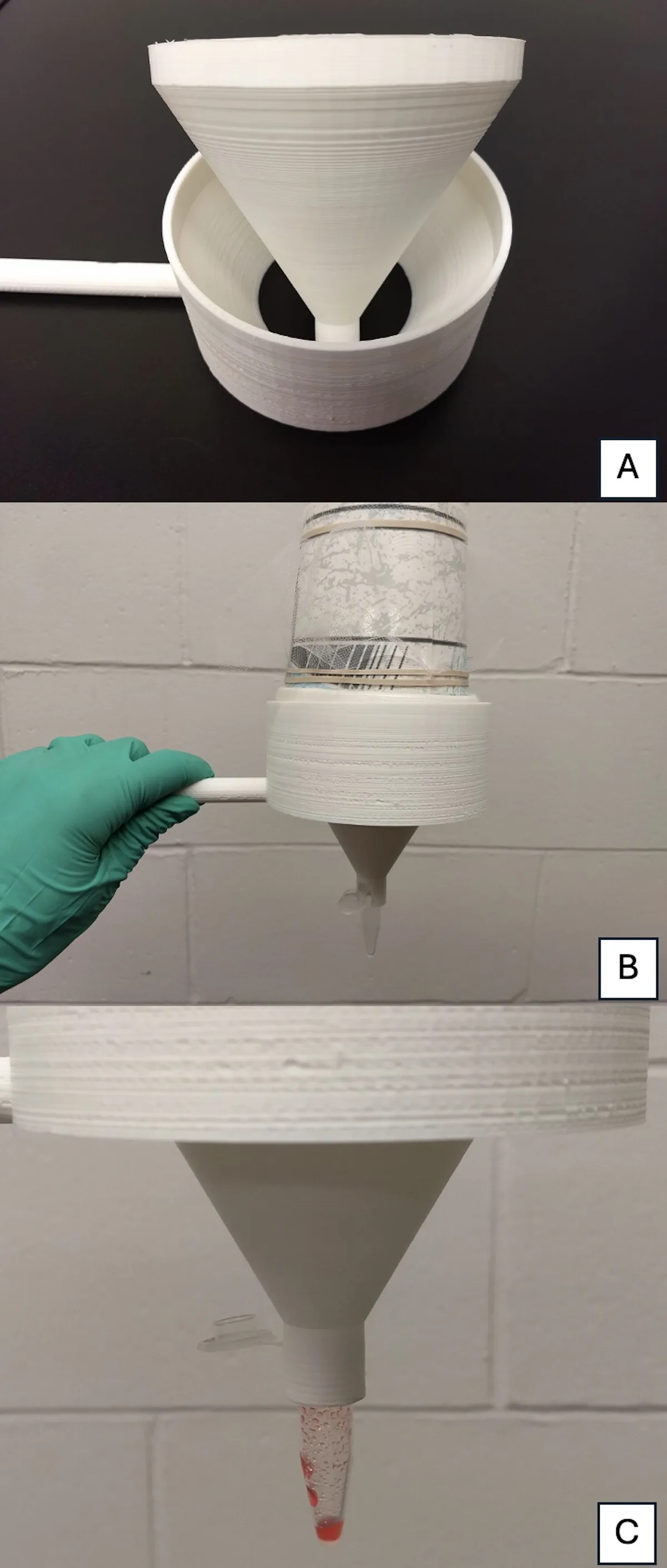
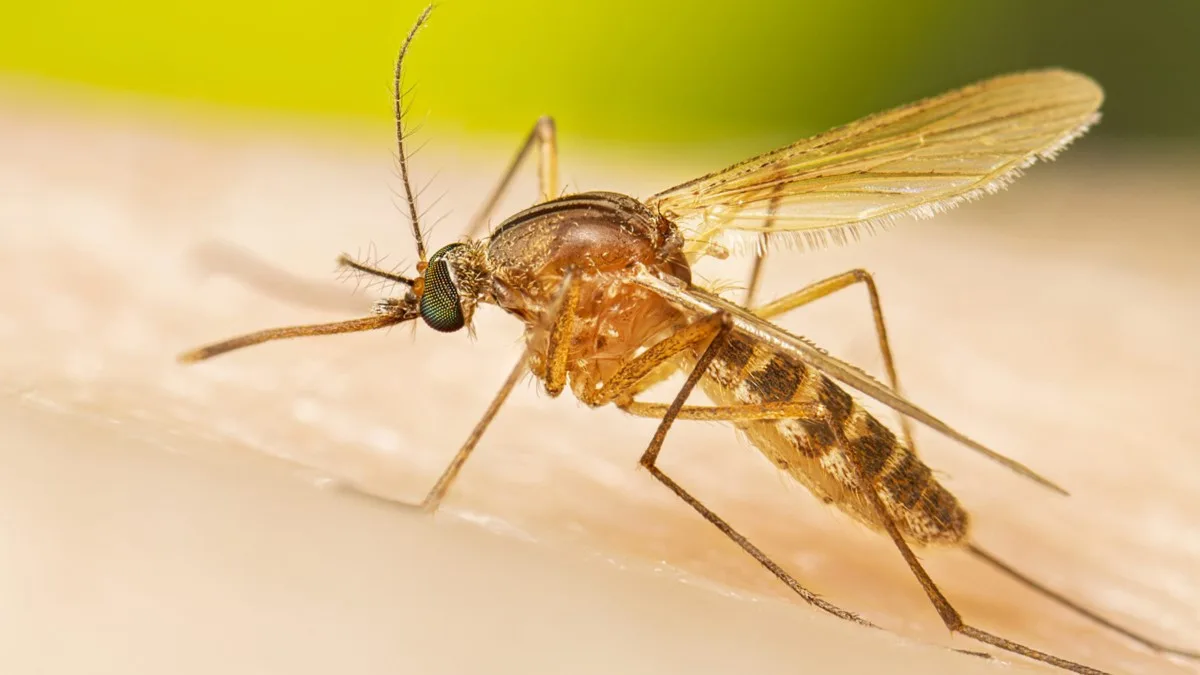
Researchers tested the device using two groups of 50 wild-caught Culex mosquitoes collected from the same New Jersey yard in 2021 and 2022. After 18 hours of feeding on sugar water, each group had produced approximately 45–55 microliters of liquid waste, roughly the volume of a single drop of water.
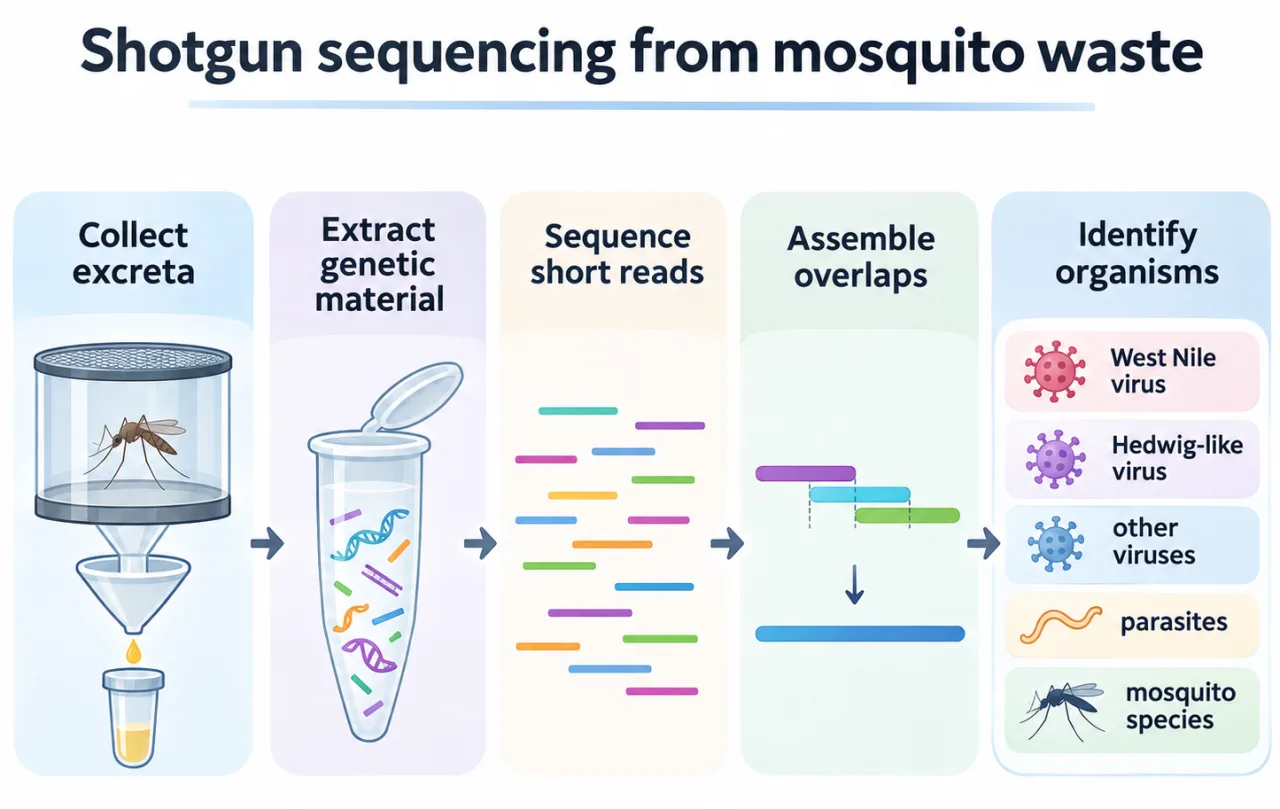
The scientists then used shotgun metagenomic sequencing, a technique that analyzes genetic material from a mixed sample without requiring researchers to select a particular organism in advance. Computers assemble millions of short genetic sequences and compare them with reference databases to determine what organisms may be represented.
And the results were impressive.
The 2022 sample yielded a complete genome of West Nile virus, a mosquito-borne pathogen that can sometimes cause serious neurological disease in humans. The researchers even identified genetic characteristics consistent with the NY07 variant, previously documented in the region. Additional molecular testing confirmed the West Nile virus RNA detection.
But West Nile wasn't the only discovery.
The researchers also detected genetic sequences closely related to Hedwig virus, which had previously been reported in Europe but not in the Americas.
And yes, there's a Harry Potter connection.
Hedwig virus was originally identified in snowy owls in Germany and named after Harry Potter's famous white owl. The New Jersey findings represent the first known evidence of Hedwig-like viruses in the Americas.
The researchers also identified sequences suggesting several potentially undescribed viruses, including partiti-like and picorna-like viruses. Other genetic evidence pointed to trypanosomatids, a group of single-celled parasites, and possibly a virus associated with those parasites.
In other words, some of the genetic material may have originated from microorganisms living inside the mosquitoes rather than directly from infections of the mosquitoes themselves.
The team also recovered mosquito genetic material that helped confirm the identity of the insects contributing to the samples.
This is what makes the approach so promising. Instead of testing only for a particular known pathogen, scientists may be able to examine mosquito waste for a much broader collection of viruses, parasites, and other biological signatures.
The long-term goal is to develop field-ready collection systems that could gather mosquito waste directly at surveillance sites, reducing the need to transport and process large numbers of insects.
With further development and validation, such systems could help researchers monitor known pathogens, identify unfamiliar viruses, and improve our understanding of how microorganisms are distributed across different environments.
Apparently, mosquitoes have been leaving behind a wealth of biological information all along.
Scientists just needed to build the appropriate bathroom facilities to collect it.
Sources
-
Metaviromic profiling of mosquito excreta using superhydrophobic collection devices expands the known RNA virome of North America
Price, D. C., Bezhani, F. L., Meng, Z., Porfirio-LaStrapes, M., Wagner, N. E., Javanmard, M., Han, T., & Barnes, M. M. (2026). Metaviromic profiling of mosquito excreta using superhydrophobic collection devices expands the known RNA virome of North America. Microbiology Spectrum, 14(9), e00938-26.
Why this source matters: The original peer-reviewed study describing the mosquito-waste collection device, genetic sequencing methods, recovery of a complete West Nile virus genome, and detection of additional viruses and parasites.
-
Mosquito Waste Reveals Viruses Hiding in Plain Sight
MacPherson, K. (2026, September 14). Mosquito waste reveals viruses hiding in plain sight. Rutgers University.
Why this source matters: Rutgers University's report explains the experimental approach and its potential public-health applications, including insights from lead researcher Dana Price about detecting previously unrecognized viruses and developing future field-based surveillance systems.
-
Development and Field Evaluation of a System to Collect Mosquito Excreta for the Detection of Arboviruses
Meyer, D. B., Ramirez, A. L., van den Hurk, A. F., Kurucz, N., & Ritchie, S. A. (2019). Development and field evaluation of a system to collect mosquito excreta for the detection of arboviruses. Journal of Medical Entomology, 56(4), 1116–1121.
Why this source matters: Earlier research demonstrating that mosquito traps can be adapted to collect excreta for viral surveillance. Field testing detected West Nile, Ross River, and Murray Valley encephalitis viruses, providing important context for the advances reported in the 2026 study.