
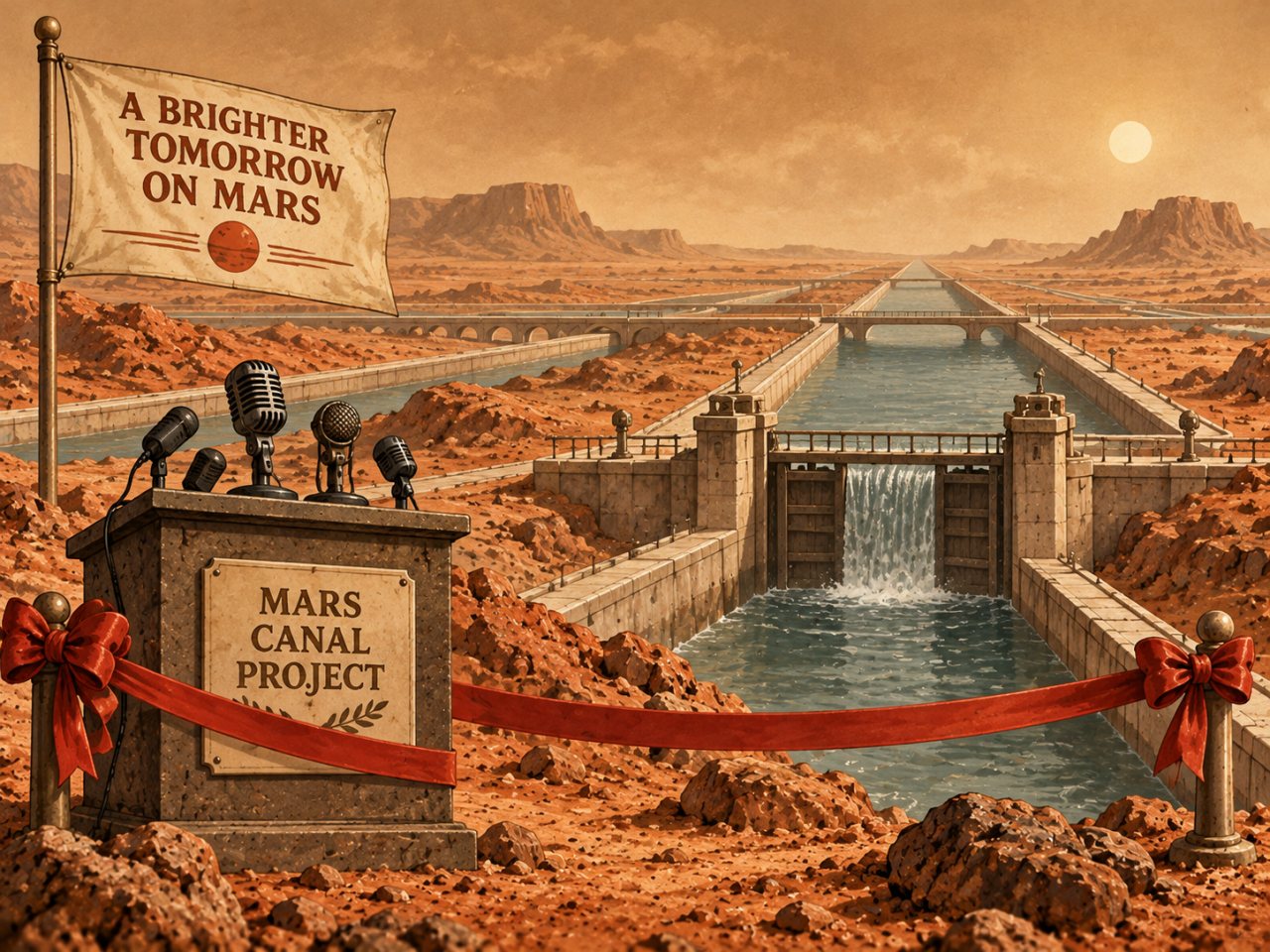
Mankind has always been fascinated with pointing telescopes at the sky and wondering about the worlds beyond Earth. And as telescopes improved, so did our view of space.
In 1877, Italian astronomer Giovanni Schiaparelli observed what looked like linear structures on Mars. He called them canali, the Italian word for “channels.” English speakers, however, translated the term as “canals” — a word that sounds much more like somebody got out there with a shovel and a municipal budget.
Then American astronomer Percival Lowell got involved.
Lowell also reported seeing the lines, but he went considerably further. He argued that they were part of a vast irrigation system built by an advanced Martian civilization trying to move water across a drying planet. He eventually wrote three books about Mars, beginning with Mars in 1895.
And, as you might expect, the public loved this.
Martian Fever abounded.
The possibility of intelligent life on Mars fed newspapers, lectures, speculation, and decades of science fiction. The telescope had supplied some blurry lines. Humanity supplied an alien public-works department.
To be fair, not everyone was buying it.
Other astronomers were skeptical, and Italian astronomer Vincenzo Cerulli argued that the supposed canals were likely an optical or perceptual effect rather than actual straight structures on the Martian surface.
By the early 20th century, Lowell’s engineered canal network had already fallen out of favor among many astronomers, although debate over some of the apparent linear markings lingered. Then, in 1965, Mariner 4 sent back the first close-up spacecraft images of Mars.
No planet-spanning irrigation system.
No neat geometric canal network.
No Martian Department of Water Management.
Mars does, however, have real natural channels and valley networks carved by ancient water. Those are not the same features Schiaparelli and Lowell thought they were seeing, and they certainly were not evidence of intelligent Martian engineering.
So what happened?
Telescopes of the time were limited in resolution. Earth’s atmosphere blurred fine details. Mars itself was small in the eyepiece. And the human visual system is extremely good at organizing vague, disconnected markings into lines and patterns.
In other words, the observations were uncertain.
The interpretation was doing a lot of heavy lifting.
So the takeaway is to wait for all the evidence before jumping to certainties.
And then maybe when The War of the Worlds is broadcast on the radio in 1938, people won’t believe it’s a genuine Martian invasion. 😜
The Real Story
When Giovanni Schiaparelli turned his telescope toward Mars during the favorable opposition of 1877, he mapped long, narrow markings crossing the planet’s surface and called them canali. In Italian, canali can mean channels or grooves. It does not automatically imply artificial construction.
That distinction became rather important.
English-language accounts commonly rendered canali as “canals,” a word that strongly suggests something deliberately engineered. But translation alone did not manufacture the entire Martian-canal craze. Schiaparelli himself regarded the markings as natural features, while later observers disagreed over what they were seeing and whether the lines were even physically real. Lowell Observatory’s historical account specifically notes that Schiaparelli favored a natural geological interpretation, while Percival Lowell later insisted that the features were artificial.
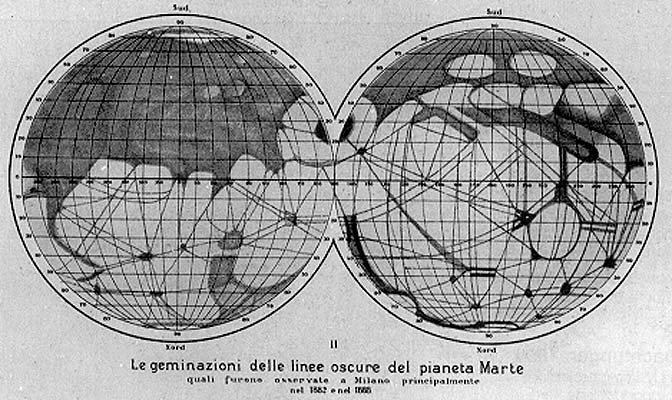
Lowell entered the story in the 1890s.
After becoming fascinated by Schiaparelli’s observations, he established an observatory near Flagstaff, Arizona, and devoted years to studying Mars. He produced detailed drawings and globes covered with networks of remarkably straight lines. To Lowell, their apparent straightness, uniform width, and organized arrangement argued against a natural origin.
In Mars and Its Canals, published in 1906, Lowell treated the canals as genuine surface features and devoted an entire section of the book to what he called “non-natural features.” He argued that the network was best explained as an artificial system created by intelligent inhabitants of a drying Mars.
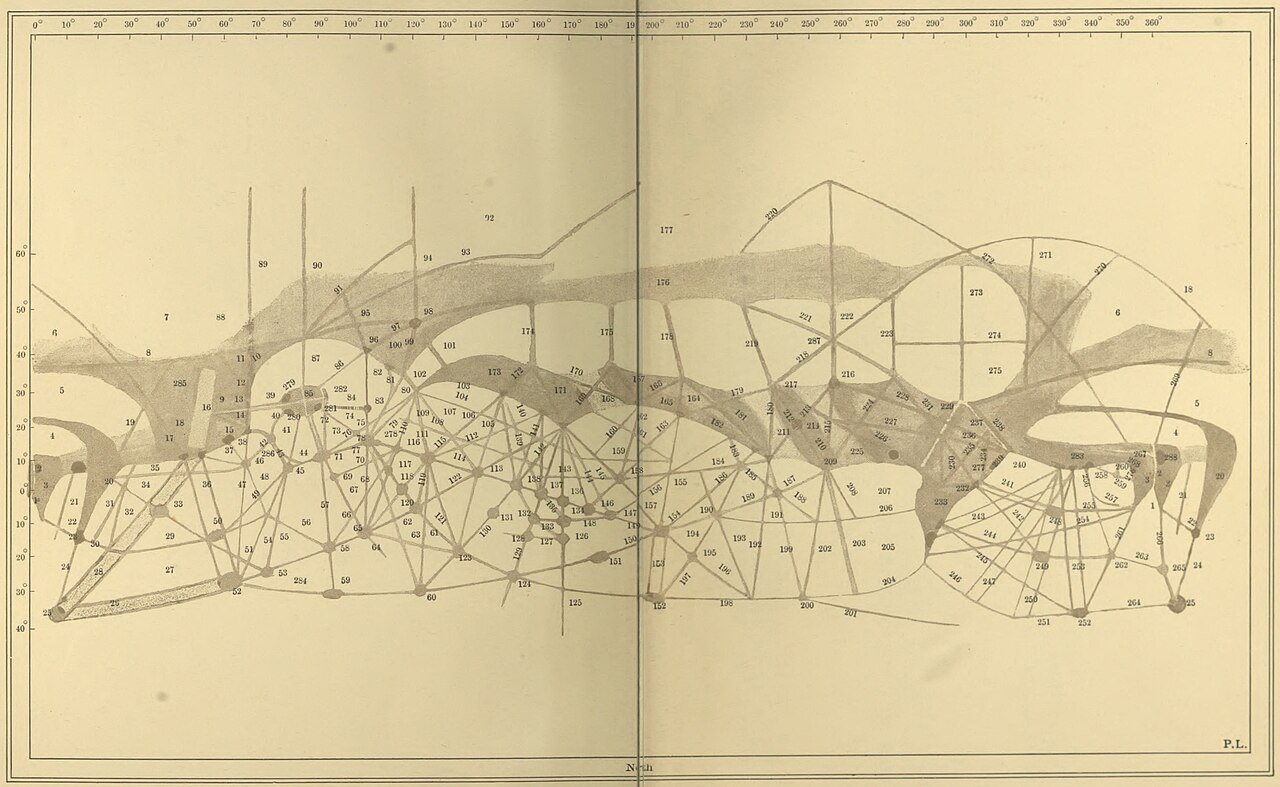
This was never a unanimous scientific conclusion.
Lowell Observatory’s own historical summary notes that most of the scientific community remained skeptical even while Lowell’s ideas became enormously popular with the public. His books, magazine articles, lectures, and press coverage helped transform a technical astronomical controversy into a cultural phenomenon.
And some astronomers were already proposing a very different explanation.
Italian astronomer Vincenzo Cerulli argued that the famous lines could arise from the way an observer’s visual system organized very small, irregular patches of light and dark that could not be individually resolved through the telescope. Rather than being either pure imagination or perfect representations of real straight structures, the “canals” could emerge when genuine but unresolved surface detail was perceptually connected into cleaner geometric patterns. Cerulli’s work became known as an optical interpretation of the Martian canals.
That distinction matters.
The observers were not necessarily staring at a completely blank disk and hallucinating lines out of nothing. Mars has abundant real variations in brightness, color, terrain, and topography. The problem was that nineteenth-century observers were trying to resolve extremely fine detail on a small planetary disk while looking through Earth’s moving atmosphere.
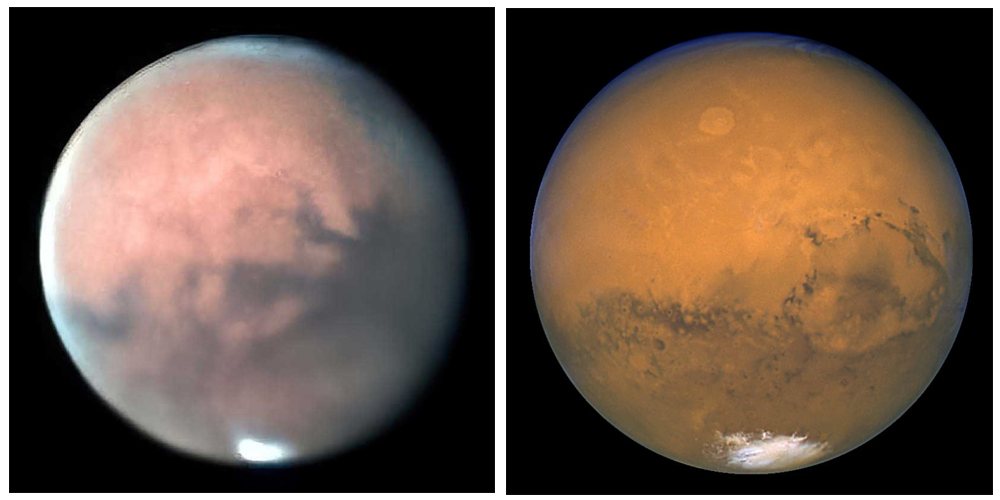
When visual information sits near the limits of resolution, nearby patches and streaks can blur together. The brain then does what visual systems are exceptionally good at doing: it organizes incomplete information into patterns.
Straight lines are particularly seductive patterns.
So one observer could see disconnected or irregular markings while another perceived those same general regions as a continuous line. Once maps existed showing expected canals, expectation itself could further influence what observers looked for and interpreted.
And then there was gemination, or “twinning.”
Schiaparelli reported that some canals appeared to split into pairs of closely parallel lines. Lowell also embraced the phenomenon, eventually describing numerous double canals. To believers, this seemed like another remarkable property of the Martian network. To skeptics, increasingly elaborate straight and doubled structures pushed the observations even farther toward a perceptual explanation.
By the early twentieth century, improved observations were steadily eroding confidence in the geometric canal network. But Mars was still frustratingly difficult to see clearly from Earth. Even the best telescopic photographs before the space age showed only broad surface markings. NASA notes that although intelligent canal-building Martians had fallen out of scientific favor by then, the planet remained mysterious enough that ideas about vegetation or other forms of life persisted well into the 1960s.
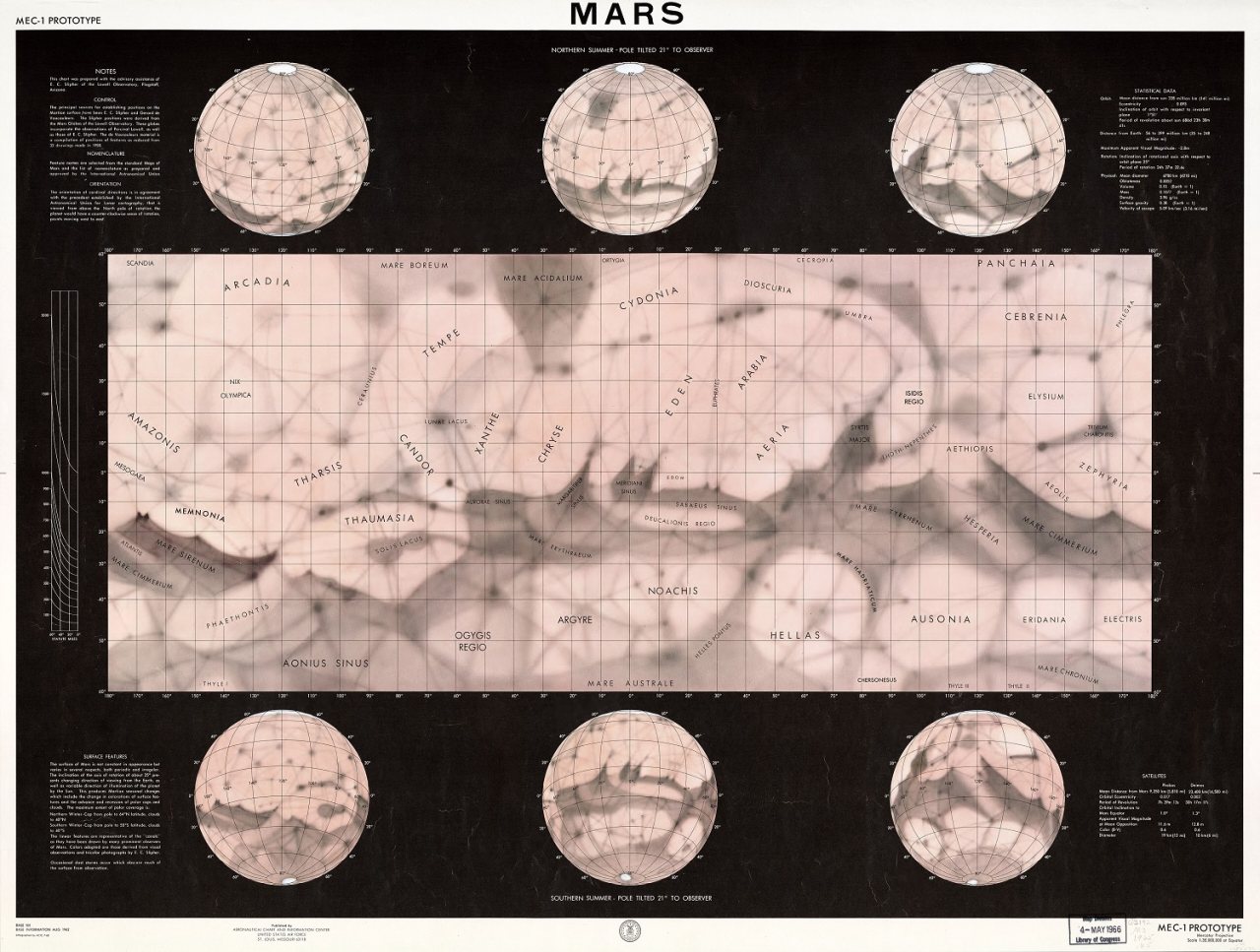
Then humanity finally sent a camera close enough.
On July 14, 1965, Mariner 4 flew past Mars and returned the first close-up photographs ever taken of another planet. The images covered only about one percent of the Martian surface, but they revealed a heavily cratered landscape very different from the elaborate geometric world portrayed on canal maps. NASA’s later retrospective notes that Mariner 4 flew over regions where canals had been drawn and saw none.
The canals Lowell imagined were gone.
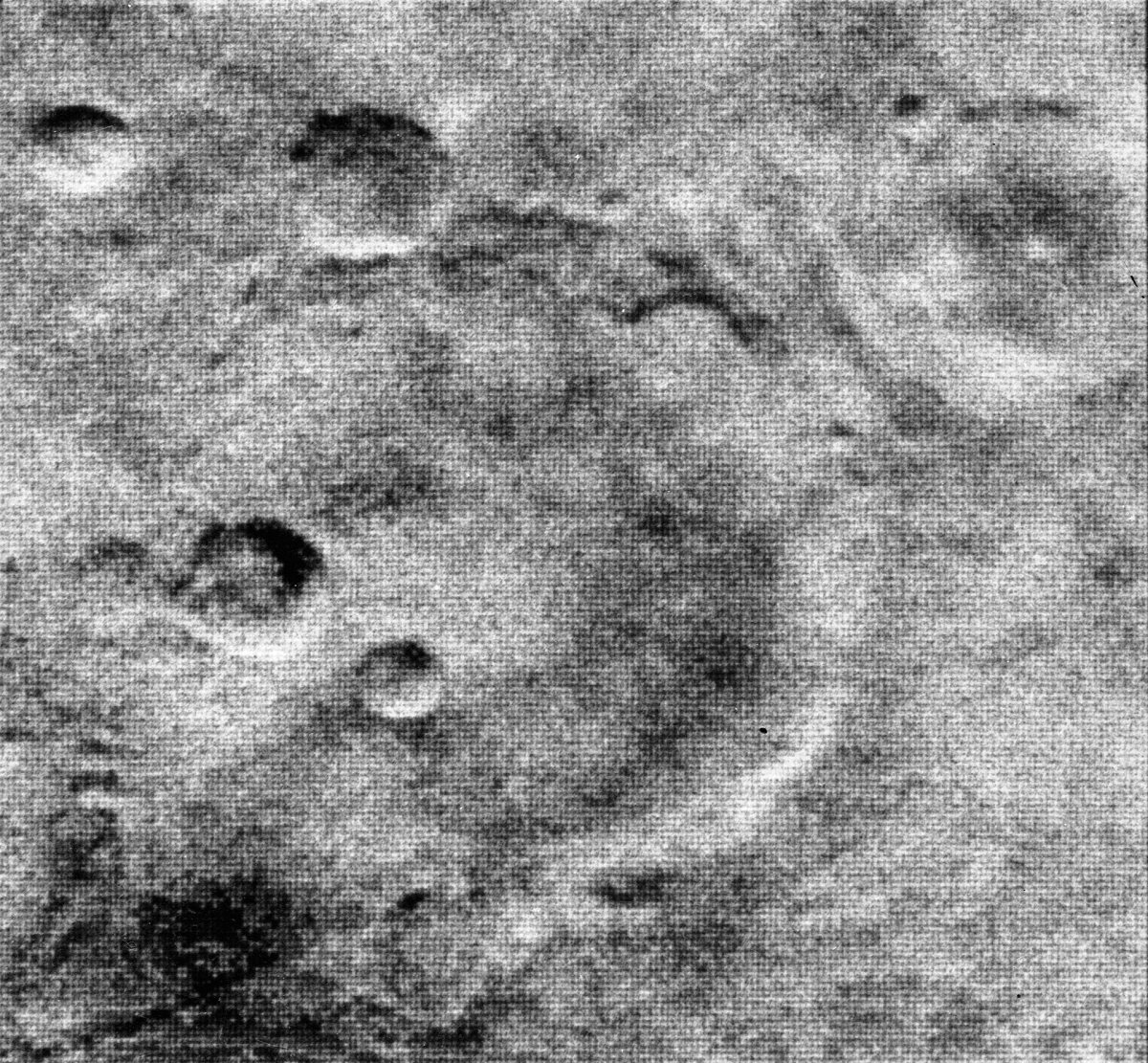
Mars, however, had one more joke waiting.
Modern spacecraft have revealed enormous natural channels, valleys, gullies, and canyon systems across the planet, many carrying evidence that liquid water once flowed across or beneath its surface. So Schiaparelli’s choice of a word meaning “channels” ended up sounding eerily appropriate in a completely different sense.
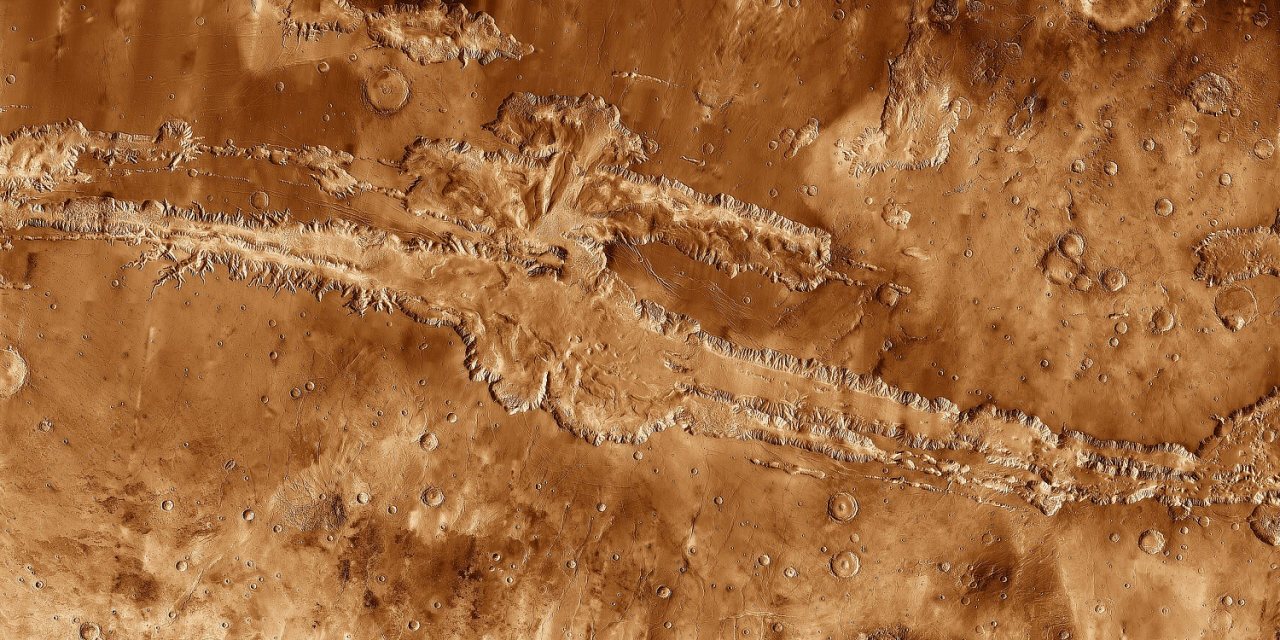
Mars really did have a watery past.
It just did not have a planet-spanning network of ruler-straight irrigation canals built by Martian engineers.
The canal episode is therefore less a story about foolish astronomers than about the difficulty of doing science at the edge of what instruments and human perception can resolve.
Schiaparelli saw ambiguous linear markings.
Lowell built a detailed explanation for them.
Cerulli and other skeptics questioned whether the lines themselves were real structures.
And spacecraft eventually supplied the view no Earth-bound nineteenth-century telescope could provide.
The maps were detailed.
The confidence was impressive.
The Martian public-works department was unfortunately unavailable for comment. 😜
Sources
-
Percival Lowell’s Search for Life on Mars
Lowell Observatory. Percival Lowell’s Search for Life on Mars. Lowell Observatory.
Why this source matters: Provides an authoritative institutional history of Schiaparelli’s canali, Lowell’s observing program, Lowell’s artificial-canal interpretation, scientific skepticism, public reaction, and Lowell’s three Mars books. It is especially useful for distinguishing Schiaparelli’s natural interpretation from Lowell’s engineered-canal theory.
-
Mars and Its Canals
Lowell, P. (1906). Mars and Its Canals. New York: The Macmillan Company.
Why this source matters: Primary historical source documenting Lowell’s own canal claims and reasoning. Lowell explicitly treated the canals as genuine features and developed his argument for their artificial origin. It is evidence of what Lowell believed and published, not evidence that Martian canals actually existed. Project Gutenberg identifies the work as public domain in the United States.
-
55 Years Ago: Mariner 4 First to Explore Mars
Uri, J. (2020, July 14). 55 Years Ago: Mariner 4 First to Explore Mars. NASA Johnson Space Center.
Why this source matters: Provides NASA’s historical account of Schiaparelli’s canali, their mistranslation as “canals,” the decline of the intelligent-canal interpretation among scientists, and Mariner 4’s 1965 first close-up reconnaissance of Mars. It also documents how little surface detail Earth-based telescopes could resolve before spacecraft exploration.
-
Cerulli, Vincenzo
Bianchi, E. (1931). “Cerulli, Vincenzo.” Enciclopedia Italiana. Istituto dell’Enciclopedia Italiana Treccani.
Why this source matters: Historical biographical source documenting Cerulli’s optical theory of the Martian canals. It describes his interpretation that the simple and doubled canal-like lines represented stages of visual perception of unresolved Martian surface appearances rather than definitive physical structures.
-
Triumph of Mariner 4
NASA Science. (2025). Triumph of Mariner 4. National Aeronautics and Space Administration.
Why this source matters: NASA’s modern retrospective directly states that Mariner 4 flew over areas where canals had previously been drawn and saw none. It also explains how subsequent orbiters, landers, and rovers transformed Mars from a blurry telescopic disk into a high-resolution mapped world.