
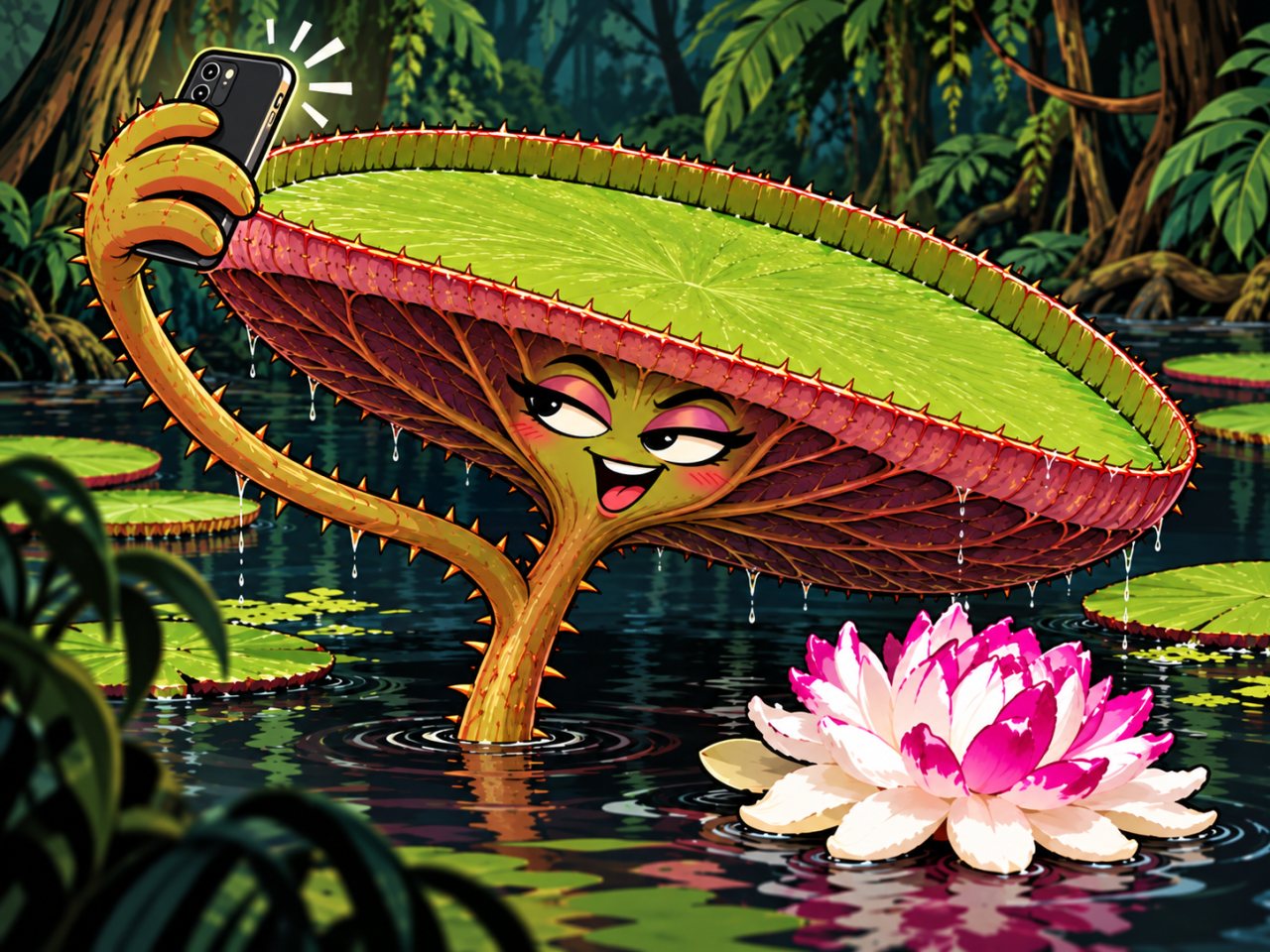
We've all heard about the dangers of social media. Clickbait. Endless scrolling. Cyberbullying. The list goes on.
But how much have you heard about the benefits of social media for identifying new species? 😳
Enter Jeremiah Harris. An expert in carnivorous plants, he took a trip to Colombia, South America, to study his botanical favorites. (And we here at Science Scandal love carnivorous plants, too! In fact, we have several carnivorous plant scandals waiting in the wings. Stay tuned!)
As you do, Jeremiah decided to go for a swim while exploring the Inírida River region. He encountered some enormous waterlilies, assumed they belonged to a known species, and posted a selfie on Instagram.
Unfortunately, the waterlilies were considerably less enthusiastic about the encounter. Their prickly stems and leaf undersides left Jeremiah and his companions removing spines from their skin for days. Apparently, the plants had strong feelings about unauthorized photography.
But that Instagram selfie would eventually help lead to the discovery of an entirely new species of giant waterlily!
In hindsight, perhaps those prickles were worth the pain. 😂
For more details about Jeremiah's adventures in Colombia, including videos of him swimming with the waterlilies, check out his blog post. (And if you're in the US and love carnivorous plants as much as we do, you can even buy some from his nursery!)
But here's where things get interesting.
Jeremiah's Instagram selfie caught the attention of Carlos Magdalena, a waterlily expert at the Royal Botanic Gardens, Kew, in England. Carlos recognized the plant as resembling Victoria amazonica, but there was a problem.
That species wasn't supposed to be growing there.
What followed was years of satellite imagery research, planning, and collaboration, culminating in a dramatic expedition into Colombia's flooded rainforest.
And the result?
A giant waterlily, with leaves up to two meters across, finally received its own scientific identity: Victoria colombiana.
A plant so enormous it could be seen from space had somehow remained unrecognized as a distinct species by formal science.
And it was only now recognized because somebody posted a selfie.
So, now let's take a closer look at how this extraordinary botanical discovery unfolded...
The Real Story
The discovery of Victoria colombiana, a giant waterlily from Colombia's upper Orinoco drainage basin, began with a photograph on Instagram. But formally identifying the species required years of investigation, satellite imagery, botanical expertise, and the knowledge of people who had lived alongside these plants long before scientists gave them a separate name.
In May 2021, American carnivorous plant specialist Jeremiah Harris traveled to the Guainía region of Colombia with fellow plant enthusiasts Fernando Rivadavia, Sergio Guzmán, and Rayner Rodríguez Diaz. Local guides Nilo Rodríguez and Gustavo Melo helped them navigate the region's rivers and flooded forests.
During an excursion to see giant waterlilies, Harris photographed himself swimming beside enormous floating leaves. He assumed they belonged to Victoria amazonica, a previously known giant waterlily species, and shared the photograph on Instagram.
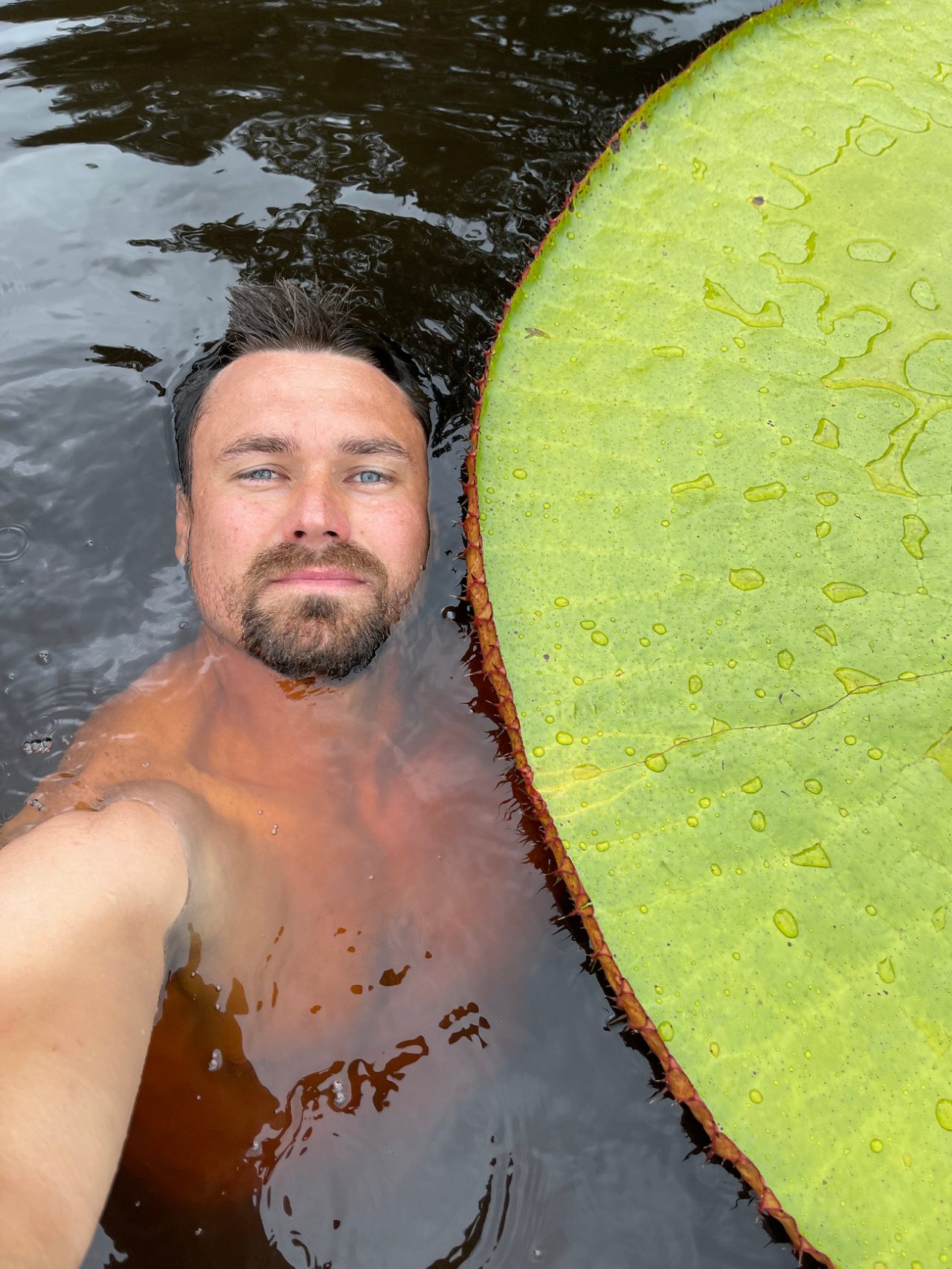
But Carlos Magdalena, a waterlily specialist at the Royal Botanic Gardens, Kew, noticed something unusual.
The plant looked like a Victoria waterlily, but its location was wrong. The known natural distributions of these giant waterlilies did not extend into the Inírida River drainage area.
In September 2021, Magdalena contacted Harris, who supplied GPS coordinates for the two locations where he had seen the plants. Magdalena then investigated satellite imagery of the Inírida River and surrounding lakes. Astonishingly, the giant floating leaves were large enough to be identified in the images.
The plant was literally visible from space!
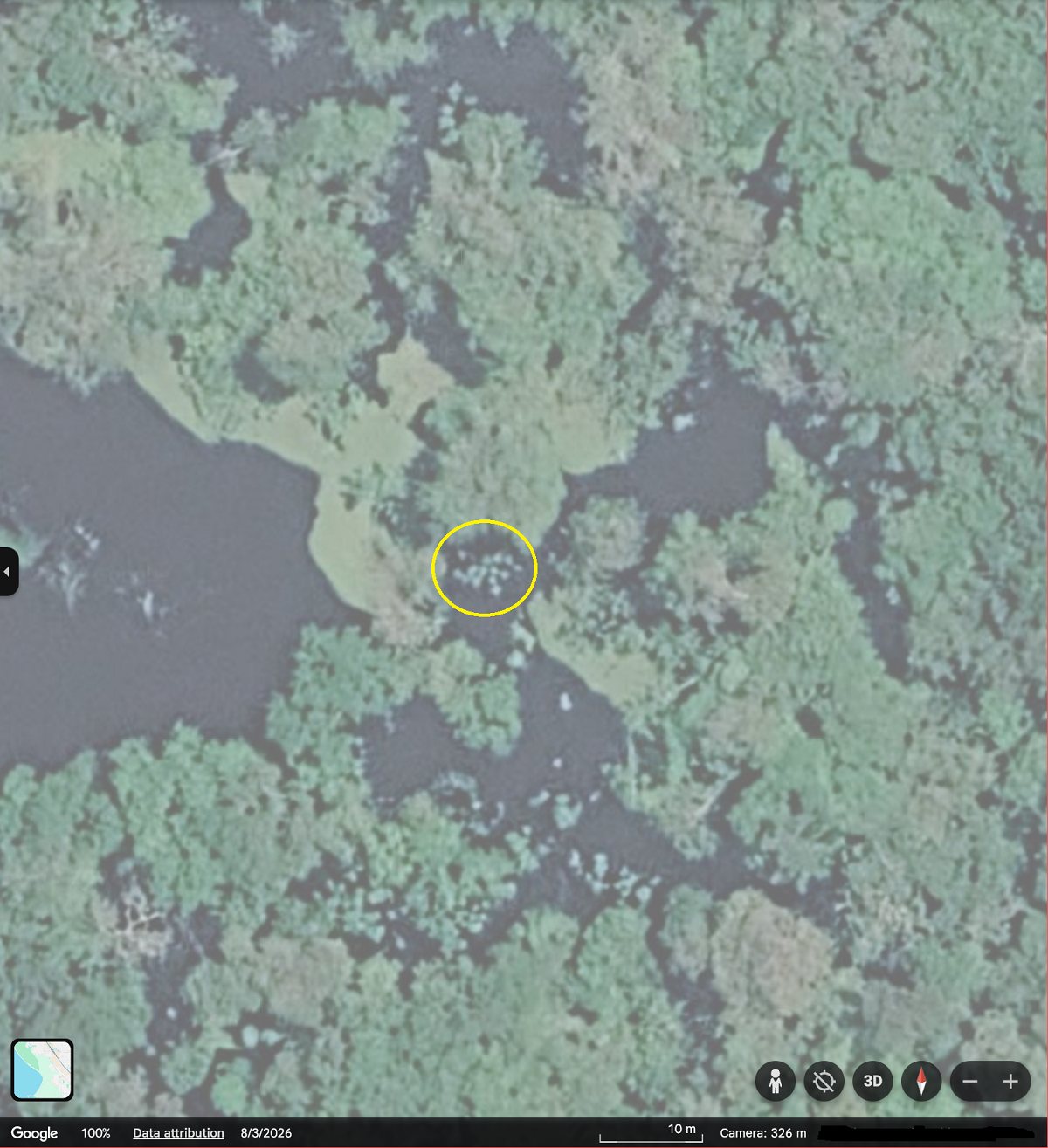
But identifying a giant waterlily in a satellite photograph is not the same as establishing which species it belongs to. That would require examining the plants in much greater detail.
Magdalena contacted Colombian botanist Mauricio Bernal-Rodriguez of the Jardín Botánico de Bogotá José Celestino Mutis. Together, they worked with Nilo Rodríguez, Jaime Hernández, and Gustavo Melo, collaborators from Indigenous reserves in the region, to organize a scientific expedition.
Their local knowledge was essential. Rodríguez had known of the waterlilies since childhood, although he remembered encountering relatively few of them. The plants were not unknown to the people living in the area. What remained unresolved was their formal scientific identity.
After nearly two years of planning, the expedition finally got underway.
Unfortunately, finding the plants was only the beginning of the problem.
During five days of searching, the team located just two individual plants, neither of which was flowering.
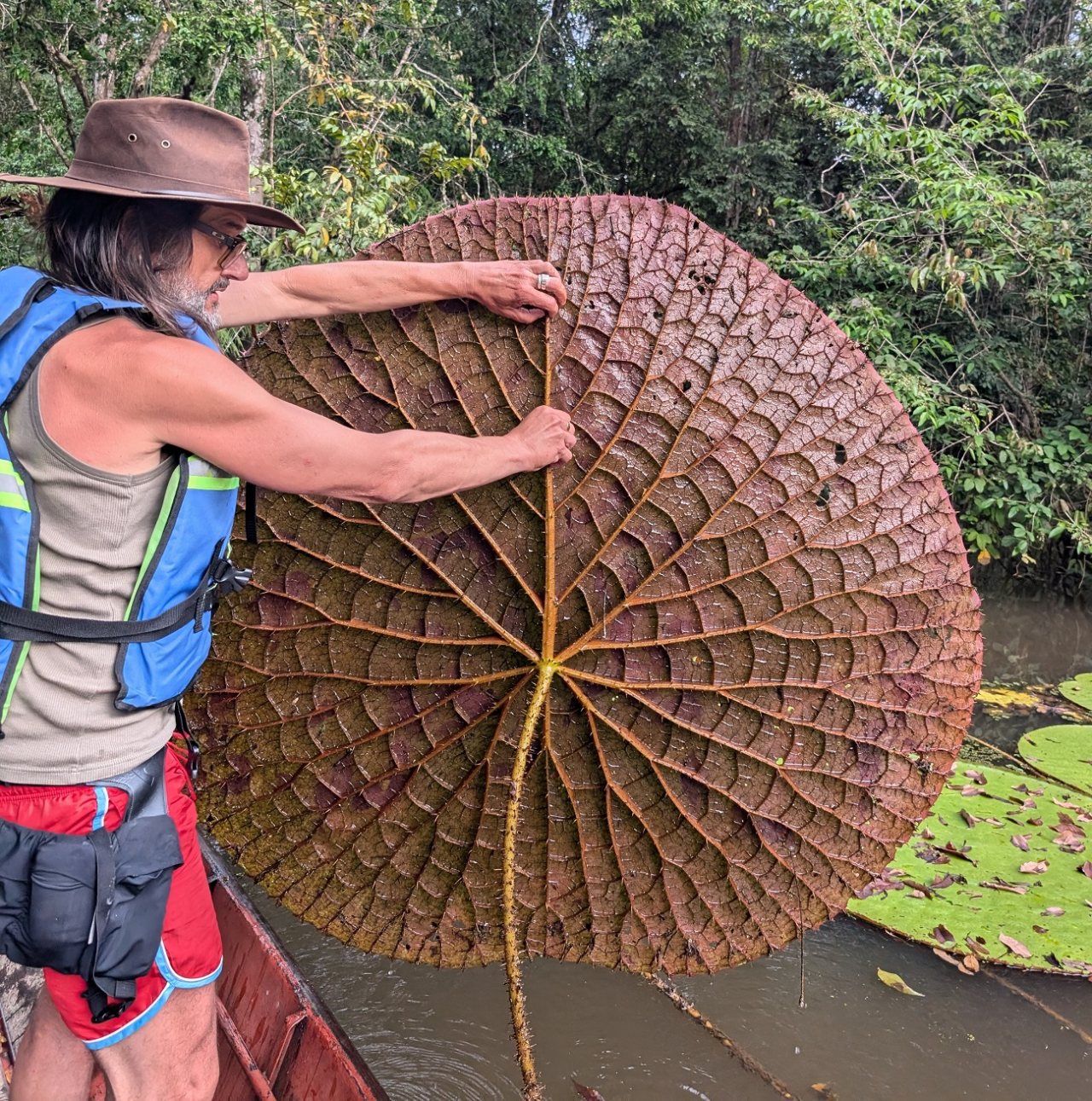
That presented a serious obstacle. Botanists use preserved reference specimens, called herbarium vouchers, to document and compare species. For this investigation, obtaining flowering material was particularly important because the reproductive structures provide valuable features for distinguishing closely related waterlilies.
Without flowers, the team lacked the material needed to complete a convincing formal description.
And their flight back to Bogotá was scheduled for the following morning.
Then, at approximately 11 p.m., Magdalena mentioned the problem to Gustavo Melo, their boatman and an Indigenous Tucano expert familiar with the flooded forest.
Melo knew another place where the plants grew.
At 1 a.m., with only hours remaining before their flight, the team set off by boat into the darkness. Relying on Melo's knowledge and navigation, they traveled deeper into the flooded rainforest until they reached a small lake shortly before sunrise.
There, they found five more giant waterlilies.
And one was flowering!
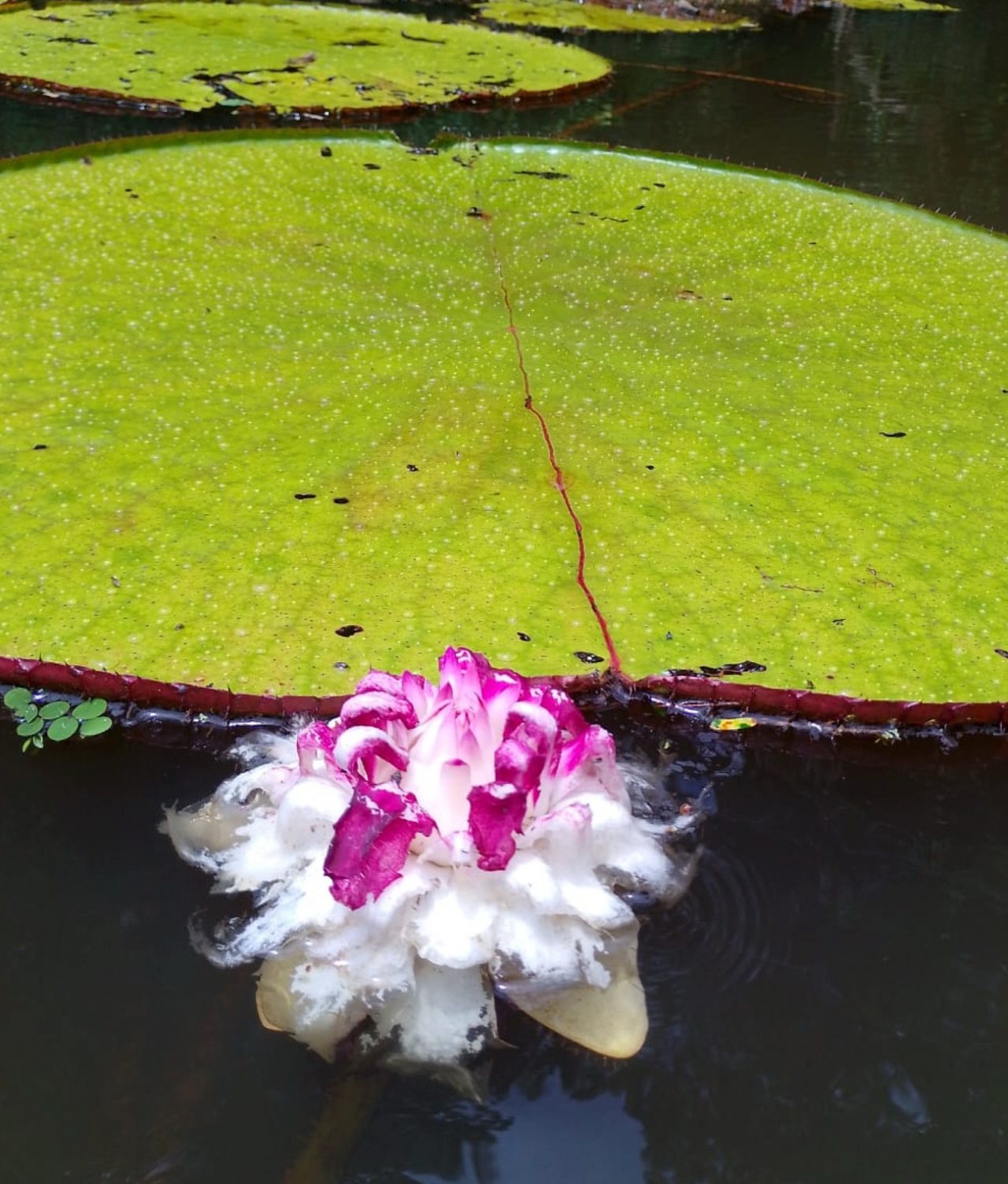
The team finally had the material needed to proceed with the formal scientific description. The expedition documented seven individual plants across two lakes, and the researchers managed to return in time for their flight.
The collected specimens were deposited in the herbarium of Bogotá's botanical garden. Taxonomic work continued with the assistance of Maarten J. M. Christenhusz, while morphological comparisons helped establish that the Colombian population warranted recognition as a distinct species.
Additional Geographic Information Systems (GIS) analysis by Colombian researcher Carlos A. Pedraza-Peñaloza identified a third lake containing the waterlily.
Satellite comparisons revealed another complication: additional waterlily leaves may become visible as water levels drop during drier periods, but those same conditions make reaching the plants considerably harder. The flooded forests are easier to navigate by boat when water levels are high.
On October 7, 2026, the research team formally described Victoria colombiana in the scientific journal Phytotaxa. All eight coauthors, Carlos Magdalena, Mauricio Bernal-Rodriguez, Carlos A. Pedraza-Peñaloza, Jaime Hernández, Gustavo Melo, Nilo Rodríguez, Jeremiah Harris, and Maarten J. M. Christenhusz, contributed to bringing the discovery into the scientific record.
The new species belongs to the giant waterlily genus Victoria, famous for its enormous circular floating leaves with raised rims. The leaves of V. colombiana can reach approximately two meters (6.6 feet) across.
The study also highlights an intriguing evolutionary possibility. Victoria seeds are sensitive to drying, and river systems and seasonal floodwaters appear important for dispersing them. The historical separation and changing courses of South American river basins may therefore have helped different Victoria lineages become geographically isolated and diversify over evolutionary time.
But while the discovery is exciting, the conservation picture is worrying.
The research team currently estimates that only 30–50 individual Victoria colombiana plants may exist in the wild. That estimate is preliminary, and additional satellite surveys and field investigations may reveal other populations.
Researchers are pursuing a formal conservation assessment and exploring ways to protect the species, including growing plants in botanical gardens and potentially establishing an additional population within Indigenous territory.
That would help protect a species whose scientific identity has only just been established.
Ultimately, this discovery was not the work of a single photographer, botanist, institution, or technology. It required an Instagram observation, expert recognition, satellite imagery, Colombian scientific collaboration, Indigenous ecological knowledge, field exploration, and careful taxonomic study.
And it raises an extraordinary question:
If something this large could remain unrecognized by formal science despite being visible in satellite imagery, what else might we already have photographed without realizing what we're looking at?
Sources
-
Discovery of a new species of Victoria (Nymphaeaceae) in the Orinoco watershed of Colombia
Magdalena, C., Bernal-Rodriguez, M., Pedraza-Peñaloza, C. A., Hernández, J., Melo, G., Rodríguez, N., Harris, J., & Christenhusz, M. J. M. (2026). Discovery of a new species of Victoria (Nymphaeaceae) in the Orinoco watershed of Colombia. Phytotaxa, 778(2), 101–136.
Why this source matters: The original peer-reviewed study formally describing Victoria colombiana. It explains how geographical distribution and morphological comparisons established the species and discusses how South America's changing river systems may have contributed to diversification within the giant waterlily genus.
-
New giant waterlily species described after chance Instagram sighting – and it’s already Critically Endangered
Royal Botanic Gardens, Kew. (2026, October 9). New giant waterlily species described after chance Instagram sighting – and it’s already Critically Endangered.
Why this source matters: Kew's firsthand institutional account documents the satellite-imagery investigation, the Colombian and Indigenous collaborators, the dramatic overnight expedition that located flowering specimens, and the preliminary population estimate and conservation plans.
-
How My Instagram Photo Led to a New Giant Waterlily, Victoria colombiana
Harris, J. (2026, October 10). How my Instagram photo led to a new giant waterlily, Victoria colombiana. Jeremiah's Plants.
Why this source matters: The photographer's firsthand account describes the 2021 Colombian expedition, the original Instagram selfie, his correspondence with Carlos Magdalena, and the role of local guides. Harris also documents his experiences swimming among the enormous, prickly waterlilies and reflects on the discovery's conservation importance.