
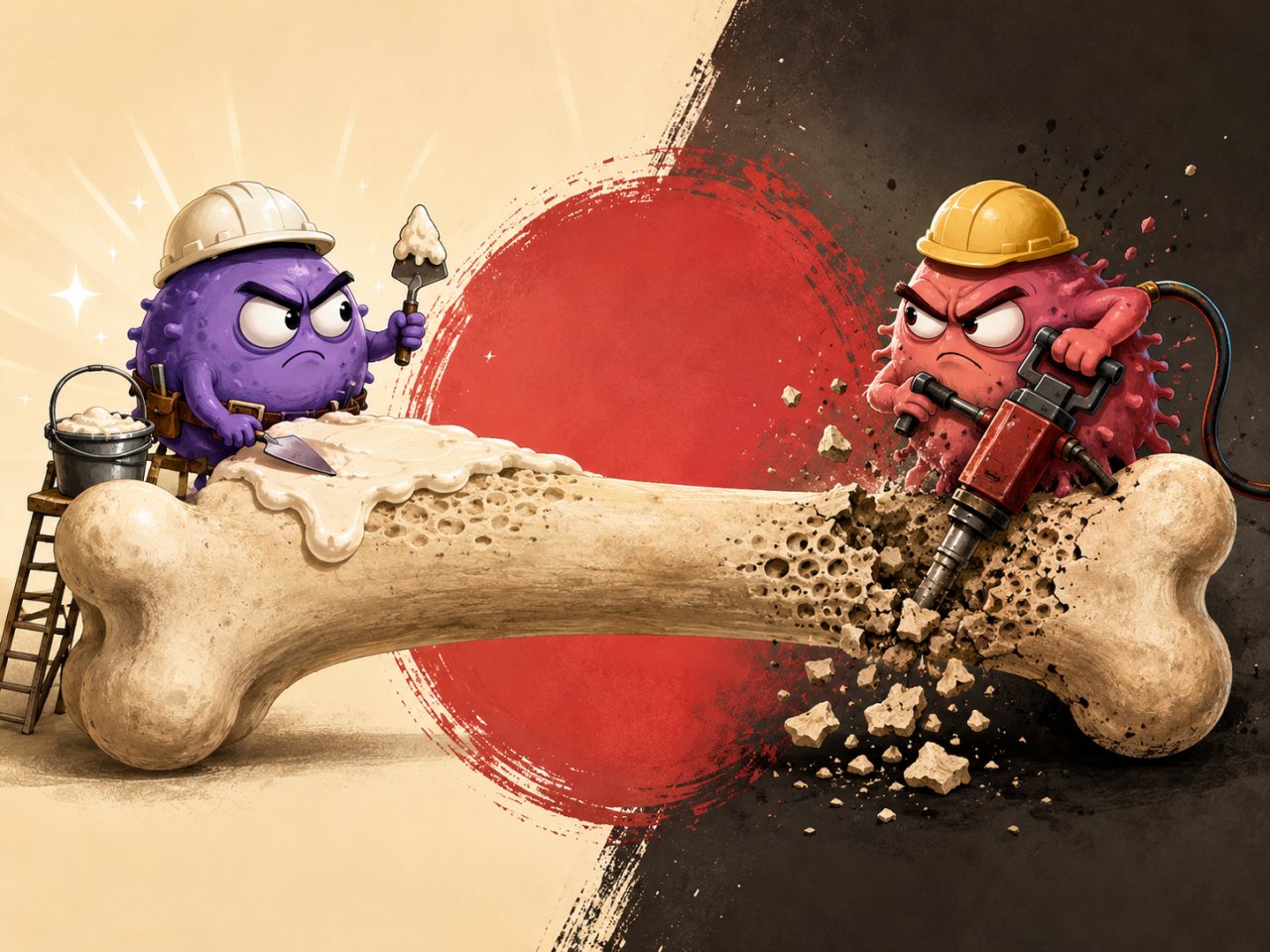
Surprise! The skeleton you have now is not exactly the same one you had ten years ago.
Sources report that the human skeleton has been trapped in a permanent renovation cycle. Construction crews are constantly installing fresh material, while demolition teams stand nearby with sledgehammers, tearing out older sections. No permits were requested, no completion date has been announced, and the work appears likely to continue for the rest of your life.
Fortunately, the demolition crew cleans up after itself. Old bone is dismantled and carried away rather than being left scattered through the premises, while the builders move in behind it and replace what was removed.
The arrangement generally works well, but investigators have learned that the balance can shift over time. As the skeleton ages, demolition may gradually begin outpacing construction, causing bone mass to decline. Management insists this is a normal part of aging, although nobody seems thrilled about it.
Sources also report that weight-bearing exercise can encourage the builders, while spending too long in bed allows the demolition crew to gain an alarming amount of ground.
The skeleton declined to provide a projected completion date, stating only, “Remodeling is a process.”
The Real Story
Bone may look permanent, but it is living tissue that is continuously maintained throughout adulthood. The process is genuinely called bone remodeling. Small sections of older or damaged bone are removed and replaced at the same location, allowing the skeleton to repair microscopic damage, respond to changing physical demands, and maintain its strength. This does not mean that the entire skeleton is replaced on a precise ten-year schedule. Different areas remodel at different rates, so the process is more like continuous maintenance than one complete whole-house replacement.
The demolition work is performed by large, specialized cells called osteoclasts. They attach to a bone surface and create a sealed working area beneath themselves. Within that space, they release substances that dissolve the mineral component of bone and break down its protein matrix. The resulting materials are removed and recycled rather than left behind as skeletal rubble.
Once the osteoclasts finish excavating a section, osteoblasts arrive to rebuild it. Osteoblasts produce a fresh organic framework called osteoid, composed largely of collagen. Minerals, especially calcium and phosphate, are then deposited into that framework, hardening it into new bone. Some osteoblasts eventually become inactive lining cells, while others become trapped within the matrix they produced and mature into osteocytes, cells that maintain the bone tissue surrounding them.
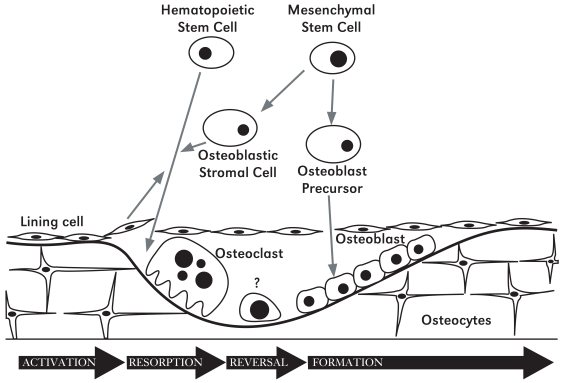
Osteocytes form an extensive communication network inside bone. Because they are embedded within the mineralized tissue, they are well positioned to detect mechanical strain and small areas of damage. They help signal where remodeling is needed and influence the activity of both osteoclasts and osteoblasts. In other words, the skeleton contains its own building inspectors, although their paperwork remains internal.
Remodeling also makes the skeleton part of the body’s mineral-management system. Bone stores most of the body’s calcium and phosphate. These minerals provide hardness and resistance to compression, but they are also needed elsewhere for functions such as nerve signaling, muscle contraction, and cellular communication. When necessary, bone resorption can release minerals into the bloodstream, while bone formation returns them to storage.
In a healthy young adult, bone removal and replacement are generally well balanced. As people age, however, each remodeling cycle may replace slightly less bone than was removed. Over time, this negative balance gradually reduces bone mass and alters the skeleton’s internal architecture. Some age-related bone loss is therefore normal. Osteoporosis is not simply the existence of ordinary remodeling or mild aging-related thinning. It is a disease in which low bone mass and structural deterioration weaken the skeleton and increase the risk of fractures.
Bone also responds to how it is used. Mechanical forces created by gravity, movement, and contracting muscles provide signals that help maintain and strengthen loaded regions of the skeleton. Weight-bearing activities and resistance exercise can help preserve bone density and may modestly increase it over time, although the response depends on the exercise, the skeletal site being loaded, age, hormones, nutrition, and other factors.
The opposite is also true. During prolonged bed rest, immobilization, or weightlessness, the skeleton receives less mechanical stimulation. Remodeling can then shift toward greater bone removal than replacement, producing a potentially rapid loss of bone mass. The demolition crew, apparently freed from meaningful supervision, begins gaining ground.
Your skeleton is therefore not a finished framework that was completed sometime around adulthood and left untouched. It is a living organ engaged in a lifelong cycle of inspection, demolition, recycling, rebuilding, and mineral management. The renovation never ends because keeping bone functional requires the work to continue.
Sources
-
The Basics of Bone in Health and Disease
Office of the Surgeon General (US). (2004). The basics of bone in health and disease. In Bone health and osteoporosis: A report of the Surgeon General. Office of the Surgeon General.
Why this source matters: Authoritative overview of bone biology, remodeling, osteoclasts, osteoblasts, osteocytes, mineral storage, aging, and osteoporosis. The supporting bone-remodeling figure also comes from this report.
-
Exercise for Your Bone Health
National Institute of Arthritis and Musculoskeletal and Skin Diseases. (2023). Exercise for your bone health. National Institutes of Health.
Why this source matters: Federal health resource supporting the discussion of weight-bearing activity, muscle-strengthening exercise, prevention of bone loss, and the relationship between exercise and bone strength. The page states that it was last reviewed in May 2023.
-
Exercise and Bone Health Across the Lifespan
Santos, L., Elliott-Sale, K. J., & Sale, C. (2017). Exercise and bone health across the lifespan. Biogerontology, 18(6), 931–946.
Why this source matters: Peer-reviewed review covering bone adaptation to mechanical loading, exercise, aging, bone loss, and osteoporosis across different life stages.